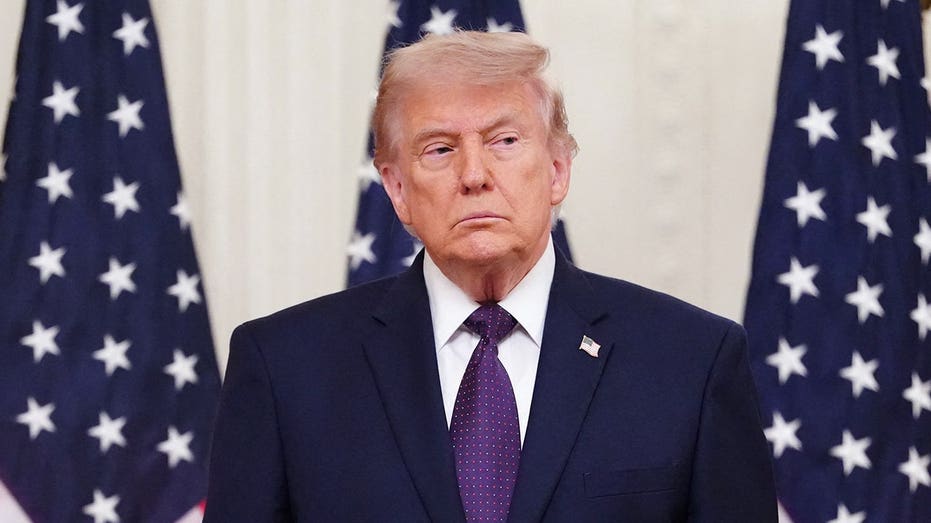
Trump admin backs off controversial $2B fund, clearing path for stalled GOP immigration bill
The DOJ paused the Trump administration's proposed anti-weaponization fund Monday, giving Senate Republicans space to push immigration enforcement funding.

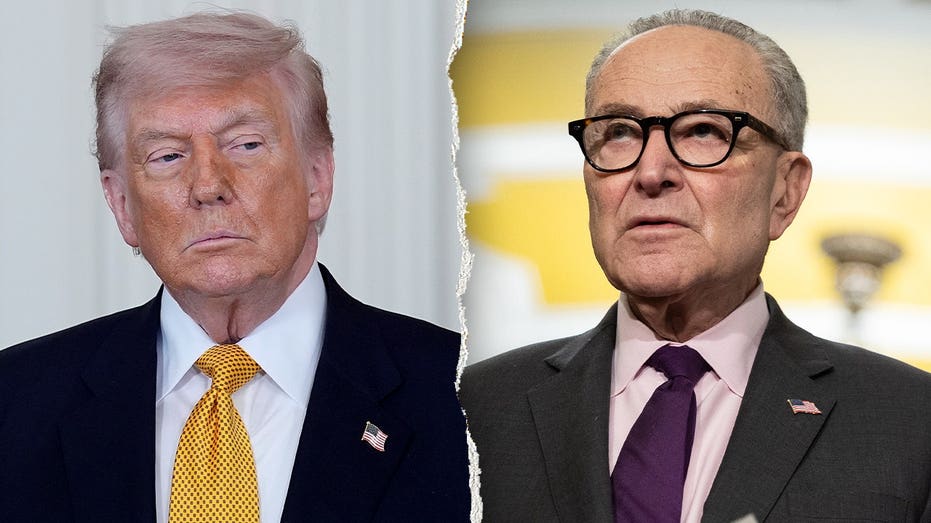
Republicans returned to Capitol Hill on Monday facing a cascade of crises of President Donald Trump's making, and a prominent Beltway insider delivered a blunt diagnosis for the party's predicament.Punchbowl News co-founder Jake Sherman described Senate Republicans as "absolutely screwed" and stuck in a "very bad jam" over the anti-weaponization fund specifically, with the administration failing to send language that could win over GOP holdouts."These are critical weeks for Trump and the GOP-controlled Congress, with just over five months left until Election Day. Trump has been bogged down in peace negotiations with Iran. The conflict remains at a stalemate somewhere between war and peace. Trump blames ‘Dumocrats, and various seemingly unpatriotic Republicans’ for not understanding that ‘it will all work out well in the end,'" Punchbowl News wrote. Republicans hope to launch a vote-a-rama Wednesday night and muscle the immigration reconciliation bill through by Thursday morning, the outlet reported. Two provisions have badly snarled that timeline.Security funding for Trump's planned White House ballroom was already attached to the package, costing support among lawmakers worried about electoral blowback. The Senate parliamentarian ruled last month that the $1 billion provision violated the Byrd Rule, forcing Republicans to redraft.The anti-weaponization fund has proven to be an even larger hurdle, with some Senate Republicans refusing to advance the bill until the White House places guardrails around the money, which the administration has shown little interest in doing. Democrats are preparing what Punchbowl called a "massive amendment blitz" to force public votes on the fund.“Senate Democrats will launch a coordinated effort to kill the slush fund before one cent goes out the door,” Senate Minority Leader Chuck Schumer proclaimed Monday. “And no matter what Republicans do, we will force them to vote on it.”
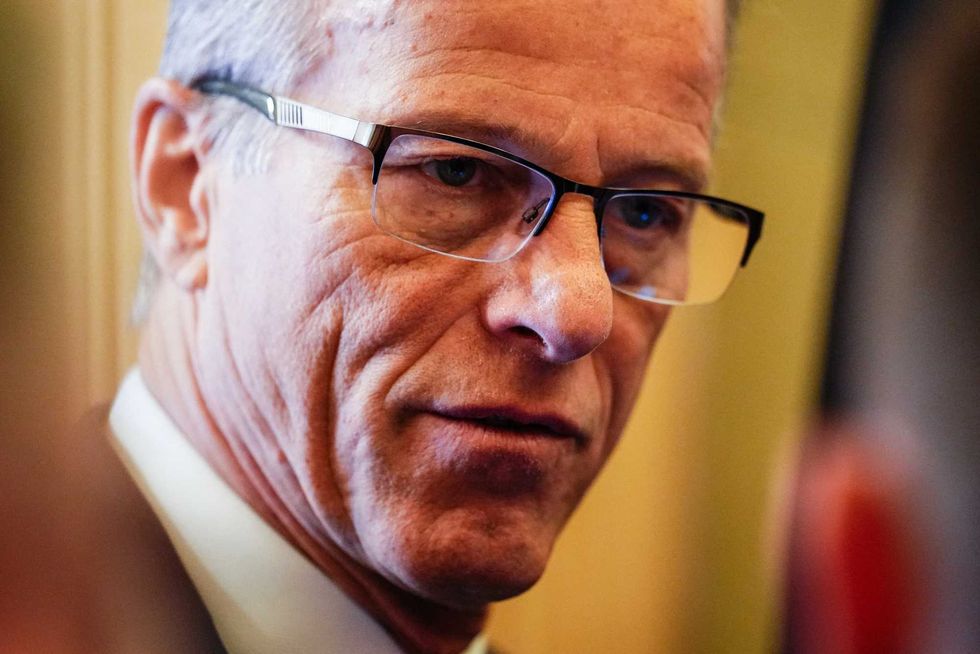
The DOJ paused the Trump administration's proposed anti-weaponization fund Monday, giving Senate Republicans space to push immigration enforcement funding.
Senate Democrats plan to kill Trump's $2 billion anti-weaponization fund as GOP dissent grows and a reconciliation vote-a-rama approaches this week.
President Trump is dropping his $1.776 billion “anti-weaponization” fund, the Justice Department announced on Monday.
President Donald Trump's administration pulled the plug on his $1.776 billion "Anti-Weaponization Fund" after a federal judge temporarily blocked it over the weekend — but that doesn't mean the rising confrontation it's caused between the White House and Republicans on Capitol Hill is over, Punchbowl News' Jake Sherman told MS NOW's Katy Tur on Monday."Maybe you have some information about what Speaker Mike Johnson might have said to the president when he was at the White House a little bit earlier today," Tur asked Sherman, referring to the recent meeting on the status of the reconciliation bill, which Republicans have debated updating with language limiting the fund.Sherman acknowledged he didn't know exactly what was discussed there about the fund, but that his sources tell him "the administration is going to announce through DOJ that they are going to comply with the court order ... but the administration plans to say they plan to take no further action."Despite that, he argued, this "is not going to be an immediate salve for Capitol Hill" because Trump could simply decide at a later date to restart it up again when the court order expires. "They're going to want to put language in ... the reconciliation legislation, which funds ICE and CBP, to make sure that the administration can't, at some point, return and do this again."In other words, he said, Republicans will take a "trust, but verify" attitude and "put teeth into legislation to make sure that the administration doesn't, in a couple of months, say, actually, we've changed our minds. We're going to go back and set up this $1.8 billion fund."Ultimately, though, he said, this is probably good news for Republicans because the administration's surrender means they can move forward with the broader reconciliation bill."This was the only path, Katy, to get this done," he said. "The administration would have been frozen up here for weeks, if not months ... if this weaponization fund was put in place, they would have had to deal with this on every single bill that the House and Senate were looking to pass." As a result, Trump had "no other option" but to throw in the towel on the slush fund. - YouTube youtu.be
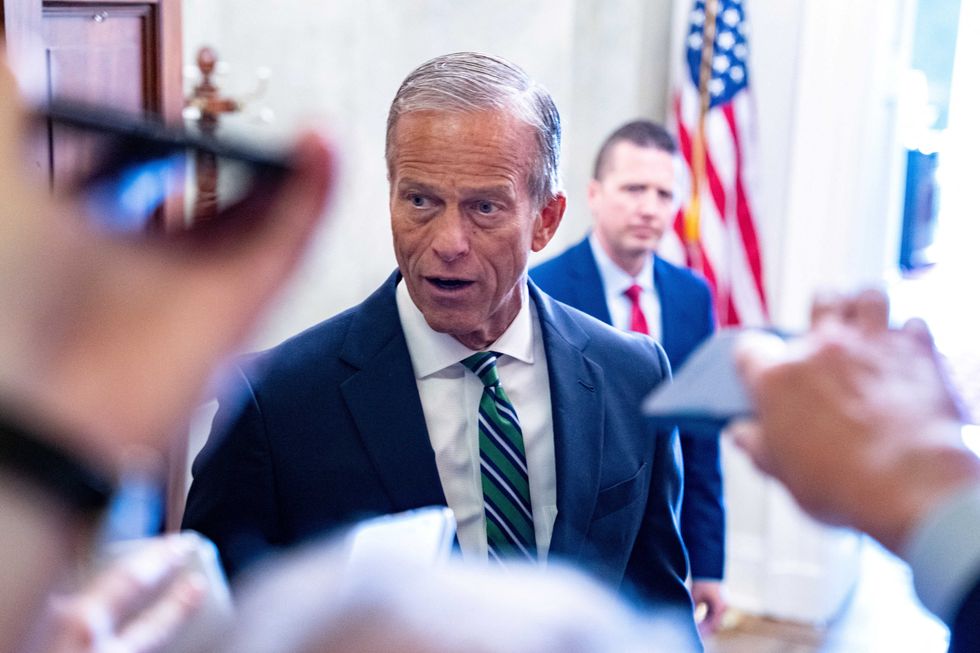
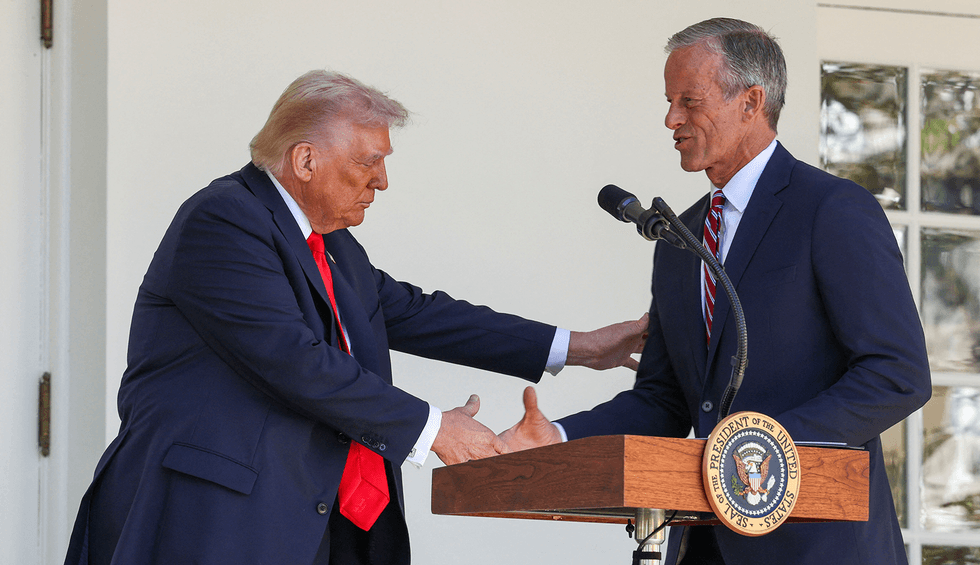
President Donald Trump is committed to rewriting reality when it comes to a certain "bald-faced lie," one political scholar wrote for The Hill, and it is one that is putting him on a collision course with his own party.John Kenneth White is a professor emeritus of political science at the Catholic University of America, and on Monday, he published a piece for The Hill arguing that Trump has lost "all sense of reality" when it comes to the Jan. 6 Capitol Riots — and it is proving to be a massive headache for Republicans staring down tight races in the coming midterms."For years, President Trump and his fellow Republicans have sought to recast the events of that day. Trump called it a “day of love,'" White wrote. "Recently, Rep. Ralph Norman (R-S.C.) told reporters it had been a 'self-made riot by people who hate Trump.' Today, the price of admission into Trump’s Republican Party is to accept the bald-faced lie that the 2020 election was stolen, and the violence of Jan. 6 either did not happen or was staged."He added later: "But Trump’s version of history is running afoul of Republicans who fear voter retribution is coming this November. After Trump sued his own government for leaking information about his tax returns, the Justice Department announced a $1.776 billion settlement. The money, Trump said, is to be paid to people who were 'really treated brutally by a system that was so corrupt with corrupt people running it,' among whom he likely intends to include Jan. 6 rioters."This plan, White noted, was a bridge too far even for Republicans, many of whom "demurred" at the idea. Senate Majority Leader John Thune said that he was "not a big fan," of the fund, while Rep. Ron Johnson of Wisconsin called it a "galactic blunder." This face-off between Trump and the GOP comes as economic matters are set to be the defining issue of the midterms, and Republicans sweat about the president's increasing obsession with frivolous and costly ideas at the expense of actual policy wins."Trump’s intentional forgetfulness about the violence of Jan. 6 and his role in it is akin to white Southerners’ rewriting of history after the Civil War," White continued. "Following the Confederacy’s defeat, the South recast the Civil War as a noble cause in defense of states’ rights. By the early 20th century, nearly 700 Confederate statues were erected throughout the South and the history books were whitewashed to make the conflict primarily about states’ rights, not slavery."He added later: "Trump has adopted an even more aggressive stance when it comes to rewriting the history of Jan. 6. This month, the Justice Department began scrubbing its website of any references to the insurrection. The department said it is, 'proud to reverse' its 'weaponization under the Biden administration,' and 'will do everything in our power to make whole those who were persecuted for political purposes,' including removing 'partisan propaganda' from the Justice Department’s website."
President Donald Trump ripped California’s elections as a “fraud,” triggering Gov. Gavin Newsom to respond by calling him names. The long-running war of words between the president […]
Questions about a Democrat’s character amid a sexting scandal found an incumbent senator resorting to Trump Derangement Syndrome-spin to claim a “pretty clear contrast.” Over the weekend, […]
A prominent economist has calculated the overall cost of President Donald Trump’s Iran war on American consumers, boiled it down to how much it is costing each U.S. household, and is issuing a warning on the economy.Dr. Mark Zandi is the chief economist at Moody’s Analytics and the co-founder of Economy.com. He puts the total cost of Trump’s war at $100 billion — a conservative estimate to some — which amounts to about $750 per household so far. That $100 billion includes “the additional U.S. military costs and the higher energy and other prices resulting from the war,” says Zandi, who calls it a “big economic blow.” Last week, Zandi told CNBC that if prices stay roughly the same, and the war drags on to a full year, the total cost will jump to about $2,000 for each U.S. household.He warns that while Trump’s “deficit-financed tax cuts have cushioned it” so far, as of the middle of last month, “the bigger tax refunds Americans have received this year no longer cover the higher costs of gasoline, diesel, and jet fuel caused by the war.” Patrick De Haan, the head of petroleum analysis at GasBuddy, on May 19 reported that “Americans will be spending $2 billion more on gasoline over the four day Memorial Day weekend compared to a year ago, according to GasBuddy estimates, or roughly $22 million more every hour.”Looking at the “hard-pressed middle and lower-income households,” Zandi found that the financial pressure is “mounting quickly.”He notes that the U.S. consumer’s savings rate is now “about as low as it ever goes,” and warns that “unless the war ends soon and energy prices come down,” Americans “will have little choice but to rein in their spending, weighing further on the already sagging economy.” Gregory Daco, chief economist at EY-Parthenon, told CNBC that consumers “are increasingly facing an income squeeze, which is forcing them to use savings, credit and wealth to sustain their spending patterns.”The Trump White House over the weekend offered a different take.Kevin Hassett, the director of the White House National Economic Council, told reporters that “People are spending more on gas, but they’re also spending more on everything else — not just groceries, but restaurants and so on,” MS NOW reported. “I think that that’s a sign that you would see when people are optimistic about the future.”