Saturday's Summary
This briefing analyzes the news climate of the previous 24 hours, ending June 19, 2026. The dominant global narrative remains the fallout from the 14-point memorandum of understanding (MOU) between the Trump administration and Tehran, a tentative agreement intended to conclude the recent military conflict with Iran and initiate a 60-day trial period of de-escalation.
How the coverage differs
The most striking divergence involves the internal "conservative revolt" against the deal. While both sides reported on the backlash from figures like Batya Ungar-Sargon, left-leaning outlets framed this as a sign of a fracturing MAGA coalition and "immediate turbulence" for the peace plan. Conversely, right-leaning outlets framed it as a principled debate over whether the administration is "folding" to Tehran's demands, focusing heavily on the technical failings of the 14-point plan.
A "High Consensus" story regarding a new book by Maggie Haberman and Jonathan Swan provided another point of varied framing. Both sides reported on the alleged friction between Trump and Vance during "Operation Midnight Hammer," specifically Trump's irritation with Vance’s "second-guessing" of his rhetoric. Left-leaning outlets used the "obliterated" anecdote to highlight Trump’s demanding leadership style and Vance’s initial hesitation. Right-leaning outlets, while acknowledging the tension, often balanced the report with White House denials and emphasized Vance’s "trusted" status as the lead negotiator for the current MOU, framing the friction as a standard byproduct of high-stakes military decision-making.

White House turns on MAGA allies as Iran deal sparks conservative revolt
Conservative commentators Batya Ungar-Sargon and David Reaboi became the latest targets on Friday.
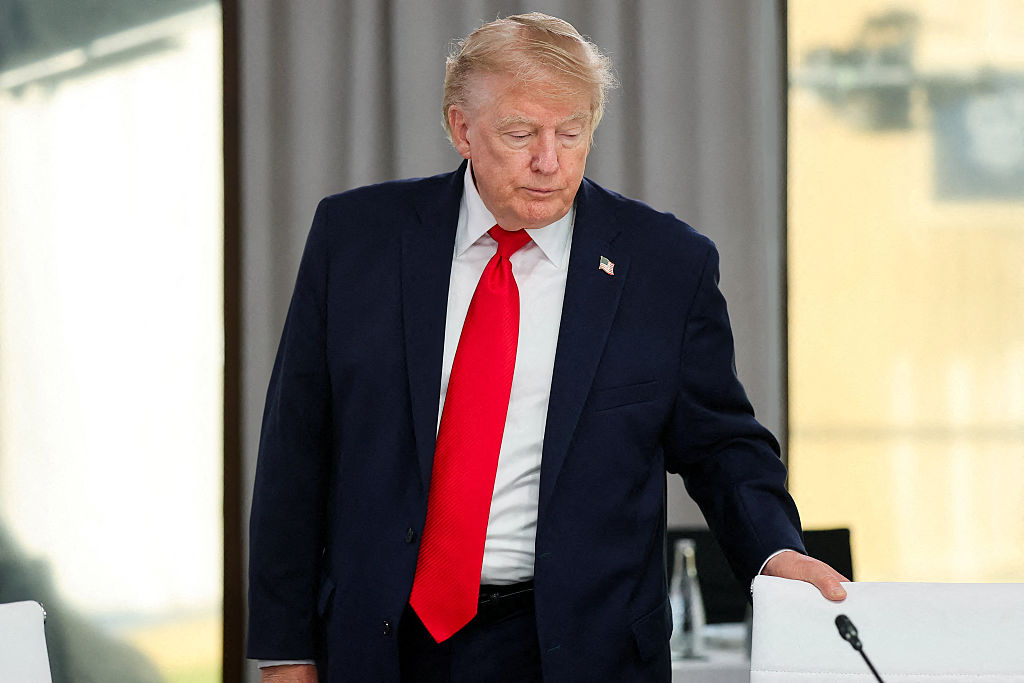
Trump’s Iran framework hits immediate turbulence after announced deal
Escalation in Lebanon, GOP dissent and even lower approval ratings signal the US-Iran peace deal might not be ready
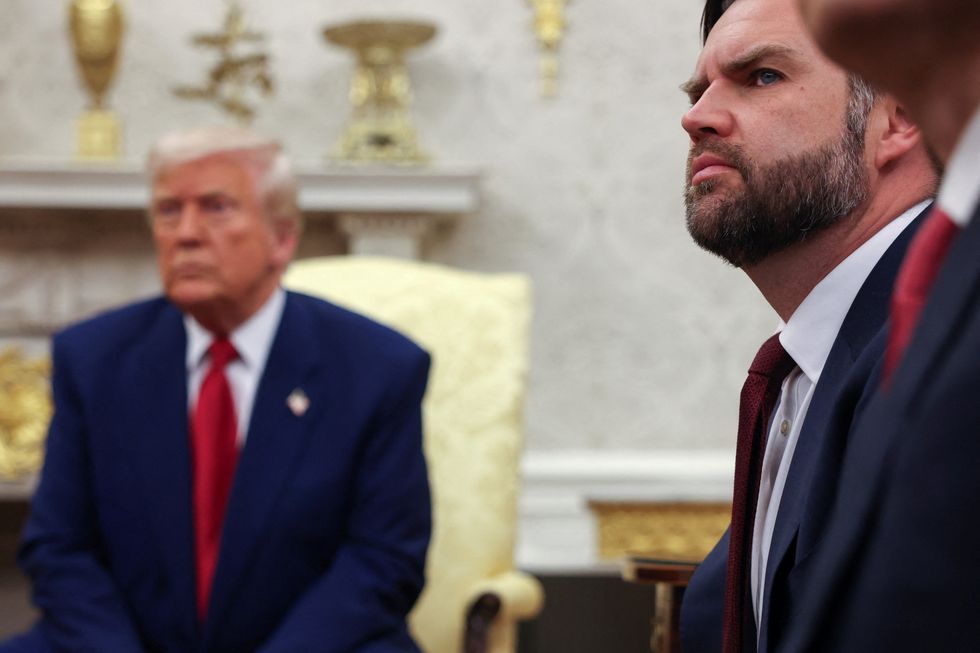
Angry Trump turned on Vance in White House tantrum: NY Times' Maggie Haberman
President Donald Trump turned his back on Vice President JD Vance in anger last summer after he suggested softening parts of a speech about U.S. strikes on Iran, according to a book from New York Times reporters.In "Regime Change: Inside the Imperial Presidency of Donald Trump," obtained by Politico, New York Times correspondents Maggie Haberman and Jonathan Swan reported that Vance, an Iraq War veteran and longtime skeptic of foreign interventions, appeared "anxious" to aides the night Operation Midnight Hammer commenced.Vance suggested edits to soften Trump's remarks, but the president snapped, "I know what I'm doing," the authors wrote. They added that Trump then turned away from Vance without responding further, appearing irritated by what they describe as Vance's "second-guessing."A senior White House official disputed the account, speaking on condition of anonymity. "You'd think they would have checked their sources before putting false claims like these on paper," the official said, denying that Trump ever turned his back on Vance and calling the book's version of events a mischaracterization.The episode is one of several tensions between Trump and Vance detailed in the book. Separately, the authors report that Trump was angry with Vance for not immediately echoing his claim that Iran's nuclear program had been "totally obliterated."“Trump told one associate, ‘Everyone needs to say ... “obliterated," the authors wrote. "'That’s the word. Everyone just needs to copy what I say. Obliterated. Obliterated.’”Vance had instead told ABC News he wasn't sure of the distinction between "severely damaged" and "obliterated," though he later adopted Trump's preferred language in a Fox News appearance the next day.White House spokesperson Anna Kelly defended Vance in a statement, calling him "an incredibly trusted and talented member" of Trump's national security team and pointing to his role leading negotiations on the memorandum of understanding that ended the Iran conflict.The book also reportedly described Trump as genuinely impressed by Vance, frequently telling associates it was notable that Vance got into Yale without wealthy family backing.
Left-Leaning Media's Perspective
- Defending the Deal via Leverage: Outlets highlighted Vice President JD Vance’s sharp rebuke of Israeli cabinet members who criticized the Iran MOU. Vance specifically cited Israel’s dependence on U.S.-funded defensive weaponry as a reason for the ally to refrain from attacking the agreement.
- Media Priorities and Counter-Programming: Significant attention was paid to Fox News’ decision to cut away from former President Barack Obama’s speech at the opening of his $850 million presidential center in Chicago. The pivot to a discussion on $5 gasoline and the Iran deal was framed as a deliberate move to prioritize administration talking points over a historic multi-president gathering.
- Trump’s Rhetorical Counter-Offensive: Reports focused on the President's aggressive social media defense against "hawkish conservatives" and "Dumocrats." The narrative emphasized Trump’s insistence that Iran is "finished" as a military power and his dismissal of claims that the deal offers too many concessions.
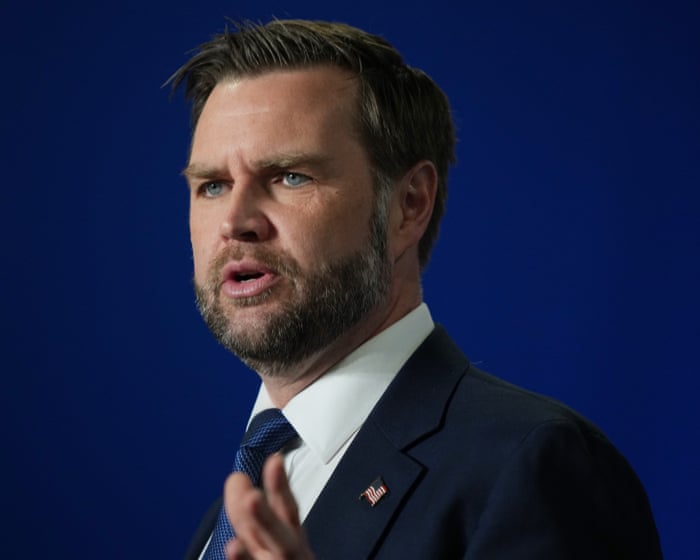
Trump news at a glance: Vance uses US weaponry barbs to scold Israeli critics of Iran deal
Vice-president says Israeli cabinet members shouldn’t attack the country’s ‘only powerful ally’ left; Iran says it will impose fees on strait of Hormuz – key US politics stories from Thursday 18 JuneJD Vance has sharply rebuked Israeli government critics of the US deal with Iran, saying the cabinet members should remember that two-thirds of the defensive weapons that have protected Israel “have been built by American hands and paid for by American tax dollars”.The US vice-president, asked about a report that Israeli prime minister Benjamin Netanyahu was fuming over the agreement, told reporters at the White House: “If I was in the cabinet of the Israeli government, I might not be attacking the only powerful ally that I have anywhere left in the entire world.” Continue reading...
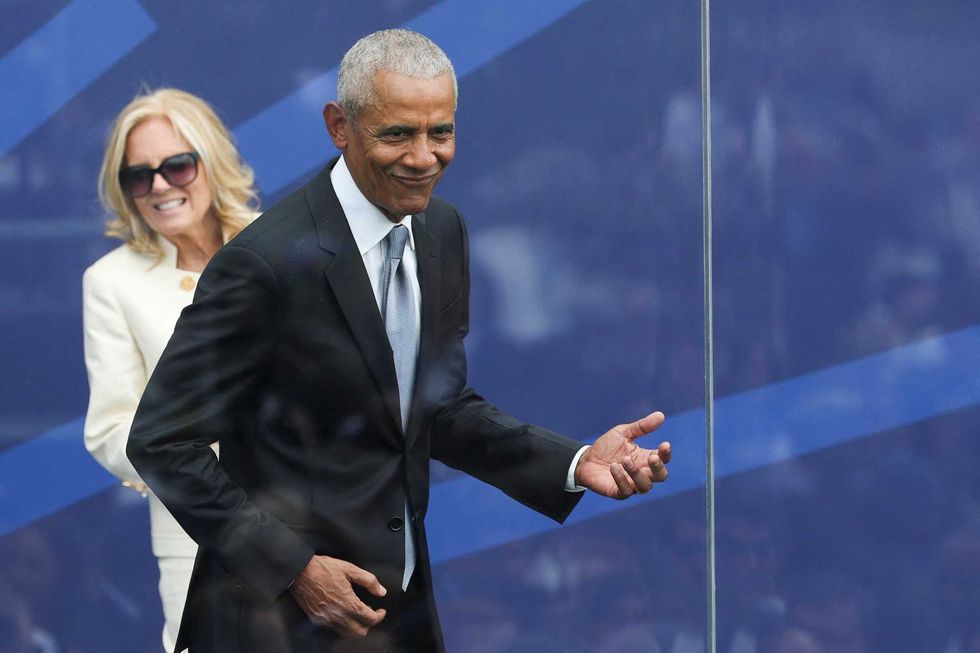
Fox News cuts feed to Obama's historic library speech to criticize Trump admin's Iran deal
Fox News cut away from former President Barack Obama's historic remarks at the opening of his presidential library on Thursday to go to political analyst Reince Priebus.The abrupt switch came during Obama's dedication speech at the $850 million Obama Presidential Center in Chicago's Jackson Park, where three former presidents and a roster of A-list performers had gathered for an invitation-only ceremony.Obama was mid-sentence when anchor Sandra Smith pulled the plug."Hard things are hard," Obama told the crowd. "And that's especially true in a big, raucous, diverse, argumentative democracy like the United States of America. Everybody's got an opinion. And that means getting stuff done involves reconciling the demands of a couple hundred million people.""Alright," Smith said, cutting him off. "You've been listening live to former President Barack Obama there in Chicago at the grand opening of the Obama Presidential Center."Co-anchor John Roberts offered a brief recap — noting that former Presidents Bill Clinton and George W. Bush were in the audience and remarking that Bono "still looks pretty good" — before pivoting hard to Iran."JD Vance becoming a public face to the Trump administration's deal with Iran and what could be a moment that shapes a potential 2028 White House bid," Roberts said. "Reince Priebus is standing by."Priebus, a Fox News political analyst and former Republican National Committee chairman, then held forth on the Iran memorandum of understanding, calling it "a sixty-day trial run.""Americans care more about $5 gasoline than they do staying in a war with Iran," Priebus said. "That is an unpleasant thing for some people out there to live with, but it's true."President Donald Trump was not invited to the ceremony. Obama Foundation CEO Valerie Jarrett said the event was reserved for those who supported Obama's journey.The center opens to the public on Friday.
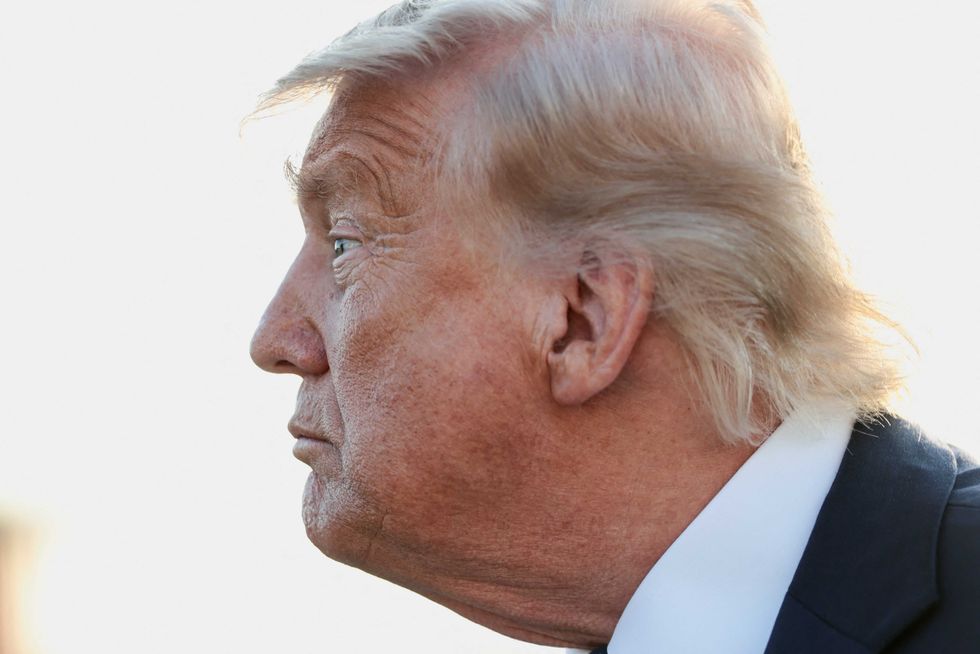
'How stupid': Trump hits back as he's shamed over Iran peace deal
President Donald Trump fired off a social media attack Friday morning as he was buried under an onslaught of criticism hurled his direction regarding the tentative peace deal he reached with Iran.According to the 14-point memorandum of understanding reached between Washington and Tehran, the United States would help Iran gain access to a $300 billion redevelopment fund, lift all sanctions, and unfreeze billions of dollars of restricted Iranian funds. The tentative deal has received criticism – particularly from hawkish conservatives – that Iran would be better positioned from the deal than they were prior to the war.Trump fiercely refuted critics’ assessments.“The War has diminished Iran! It doesn’t, any longer, have an Air Force, a Navy, Antiaircraft Equipment, Radar, or practically anything else, and yet the Dumocrats say that Iran is better off now than it was four months ago,” Trump wrote on his social media platform Truth Social. “Can you imagine getting away with that??? How stupid can some people be???”In a subsequent social media post made just minutes later, Trump insisted that his administration did not fold to Iran’s demands, and that, in actuality, the inverse had happened.“We didn’t meet out of desperation, Iran did. They are FINISHED!” Trump wrote. “We’ll play out the 60 days. They get no money, not ten cents!”
Right-Leaning Media's Perspective
- Policy Skepticism and "Capitulation": Coverage centered on whether the MOU represents a genuine diplomatic breakthrough or a strategic "dud." Analysts questioned the White House’s talking points, suggesting the deal's framework—including access to a $300 billion redevelopment fund—may leave Iran in a stronger position than it was before the war.
- Vance’s Political Vulnerability: Discussion focused on the Vice President’s high-stakes role as the primary defender of the deal. With Vance canceling a trip to Switzerland for direct talks, conservative commentators are debating if this deal will define a potential 2028 White House bid or serve as a political liability among the GOP base.
- Administrative Strategy at Camp David: Outlets tracked the movement of the Cabinet to Camp David for a Friday meeting. This is being framed as a necessary huddle to solidify the administration's stance as pushback against the Iran framework grows within the party.
The Most Telling Sign That Iran Deal Is a Dud
The White House released a set of talking points on Tuesday that only highlighted the deal's failings.
Iran Deal Puts Vance in the Hot Seat
Thursday on the RealClearPolitics podcast, Andrew Walworth, Tom Bevan, Carl Cannon, and Phil Wegmann discuss the political fallout from Trump's 14-point MOU to end the war with Iran: does it represent a diplomatic opening or a capitulation? They also cover the opening of the Obama Presidential Center, the stakes for JD Vance as he defends the Iran deal, Vance's fraud task force targeting unemployment benefits, and the World Cup/patriotism debate.
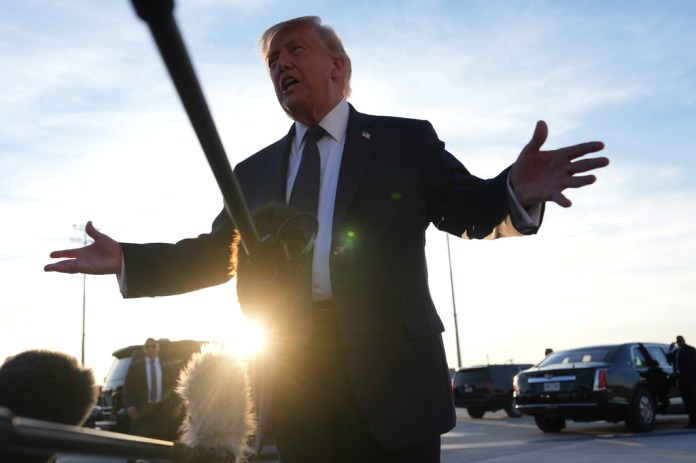
Trump heads to Camp David as pushback against Iran deal grows
President Donald Trump will travel to Camp David on Friday for a Cabinet meeting, reviving plans that were postponed last month because of poor weather. The White House announced the trip shortly after Vice President JD Vance canceled a planned visit to Switzerland, where a new round of direct talks with Iran were expected to […]