Daily Bias Analysis: 2026-06-11

Summary

This briefing analyzes the news climate of the previous 24 hours ending 2026-06-10. Today’s landscape is defined by the fallout of a high-stakes Senate primary in Maine and a significant escalation of U.S. military activity in the Middle East following the downing of an American helicopter.

Where the Narratives Split

The two sides provided radically different lenses for the Maine Senate primary. Left-leaning outlets focused on Platner's electability and his "redemption" arc, treating his personal scandals as past mistakes that he is actively overcoming to reach a populist base. In contrast, Right-leaning outlets emphasized the scandals as defining traits, using provocative labels to characterize his candidacy as extremist. While the Left weighed his personal flaws against his potential to flip a crucial Senate seat, the Right framed his victory as a strategic opportunity for the GOP to defeat a compromised opponent. Regarding foreign policy, both sides reported on the U.S. strikes in Iran, but the intensity of coverage varied. Right-leaning and consensus sources elevated the military escalation to headline status, presenting the strikes as a decisive show of strength following the "tap-tap-tap" of failed negotiations. While the Left acknowledged the strikes through high-consensus reporting, their primary editorial focus remained fixated on domestic electoral politics in Maine, largely ignoring the specific details of the Iranian strikes in their most viral content.

Left-Leaning Media Perspective

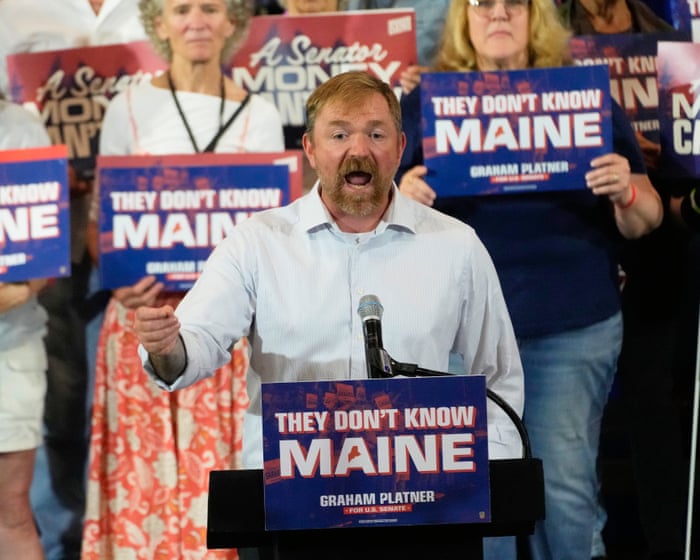
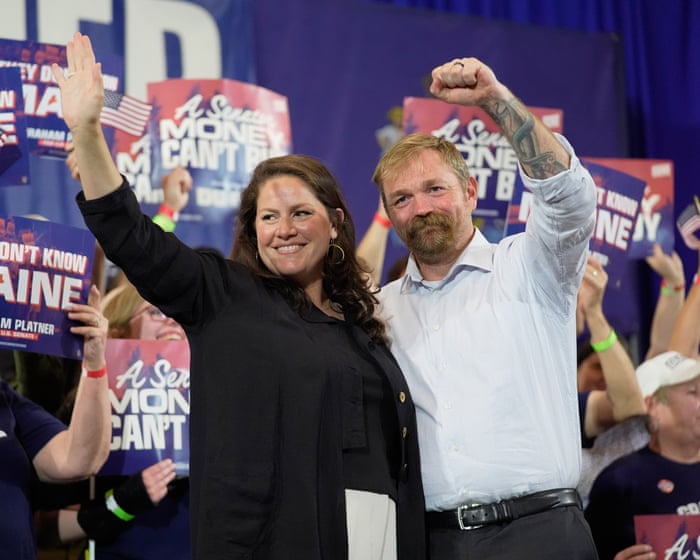
* Graham Platner’s decisive 72% victory in the Maine Democratic Senate primary, a result achieved despite the emergence of allegations regarding past infidelity, physical intimidation, and controversial social media activity. * The framing of Platner as a "high-risk, high-reward" outsider whose populist appeal to blue-collar and rural voters is seen as a viable path to unseating long-term Republican incumbent Susan Collins. * A narrative of personal redemption and "political authenticity," emphasizing Platner’s background as a Marine veteran and oyster farmer while downplaying primary scandals as "juvenile" or surmountable obstacles in a projected Democratic "wave" election year.
Right-Leaning Media Perspective

* The escalation of U.S. military strikes against 20 Iranian targets—including air defenses and radar sites—in direct retaliation for the downing of a U.S. Apache helicopter and President Trump’s assertion that Tehran will "pay the price." * Sharp critiques of the Maine Democratic primary winner, specifically highlighting a tattoo associated with extremist imagery and labeling Graham Platner a "scandal-plagued" candidate with "Communist" leanings. * The strategic mobilization of Senator Susan Collins’ allies, who are positioning the upcoming general election as a "bruising battle" intended to highlight Platner’s character vulnerabilities to protect the Republican Senate majority.

The Parallax Pulse

An AI-driven retrospective analysis on how the Left and Right prioritized and framed the biggest stories of the last 24 hours.

Thursday's Summary

This briefing analyzes the news climate of the previous 24 hours ending 2026-06-10. Today’s landscape is defined by the fallout of a high-stakes Senate primary in Maine and a significant escalation of U.S. military activity in the Middle East following the downing of an American helicopter.

Where the Narratives Split

The two sides provided radically different lenses for the Maine Senate primary. Left-leaning outlets focused on Platner's electability and his "redemption" arc, treating his personal scandals as past mistakes that he is actively overcoming to reach a populist base. In contrast, Right-leaning outlets emphasized the scandals as defining traits, using provocative labels to characterize his candidacy as extremist. While the Left weighed his personal flaws against his potential to flip a crucial Senate seat, the Right framed his victory as a strategic opportunity for the GOP to defeat a compromised opponent.

Regarding foreign policy, both sides reported on the U.S. strikes in Iran, but the intensity of coverage varied. Right-leaning and consensus sources elevated the military escalation to headline status, presenting the strikes as a decisive show of strength following the "tap-tap-tap" of failed negotiations. While the Left acknowledged the strikes through high-consensus reporting, their primary editorial focus remained fixated on domestic electoral politics in Maine, largely ignoring the specific details of the Iranian strikes in their most viral content.

US strikes Iran after Trump loses patience with ‘tap-tap-tap’ negotiations
Washington Examiner

US strikes Iran after Trump loses patience with ‘tap-tap-tap’ negotiations

The United States launched a slew of attacks on Iran after President Donald Trump complained earlier in the day that Tehran was not making a deal quickly enough, U.S. Central Command confirmed. “U.S. Central Command forces began launching additional self-defense strikes today at 5:15 p.m. ET against multiple targets in Iran at the Commander in […]

Left-Leaning Media's Perspective

  • Graham Platner’s decisive 72% victory in the Maine Democratic Senate primary, a result achieved despite the emergence of allegations regarding past infidelity, physical intimidation, and controversial social media activity.
  • The framing of Platner as a "high-risk, high-reward" outsider whose populist appeal to blue-collar and rural voters is seen as a viable path to unseating long-term Republican incumbent Susan Collins.
  • A narrative of personal redemption and "political authenticity," emphasizing Platner’s background as a Marine veteran and oyster farmer while downplaying primary scandals as "juvenile" or surmountable obstacles in a projected Democratic "wave" election year.
Controversial Graham Platner overcomes allegations to seal Maine Democratic nomination for Senate race – US politics live
US news | The Guardian

Controversial Graham Platner overcomes allegations to seal Maine Democratic nomination for Senate race – US politics live

Marine veteran won 72% of the vote despite infidelity and abuse allegations that emerged during primary campaignPlatner shrugs off scandals to win Maine Democratic Senate primaryProgressives rallied round the controversial Graham Platner after his primary victory in Maine on Tuesday, while Donald Trump again exerted his grip on the Republican party, helping to defeat a politician who had pushed for the release of the Jeffrey Epstein files.Primary elections were held in four states – Maine, Nevada, North Dakota and South Carolina – ahead of November’s midterms to decide control of both houses of Congress. The results offered mixed signals about the direction of the two major parties.Redemption is not just some simple or easy destination; it’s a journey. I’ve made mistakes in my life, mistakes I regret, that I live with, that I continue to learn from. I’m still far from perfect. But every day I wake up and I try to be a little bit better and a little kinder than I was the day before. And if you give me the chance, I will be a senator for the people who cannot afford to buy a senator. Continue reading...

Graham Platner wins Maine Democratic Senate primary – video
US news | The Guardian

Graham Platner wins Maine Democratic Senate primary – video

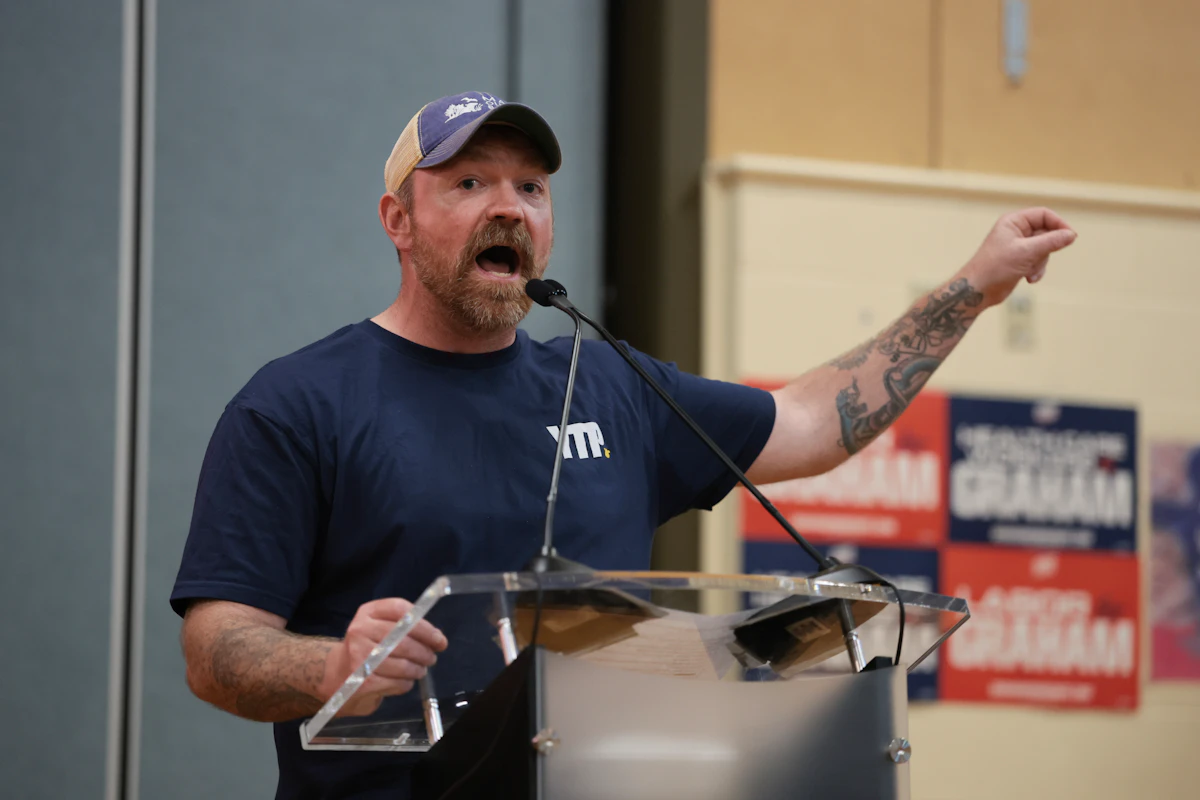
Graham Platner, a Marine veteran, oyster farmer and progressive activist, has won the Democratic nomination for the US Senate in Maine. Platner won 72% of the vote, defeating the state governor, Janet Mills, who suspended her campaign in April but remained on the ballot. Platner received scrutiny during the campaign for old incendiary Reddit posts, a tattoo resembling a Nazi symbol, sexually explicit messages sent to other women early in his marriage and accusations from a former girlfriend, denied by Platner, that he was physically intimidating. Platner will face the senator Susan Collins, a Republican running for a sixth six-year term, in November. The race is seen as a must-win for Democrats to take control of the Senate, where Republicans hold a 53-47 majority.Graham Platner shrugs off scandals to win Maine Democratic Senate primaryDemocrats rally round Platner in Maine as Trump reaffirms grip on GOP after primaries Continue reading...

Graham Platner Is Weakened—But He Can Still Win in November
The New Republic

Graham Platner Is Weakened—But He Can Still Win in November

Graham Platner will kick off starts his first general election at one of the lowest points of his upstart Senate campaign. There has been nonstop coverage, both in Maine and nationally, about racy text messages he sent to women who aren’t his wife, as well as his alleged callous treatment of ex-girlfriends. That drumbeat helped lead to Tuesday’s election results, in which about 20 percent of Maine Democrats essentially gave Platner a no-confidence vote by backing Governor Janet Mills, who had suspended her campaign in late April because Platner had built a substantial lead over her, despite the backing of establishment Democrats in Washington, D.C. Now, journalists are writing articles describing how the Maine Democratic Party could choose a new, scandal-free candidate if Platner can be convinced to drop out by July 13. It’s not an ideal beginning to his battle with incumbent Republican Senator Susan Collins, who has consistently overperformed in Maine elections. Democrats are nervous about Platner, and they should be. In a must-win Senate race, voters have nominated a high-risk, high-reward candidate—one whose downside seems much clearer than his upside. That said, all is not lost. Platner has a very strong chance of winning this seat. These last few weeks could end up being much ado about little. Why am I optimistic about Platner? First and foremost, all indications are that this is poised to be a very good election year for Democrats overall—the best for the party since 2018. Democrats have done very well since the start of 2025 in special elections for state legislative and congressional seats across the country, as well as the statewide races in Virginia and New Jersey. Trump’s approval ratings are terrible. As data analyst G. Elliott Morris wrote earlier this week, this election is shaping up to be one where stalwart Democratic voters turn out at higher levels than their Republican counterparts; new voters favor the Democrats; and more voters swing from Republican to Democrat than vice versa. In this environment, Democratic candidates are the favorites in toss-up states like Michigan and even more so in places that lean slightly Democratic, like Maine. In “wave” elections, as 2026 is likely to be, politicians from the president’s party often lose even if they are, like Collins, well-established figures. If you want to know what Platner’s biggest advantage is, it’s that he is a Democrat running in 2026. And despite the recent headlines, Platner is a strong candidate. Trust me on this: He is. I know that he has a tattoo of a symbol that had been associated with the Nazi police, he’s written juvenile things in Reddit posts, he has at times misstated details of his personal background, and has behaved toward women in such ways that many Maine voters probably would not want him to marry their daughter. At the same time, he has connected deeply with voters in Maine, who have crowded his events around the state. At a time when many Americans hate traditional politicians and crave outsiders, Planter perfectly fills the bill. For a party desperate to connect better with men, gun owners, people who work in blue-collar jobs, and residents of rural areas, Platner potentially appeals to all four blocs.Mills getting 20 percent of Tuesday’s vote after suspending her campaign makes Platner look weak. But the broader story of the primary is that Platner was so thoroughly defeating Mills, the twice-elected governor recruited by the national Democratic Party for this Senate seat, that she stopped running to avoid the embarrassment of a double-digit loss. That’s impressive. Perhaps Collins is essentially unbeatable. She’s successfully won reelection in 2008 and 2020, two other strong years for Democrats. Maybe Mills, given the right circumstances, might have appealed to some middle-aged and elderly women who will now vote for Collins. But it’s entirely possible that Platner expands the electorate by getting people who would never vote for Mills, Collins, or any traditional politician to back him. There is some evidence that Collins’s act of frequently claiming to be “concerned” with Trump but largely voting for his policies is wearing thin in Maine. In 2017, 67 percent of Maine voters approved of Collins, compared to 27 percent who disapproved, according to Morning Consult. But in a Morning Consult survey conducted last year, 41 percent of Maine voters approved of her, while 55 percent disapproved. That’s a massive downward spiral. Other surveys also show that more Maine residents disapprove of Collins more than those that approve of her. At a time when anti-Washington and anti-establishment sentiment is very high, being a 73-year-old who has served in the Senate since 1997 hurts politically. Collins can’t run against the status quo—she is the status quo. And politicians who seem like permanent fixtures in their states often eventually lose.

Right-Leaning Media's Perspective

  • The escalation of U.S. military strikes against 20 Iranian targets—including air defenses and radar sites—in direct retaliation for the downing of a U.S. Apache helicopter and President Trump’s assertion that Tehran will "pay the price."
  • Sharp critiques of the Maine Democratic primary winner, specifically highlighting a tattoo associated with extremist imagery and labeling Graham Platner a "scandal-plagued" candidate with "Communist" leanings.
  • The strategic mobilization of Senator Susan Collins’ allies, who are positioning the upcoming general election as a "bruising battle" intended to highlight Platner’s character vulnerabilities to protect the Republican Senate majority.