

Published 5/15/2026, 10:00:18 AM UTC
Friday's Summary
This briefing analyzes the news climate of the previous 24 hours ending May 14, 2026. Following the conclusion of the high-stakes summit in Beijing between President Donald Trump and Chinese President Xi Jinping, reporting has split into distinct narratives regarding the stability of the U.S.-China relationship, the fate of Taiwan, and the strategic implications of the ongoing conflict with Iran.
How the coverage differs
The most striking divergence involves the framing of the "Taiwan question." Left-leaning outlets positioned Xi’s comments as a stern rebuke and a looming crisis that the Trump administration is desperate to ignore. In contrast, right-leaning and consensus reporting largely subsumed the Taiwan issue under a broader narrative of diplomatic "wins," focusing instead on the optics of the welcome ceremony and the potential for China to resume imports of American oil.
Furthermore, the two sides offered conflicting interpretations of the Iran conflict's impact on the summit. Left-leaning sources suggested the war has strengthened China’s hand, allowing Beijing to act as a "broker for peace" in the Middle East. Right-leaning sources argued the exact opposite, claiming that U.S. military performance has cowed Beijing into a more cooperative stance on global energy security and maritime trade routes. While both sides covered the participation of U.S. CEOs, the Left viewed it as a sign of corporate influence over policy, while the Right saw it as a tool for "expanding market access" for American business.
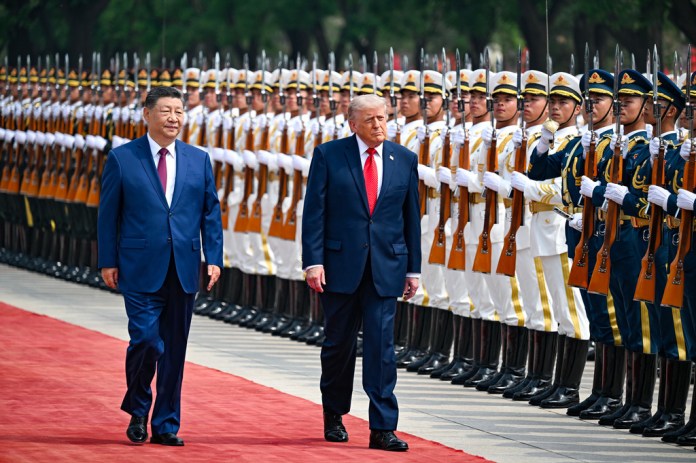
Trump says China ‘impressed’ by Iran war, hints at Beijing resuming US oil imports
President Donald Trump claimed that Chinese President Xi Jinping was “impressed” by the U.S.’s performance in its war with Iran and that it may soon resume imports of oil from the United States. Speaking with Fox News’s Sean Hannity after his meeting with the Chinese leader, Trump expressed his…

The Latest: Trump wraps up China visit and holds private meeting with Chinese leader Xi Jinping
U.S. President Donald Trump wraps up his visit to Beijing on Friday with a private meeting at Chinese leader Xi Jinping's official residence before he departs for Washington. During a series of meetings and events on Thursday the two discussed divisive issues such as the Iran war, trade,…

Trump wraps up visit to China after talks on trade, stern words on Taiwan
President Trump and Chinese President Xi Jinping conclude their summit in Beijing on Friday as both countries look to claim the visit as a win.
Left-Leaning Media's Perspective
- The Taiwan "Red Line": Outlets emphasized President Xi Jinping’s explicit warning that Taiwan independence is "irreconcilable" with peace, characterizing Trump’s refusal to address the issue in press remarks as a sign of a "dangerous" or avoidant diplomatic strategy.
- Trump as a "Diminished" Negotiator: Coverage often framed the visit as an attempt by a weakened president to seek economic relief from Beijing following setbacks in trade and the U.S.-Israeli war with Iran.
- The Role of Tech Giants: Significant attention was paid to the presence of executives like Elon Musk, Tim Cook, and Jensen Huang, with analysts questioning whether corporate interests are driving a summit that failed to produce concrete security agreements.

The One Issue Trump Is Desperate to Avoid in China
Chinese leader Xi Jinping brought up the issue of Taiwan Thursday during President Trump’s visit to China, warning that the “Taiwan question is the most important issue in China-U.S. relations.”“’Taiwan independence’ and cross-Strait peace are as irreconcilable as fire and water,” Xi said.…
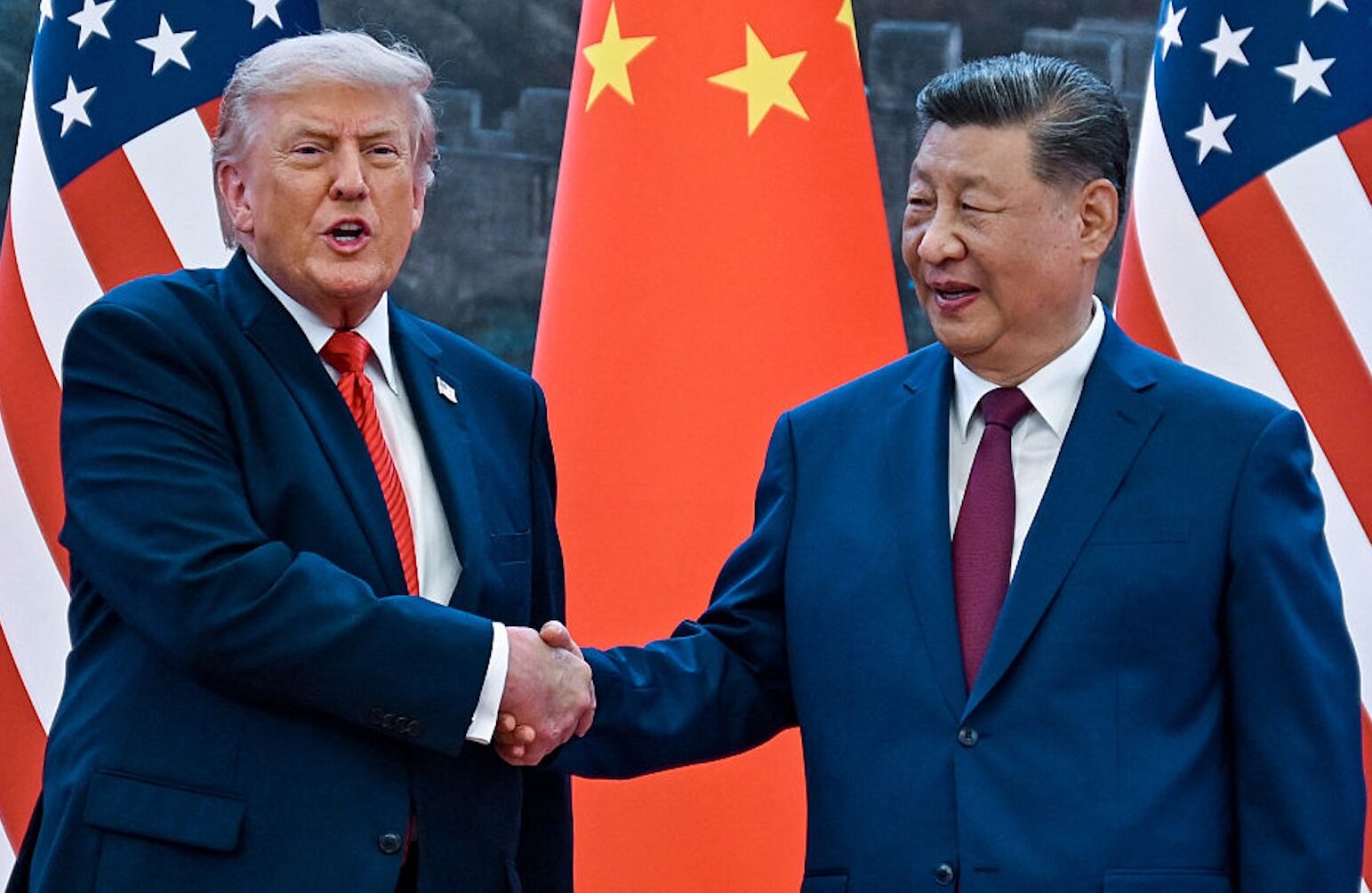
A diminished Trump goes to China — for help
The president, smarting from setbacks in war and tariffs, visits Ji Xinping ready to make deals
Xi Warns Trump of Potential "Conflict" over Taiwan in Beijing Summit on Iran, Trade, Tech & More
U.S. President Donald Trump is in Beijing for a highly anticipated summit with his Chinese counterpart President Xi Jinping. It is the first U.S. state visit to China since 2017, during Trump’s first administration. Trade, the Iran war, artificial intelligence and the fate of Taiwan are some of…
Right-Leaning Media's Perspective
- Projecting Strength and Ceremony: Reporting highlighted the "grand welcome ceremony" and "lavish" reception at the Great Hall of the People, framing the summit as a "historic" and respectful meeting between two world powers standing "shoulder-to-shoulder."
- Geopolitical Alignment on Iran: Outlets focused on a reported agreement between Trump and Xi to keep the Strait of Hormuz open, framing this as a strategic victory that pressures Iran by securing Chinese cooperation.
- Military Deterrence: Emphasis was placed on Trump’s claim that Xi was "impressed" by the U.S. military’s performance in the Iran conflict, suggesting that American "hard power" is successfully influencing Chinese trade and energy policy.
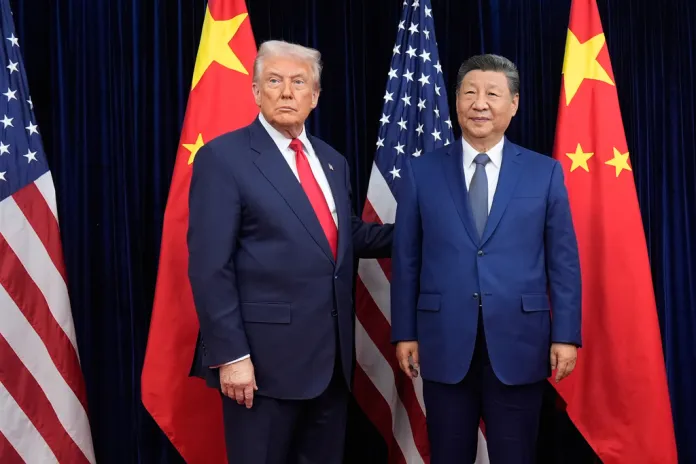
The red lines Trump must protect in China
In Focus delivers deeper coverage of the political, cultural, and ideological issues shaping America. Published daily by senior writers and experts, these in-depth pieces go beyond the headlines to give readers the full picture. You can find our full list of In Focus pieces here. President Donald…

Trump greets Xi in Beijing to kick off historic China summit with grand welcome ceremony
Trump and Xi stood shoulder-to-shoulder outside China's Great Hall of the People, a massive Communist Party showpiece overlooking Tiananmen Square, during the lavish arrival ceremony.

Chaos continues in Hormuz as Trump and Xi meet in China and 'agree' the Strait must be open with a strong warning to Iran
As Donald Trump and Xi Jinping met in China and agreed the Strait of Hormuz must stay open, Iran , one of Beijing's closest allies, is causing fresh chaos in the vital passageway.