Friday's Summary
The day's political discussion was largely dominated by President Trump's statements regarding a potential winding down of military operations in Iran, juxtaposed with ongoing military deployments and funding requests, particularly concerning the contentious Strait of Hormuz.
Where the Narratives Split
While both left- and right-leaning outlets extensively reported on President Trump's consideration of "winding down" the war and his comments regarding the Strait of Hormuz, their framing and emphasis presented notable divergences. Left-leaning reports frequently highlighted perceived contradictions between Trump's rhetoric and ongoing military actions, such as deploying thousands of Marines while denying plans for ground troops, and critically assessed the war's overall effectiveness based on rising oil prices and casualties. These analyses also questioned the implications of withdrawing without reopening the Strait, suggesting a potential economic "quagmire."
In contrast, right-leaning outlets generally amplified President Trump's stated accomplishments in the conflict and his confidence that the war's objectives were nearing completion. They focused on his declarations of degrading Iran's military capabilities and his assertion that defending the Strait of Hormuz would be an "easy" operation for other nations, downplaying the U.S. role in its security. The "High Consensus" articles often served to underscore the apparent tension between Trump's public statements about winding down operations and the concurrent buildup of U.S. forces and requests for additional funding, a point frequently emphasized in left-leaning narratives as a central element of their critical assessment.
Trump says he is considering 'winding down' Iran war
But more troops and warships are being sent to the region and the White House is seeking billions more in funding for the war.

Trump Says He Doesn't Want Ceasefire With Iran | Balance of Power: Late Edition 03/20/2026
"Balance of Power: Late Edition" focuses on the intersection of politics and global business. On today's show, Retired Rear Admiral Mark Montgomery discusses the buildup of US forces in the Middle East, and the timeline and logistics for reopening the Strait of Hormuz. Kevin Book, Managing Director at ClearView Energy Partners, discusses the global oil market impact of disruptions in the Strait of Hormuz. Aaron David Miller, Senior Fellow at the Carnegie Endowment for International Peace, says President Trump's recent comments that he's considering "winding down" military operations in the Middle East contradicts expanding deployments. (Source: Bloomberg)
Trump given plans to put troops on the ground in Iran as he claims US doesn't 'need or use' Strait of Hormuz
President Donald Trump could still put US troops on the ground in Iran despite publicly denying he plans to do so, according to a new report.
Left-Leaning Media's Perspective
- Assertions that President Trump's strategy for the three-week-old war with Iran is failing, citing rising oil prices, increased civilian casualties, and destruction of infrastructure.
- The perceived contradiction between President Trump's public denials of sending U.S. ground troops to Iran and the ongoing deployment of thousands of U.S. Marines to the region.
- Concerns that President Trump is considering ending the conflict without resolving the economic crisis caused by the closure of the Strait of Hormuz, potentially leaving other nations to manage the significant financial repercussions.
Trump Says He's Not Putting US Troops on the Ground in Iran
With the Iran war set to enter its fourth week, President Donald Trump was pressed on whether he plans to send U.S. ground troops to Iran saying, “No, I'm not putting troops anywhere. If I were, I certainly wouldn’t tell you, but I’m not putting troops.” It comes even as the United States is deploying thousands of U.S. Marines to the region. NBC’s Peter Alexander reports and moderator of Meet the Press Kristen Welker joins TODAY with analysis.
Trump Has No Idea How to End the War Against Iran
You can watch this episode of Right Now With Perry Bacon above or by following this show on YouTube or Substack. You can read a transcript here. The United States and Israel’s war against Iran has now been going on for about three weeks. President Trump sounds increasingly frustrated that Iran has not surrendered. In the latest edition of Right Now, Matt Duss, executive vice president of the Center for International Policy, argues that the war is failing by nearly every metric: Oil prices are rising; civilian casualties are up; the bombings by all three countries are getting more aggressive, destroying critical infrastructure; the Iranian regime remains controlled by leaders hostile to Israel and the U.S. Duss argues that what Trump and Israeli leaders see as successes, the killings of numerous Iranian officials, are really violations of international law. He says Trump is now grasping for a way to declare the war a success and end it. Duss, who was a foreign policy adviser to Senator Bernie Sanders during his two presidential runs, says that America’s problems in the Middle East are not just the fault of Trump. He argues that it was a huge mistake for the Biden administration to not restart the nuclear deal with Iran and to support Israel in its destruction of Gaza over the last two years. He says 2028 Democratic presidential candidates should use the terms genocide and apartheid to describe the current situation in Israel and Palestine. Duss also discussed Representative Alexandria Ocasio-Cortez’s recent trip to Germany. He advised Ocasio-Cortez on her comments there.
Trump considers "winding down" Iran war without opening Hormuz Strait
President Trump said on Friday he is considering "winding down" the war with Iran without solving the crisis over the closure of the Strait of Hormuz.Why it matters: Trump has said for several days that the war could end soon, but this is the strongest signal yet that he's actively moving in that direction. If he does walk away without reopening the strait, the U.S. would be leaving other countries to clean up a hugely consequential economic quagmire.What he's saying: "We are getting very close to meeting our objectives as we consider winding down our great Military efforts in the Middle East with respect to the Terrorist Regime of Iran," Trump wrote on Truth Social.He listed degrading Iran's missile capability and industrial base, eliminating the Iranian navy and air force, preventing Iran from obtaining a nuclear weapon, and protecting U.S. allies in the Middle East, most of which were attacked during the war."The Hormuz Strait will have to be guarded and policed, as necessary, by other Nations who use it — The United States does not," Trump wrote. "If asked, we will help these Countries in their Hormuz efforts, but it shouldn't be necessary once Iran's threat is eradicated."Reality check: A U.S. official said he doesn't think Trump's post signals an imminent end to the war. "He just said we are getting close. In the meantime the U.S. military is striking hard and continuously. It will be a couple of weeks."In the meantime, the U.S. is sending thousands of marines to the region and conducting extensive strikes to reduce Iran's capacity to menace the strait. Some Trump advisers still think ground operations are likely.Between the lines: The Hormuz crisis has Trump trapped: he can't end the war on his terms unless he breaks Iran's chokehold on Gulf oil, but reopening the strait by force would risk escalation and potentially put U.S. troops in the line of fire.Trump originally wanted to end the war before the end of March, sources say, but the crisis in the strait has compelled him to press on longer than he'd planned.While Trump suggested in his post that securing the strait would be easy, his team has been flummoxed over how best to achieve it.The White House has been discussing options, such as seizing Kharg Island off the Iranian coast, to force Iran to open the strait. Inside the room: Allies and advisers who have spoken with Trump describe a president divided over the war.On one hand, he's worried about the price of oil and annoyed he can't get allies to help solve the Hormuz closure.On the other hand, he's thrilled with the raw exercise of military might obliterating Iranian leaders and military capabilities."We're hot! We're winning!" he told a confidant opposed to the war who relayed the remarks to Axios.Polls the war is highly unpopular overall, but Trump prefers to focus on the high percentage of MAGA Republicans who back it, his advisers say.The flipside: Trump wanted NATO countries and other allies to send warships, minesweepers and aircraft as part of a coalition to reopen the strait.Most U.S. allies refused. The U.K. managed to get several Western countries to sign a political statement supporting such a coalition, without committing to sending forces.That statement didn't satisfy Trump. On Friday he called NATO countries "cowards" and said that without the U.S., NATO is "a paper tiger."The bottom line: It would be an extraordinary step to withdraw U.S. forces and support without solving a major economic crisis that resulted from the war and is driving gas prices up at home.
Right-Leaning Media's Perspective
- President Trump's statements via Truth Social that the U.S. is "very close to meeting our objectives" in Iran and is considering "winding down" military efforts.
- Emphasis on President Trump's claims that U.S. strikes have effectively degraded Iran's military capabilities, eliminated its navy and air forces, and prevented nuclear weapon acquisition.
- The assertion by President Trump that the Strait of Hormuz should be guarded by other nations who use it, with the suggestion that such a military operation would be "easy" for them.
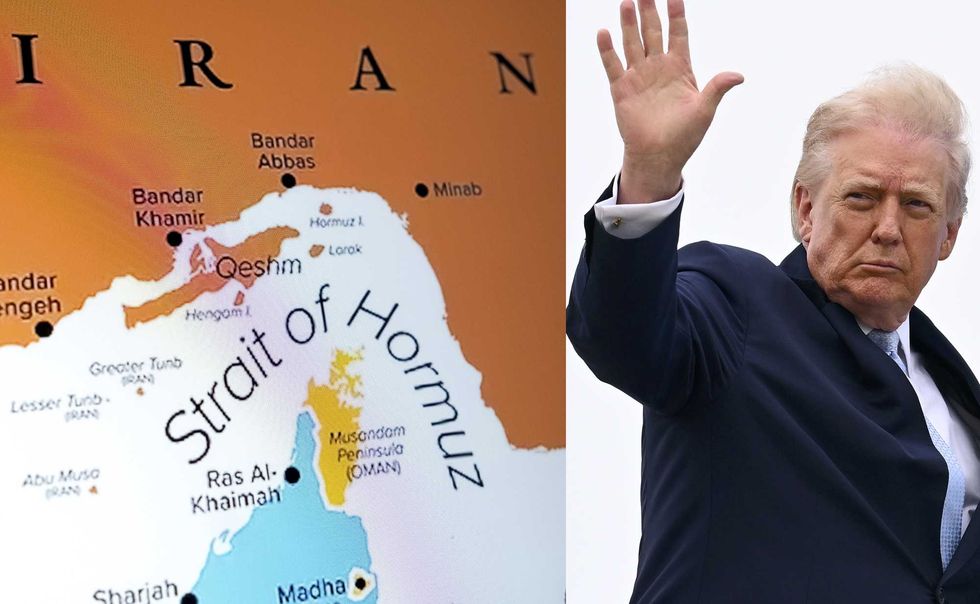
Trump says Strait of Hormuz must be defended by others — and adds he's considering 'winding down' war on Iran
President Donald Trump said he is considering winding down the military campaign in Iran and added that the Strait of Hormuz must be defended by other nations.The president posted the update on the war with Iran in a statement on Truth Social on Friday, after 21 days of the military campaign.'Importantly, it will be an easy Military Operation for them.'"We are getting very close to meeting our objectives as we consider winding down our great Military efforts in the Middle East with respect to the Terrorist Regime of Iran," the president wrote.He went on to say the strikes had completely degraded Iran's missile capabilities, eliminated its navy and air forces, and destroyed its ability to obtain nuclear weapons. He then addressed the Strait of Hormuz, which has become a contentious issue."The Hormuz Strait will have to be guarded and policed, as necessary, by other Nations who use it — The United States does not!" he added. "If asked, we will help these Countries in their Hormuz efforts, but it shouldn't be necessary once Iran's threat is eradicated."The threat of strikes from Iran has caused oil tankers to stop transporting oil through the strait and sent gas prices skyrocketing across the globe.He added that the U.S. had accomplished protecting Middle Eastern allies that included Israel, Saudi Arabia, Qatar, the United Arab Emirates, Bahrain, and Kuwait.The president previously demanded that other countries help defend the strait, but claiming that the U.S. does not use it appears to be an escalation of his claim. About 20% of the global source of oil flows through the strait.On Thursday, a group of European countries and Japan issued a statement condemning Iran's actions in the strait and pledging to protect the key trade route."We express our readiness to contribute to appropriate efforts to ensure safe passage through the Strait," reads the letter from the nations' leaders. "We welcome the commitment of nations who are engaging in preparatory planning."RELATED: US allies have change of heart on defending Strait of Hormuz from Iranian attacks after oil prices continue to surge Trump reassured those who might defend the Strait of Hormuz that it would be easy."Importantly, it will be an easy Military Operation for them. Thank you for your attention to this matter!" he added.Like Blaze News? Bypass the censors, sign up for our newsletters, and get stories like this direct to your inbox. Sign up here!
Trump given plans to put troops on the ground in Iran as he claims US doesn't 'need or use' Strait of Hormuz
President Donald Trump could still put US troops on the ground in Iran despite publicly denying he plans to do so, according to a new report.
To defend the Strait of Hormuz, it might pay to have some friends
Unsurprisingly, the Strait of Hormuz has become central to the war with Iran. Prior to the war, millions of barrels of oil would pass through this narrow waterway — which lies along the southern coast of Iran between the Persian Gulf and the Gulf of Oman — on a daily basis. But now, under the […]