arallaxNews.io
The Parallax Pulse
🔥 Top🕒 Latest

The Parallax Pulse

An AI-driven retrospective analysis on how the Left and Right prioritized and framed the biggest stories of the last 24 hours.

Thursday, May 21, 2026

Thursday's Summary

This briefing analyzes the news climate of the previous 24 hours, ending May 20, 2026. The political landscape is currently defined by the fallout of several key Republican primary elections and the establishment of a multi-billion dollar taxpayer-funded legal settlement program.

Where the Narratives Split

The most striking divergence involves the interpretation of Thomas Massie’s primary defeat. Left-leaning outlets framed the event as a signal of a "new fissure" or a "loud minority" coalition of anti-war and libertarian voters forming a resistance against the Trump establishment. Conversely, right-leaning reports largely dismissed Massie as a once-principled lawmaker who lost his seat because he became an "obsessive" outlier on niche issues rather than a victim of a political purge.

While both sides reported on the $1.8 billion "Anti-Weaponization Fund," the framing varied significantly regarding its legitimacy. Left-leaning reports categorized the fund as "brazen corruption" and a "loophole" in the 1956 Judgment Fund. High-consensus reporting, however, noted that the administration is citing the Obama-era Keepseagle settlement as a legal precedent for using large settlements to address systemic government discrimination, a point largely omitted from more critical perspectives. Additionally, while the Left highlighted the potential for the fund to bankroll Jan. 6 rioters, right-leaning coverage focused more on the fund as a tool for those who feel targeted by "lawfare."

Ally of DOJ pardon attorney seeks to join board of Trump's $1.7+ billion fund
Politics - CBSNews.com

Ally of DOJ pardon attorney seeks to join board of Trump's $1.7+ billion fund

In his application letter, attorney Mike Howell proposed organizing a national gathering of "thousands of victims of weaponization," including those involved in the Jan. 6, 2021, Capitol riot.
Read →
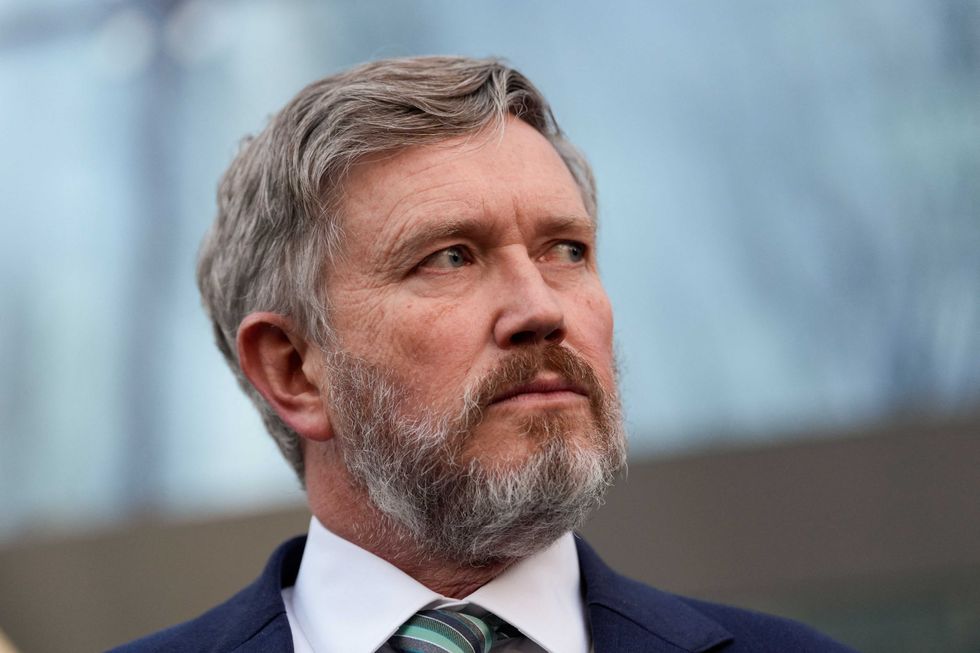
Thomas Massie and his new 'loud minority' may get the last laugh against Trump: analysis
Raw Story

Thomas Massie and his new 'loud minority' may get the last laugh against Trump: analysis

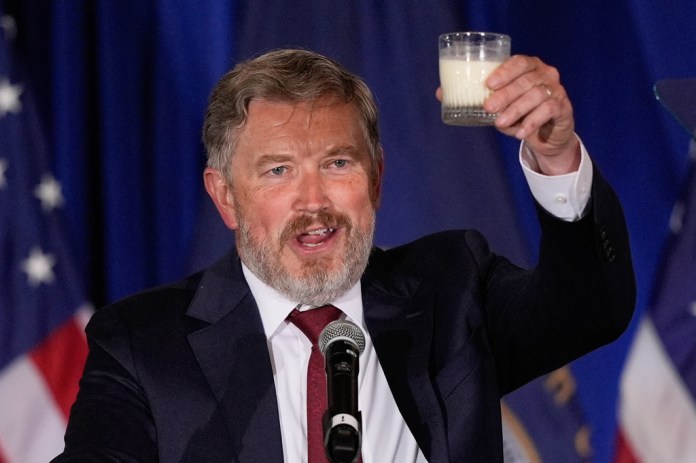
Rep. Thomas Massie's (R-KY) primary loss on Tuesday was another example of President Donald Trump's grip on the Republican Party, according to some political experts. But a new analysis suggests that Massie may get the last laugh against Trump before all is said and done. Ben Jacobs, a political reporter for Slate, wrote in a new column that Massie appears to be growing a new "loud minority" coalition to fight against Trump. Jacobs attended Massie's watch party on Tuesday, where he noticed a peculiar energy in the air around a man who had just lost his race to the Trump-endorsed former Navy SEAL Ed Gallrein. "It may have represented the end of Massie’s stint in Congress, but it may too represent the coalescing of a new faction in Republican politics," Jacobs wrote. "Along with the usual assortment of local Kentucky supporters, the crowd at Massie’s event included an eclectic mix. There were a score of influencers who had come from across the country to support his campaign, there were libertarians stopping in Kentucky on their way to their party’s national convention in Michigan, and there were also figures like former Rep. Dana Rohrabacher and Proud Boys founder Gavin McInnes floating around."Massie became a thorn in Trump's side during the second administration because Massie pushed for the release of the Jeffrey Epstein files. Massie coordinated efforts with Rep. Ro Khanna (D-CA) to pass the Epstein Files Transparency Act, which required the Department of Justice to release all of the files by the end of 2025. He also publicly supported survivors of Epstein's crimes in their push for transparency. Jacobs noted that the crowd who attended Massie's concession speech chanted “America First, America First!” and “No War, No War!” The chants reminded him of the Tea Party coalition that formed in opposition to the traditional Republican Party in 2010 and catapulted people like Sen. Ron Paul (R-KY) into office. That coalition could also send Massie back to Congress, where he could continue to lean on the Trump administration. "Like the Ron Paul coalition it resembles (and shares a lot of crossover with), it may not be more than a loud minority within the GOP, bigger on podcasts than in legislatures," Jacobs wrote. "But it does symbolize the potential nucleus of a new point of resistance to the Trumpist establishment in the GOP, one that not so much harks back to a Reagan-esque past as looks to a future where voters can drink raw milk while being transported in their self-driving Teslas." "At a moment when Trump has seemingly quashed all dissent within the party, successfully ousting both Massie and Cassidy in less than a week, it signifies a potential new fissure opening within the GOP," Jacobs continued. "And for those at Massie’s election night, that seemed as much worth celebrating as anything."

Read →
Trump ‘may release’ his tax returns after IRS settlement
Washington Examiner

Trump ‘may release’ his tax returns after IRS settlement

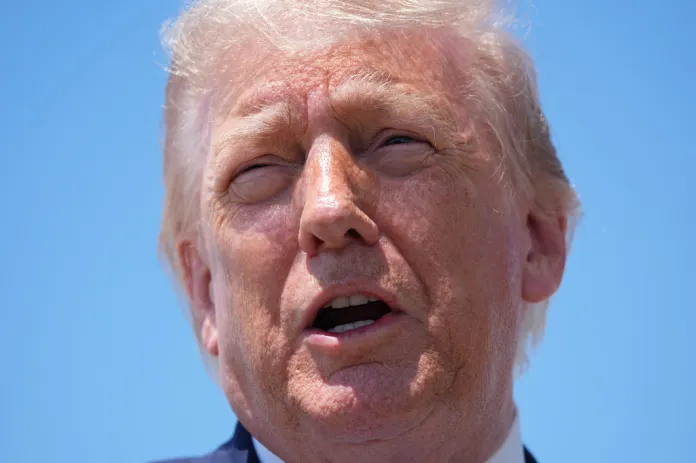
President Donald Trump said on Wednesday he “may release” his current tax returns to the public after the IRS reached a settlement over a leak of his past tax records. The leaked returns from Trump’s first term “showed I pay a lot of tax,” he told the Washington Examiner. “I may even release my current […]

Read →

Left-Leaning Media's Perspective

  • The "Anti-Weaponization Fund" Controversy: Outlets focused heavily on the mechanics of a $1.776 billion government fund created following a settlement between the Trump administration and the IRS. Narratives emphasized a lack of judicial oversight, the potential for funds to be distributed to January 6 defendants, and the appointment of Trump-aligned commissioners to oversee the payouts.
  • Republican Strategic Fractures: Significant attention was paid to internal GOP friction in Texas, where former Bush-era strategists and Democratic observers characterized Donald Trump’s endorsement of Ken Paxton over John Cornyn as a costly "ego" move that could force the NRSC to spend upwards of $250 million to defend a safe seat.
  • The Ousting of Thomas Massie: Coverage framed the seven-term Kentucky Congressman’s primary defeat as a "personal vendetta" by the president. These reports highlighted Massie’s opposition to foreign intervention and his advocacy for the release of Jeffrey Epstein-related files as the primary drivers for his removal from the party’s mainstream.
First Thing: Trump critic Thomas Massie defeated in Kentucky Republican House primary
US news | The Guardian

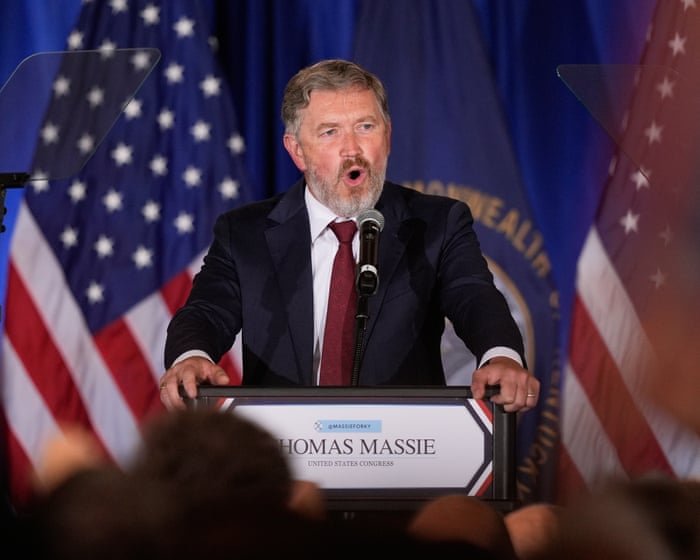
First Thing: Trump critic Thomas Massie defeated in Kentucky Republican House primary

Seven-term incumbent had spoken out against Iran war, government spending and Jeffrey Epstein files. Plus, Trump’s ‘board of peace’ receives just $23m to rebuild GazaDon’t already get First Thing in your inbox? Sign up hereGood morning.Voters in northern Kentucky on Tuesday rejected the incumbent congressman Thomas Massie, who has been critical of Donald Trump, in favor of the president’s hand-picked candidate.Where else held primaries on Tuesday? Pennsylvania, Georgia, Alabama, Oregon and Idaho. Georgia also delivered a defeat to a prominent Trump critic, while a Trump ally won in Alabama, too.How significant was Kentucky? Massie, a seven-term incumbent, has been an outspoken GOP opponent to Trump – repeatedly clashing with the president over Iran, government spending and the Jeffrey Epstein files. In response, Trump treated the primary as a personal vendetta.What is at the top of the agenda? For Putin, it is likely to be reciprocal trade and investment, as Russia’s economy continues to suffer over the cost of its war in Ukraine and related sanctions. China, Russia’s largest trading partner, buys almost half of Moscow’s oil exports.What about foreign policy? Xi said the world was in danger of returning to the “law of the jungle”, adding that further hostilities in the Middle East were “inadvisable”, and calling for a ceasefire, state media reported. Continue reading...

Read →
How Trump's $1.8B "anti-weaponization" fund works
Axios

How Trump's $1.8B "anti-weaponization" fund works

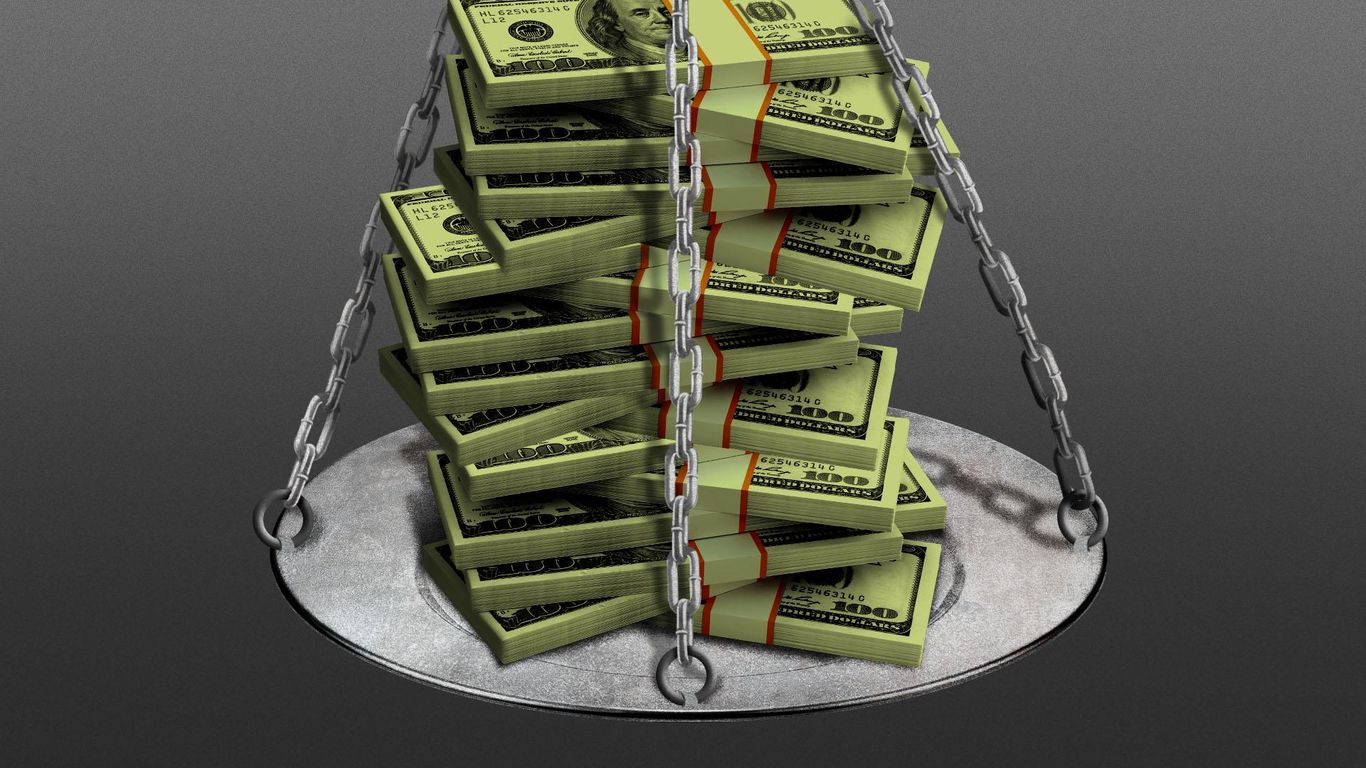
President Trump sued his own administration, settled and will now spend $1.776 billion of taxpayer money to pay people who say the government targeted them politically.Why it matters: The "Anti-Weaponization Fund" turns a personal Trump settlement into a new government program, shields decisions on who gets the money from the courts and limits information about what the public knows about where the funds go.The backstory: Trump sued the IRS and Treasury in January for $10 billion over the 2019 leak of his tax returns. The settlement gives Trump, his sons and the Trump Organization a formal apology but no money, and it bars the IRS from auditing Trump's past tax returns.Acting Attorney General Todd Blanche, Trump's former criminal defense lawyer, created the Anti-Weaponization Fund with the Treasury Department's Judgment Fund.How it works: The attorney general will handpick the five-member commission that decides who will collect money from the fund, which ends in December 2028.Those decisions can't be appealed or challenged in court. The settlement does not require public disclosure of payouts.The settlement lets the fund spend part of the $1.776 billion on itself, including staff, travel and facilities. The Justice Department and the White House did not answer Axios' question about whether there is any cap on those costs.Who's eligible: Almost anyone alleging "weaponization" or "lawfare" can apply, Blanche told a Senate Appropriations subcommittee Tuesday.Blanche refused to commit that people convicted of assaulting Capitol Police would be excluded: "I'm not one of the commissioners setting up the rules."Vice President Vance separately said that even Tina Peters, the former Colorado county clerk convicted of a state crime, and Hunter Biden, the son of former President Biden, could be compensated.Context: Trump's new fund is possible thanks to a Judgment Fund created by Congress in 1956, so the government could quickly pay off court losses and settlements without voting each time.Initially, payouts were limited to $100,000. That cap was lifted in 1978.Critics have previously warned that it lets administrations spend huge sums with little oversight. The Obama administration's $1.7 billion Judgment Fund payment to Iran became a major flashpoint in 2016.Zoom in: Paul Figley, who spent 32 years at the Justice Department and is an expert on the Judgment Fund, tells Axios this use is "certainly not what Congress anticipated when it set the system up.""It's bad policy, but it's Congress's fault" for leaving a "huge loophole," Figley said. He expects future administrations of either party to do the same "until Congress stops it."Nobody typically has standing to challenge Judgment Fund payouts in court, he said.Yes, but: Legal challenges over Trump's fund have already begun.Two officers who defended the Capitol on Jan. 6, 2021, sued Wednesday to dissolve the fund, calling it "the most brazen act of presidential corruption this century."Former Capitol Police Officer Harry Dunn and D.C. Metropolitan Police Officer Daniel Hodges argue the fund will bankroll Proud Boys and Jan. 6 rioters who have threatened their lives.The suit invokes the 14th Amendment's bar on the U.S. paying "any debt or obligation incurred in aid of insurrection."The other side: Blanche and the Justice Department repeatedly pointed to a $760 million Obama-era Keepseagle settlement for Native American farmers alleging Agriculture Department discrimination as precedent for the fund's existence.But that settlement was approved by a federal judge after years of litigation.Trump's case settled days before the Justice Department was due to respond to a court order asking if the president's lawsuit against agencies he oversees was a real dispute.

Read →
Republicans say Trump blew up Texas for 'his ego'
Alternet.org

Republicans say Trump blew up Texas for 'his ego'

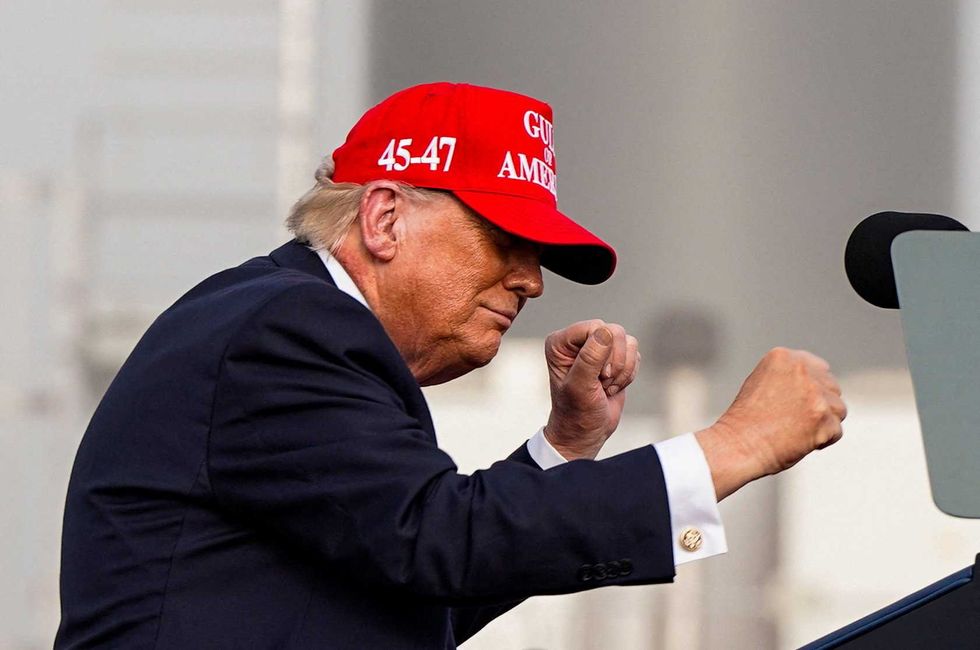
Former Bush Speechwriter David Frum and Republican strategist David Urban each took turns unloading on President Donald Trump for making Republicans’ difficult November fight even harder in ruby-red Texas and everywhere else.The punches came after Trump endorsed problematic Texas AG Ken Paxton over incumbent Texas Republican John Cornyn, who was assured an easy victory.“I think [Sen.] Lindsey Graham summed it up best,” Urban told CNN anchor Kaitlyn Collins. “It's going to cost three times as much now [to win that Texas seat]. That's what's really underpinning all this in a Texas race that Cornyn … was kind of a walk to win and beat [Democratic challenger James] Talarico. But Paxton — completely different story.”“I've seen some numbers where it's estimated the [National Republican Senatorial Committee] is going to have to spend an additional $250 million in Texas. That's not pocket change, when you got a race in Maine and a race in Alaska to help protect. Some of these races are going to be close. And if you have to spend 250 million bucks in Texas now to kind of prop up a guy who may not be the strongest candidate in a general election.”“I also think that if you look at the situation in May and project it forward to November, you're not understanding the dynamics of the American economy,” warned Frum. “This is a slowing economy. By November, it will be clear that Donald Trump lost the war in Iran. It will be clear that all Americans got out of it was higher gas prices, higher food prices, higher fuel prices. You're probably going to be in a very slow job creation situation by the second half of the year and continuing high rising prices.”“So, the situation is deteriorating,” said Frum “I think that that's the sense of panic you're hearing from the Republican senators. They know it's going to get worse. And Donald Trump is doing his part to make it worse because of his own ego needs: his desire is to get the ballroom and never pay taxes again and punish my enemies.”Ashley Allison, a former senior staffer with the Obama and Biden campaigns, said “Republican senators are lying in the bed that they made.”“They had moments of intervention, and they didn't have the moral courage, and it still came to bite them in the long run,” Allison told Collins and the panel. “Texas is going to be hard [for Democrats]. But what I will say is in the primary with James Talarico and Jasmine Crockett, we had some of the largest turnout of democratic voters in history there, because Democrats have not always organized in Texas and didn't always have a strong democratic infrastructure.” - YouTube youtu.be

Read →

Right-Leaning Media's Perspective

  • Georgia Senate Runoff Dynamics: Reports focused on the success of Mike Collins, a "MAGA-style" Republican who secured a plurality in the Georgia Senate primary. The narrative centered on the upcoming June 16 runoff against Derek Dooley, a candidate backed by Governor Brian Kemp, framing the contest as a test of Trump’s influence versus state-level GOP leadership.
  • Massie’s Loss as a Shift in Principles: Rather than a simple purge, analysis centered on Thomas Massie’s perceived departure from libertarian conservatism. Outlets argued that his pivot toward "conspiracy theories" and his opposition to border security legislation in 2025 led to his alienation from his own voter base.
  • Tax Return Transparency: Following the IRS settlement, coverage highlighted the president’s statement that he "may release" his current tax returns. This was framed as a move toward transparency following the resolution of a legal dispute regarding the unauthorized leak of his past financial records.
'Friend' of President Trump advances to Georgia Republican Senate primary runoff
Blaze Media

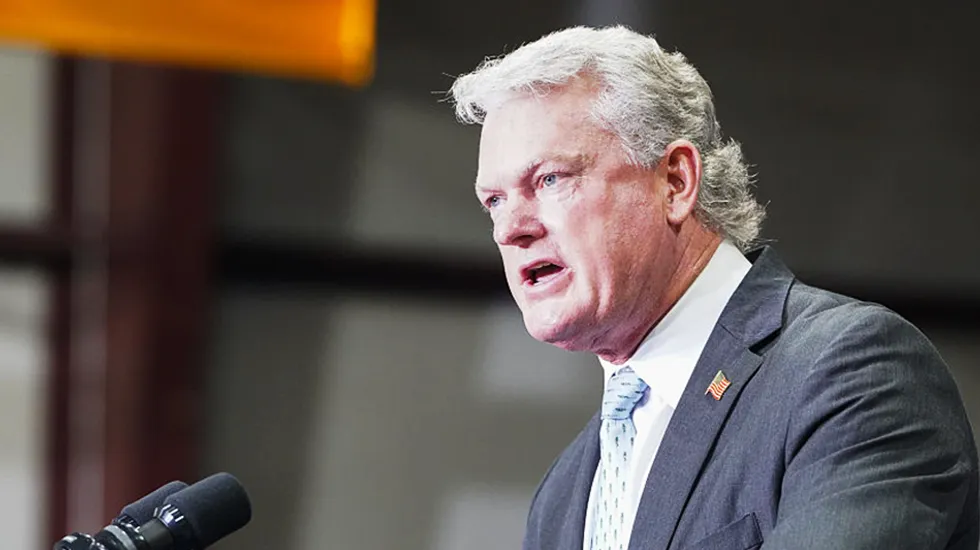
'Friend' of President Trump advances to Georgia Republican Senate primary runoff

The president likes him "a lot," but Georgia voters still have to prove they agree.Sitting U.S. Rep. Mike Collins (R-Ga.) took home the most votes in the Georgia GOP primary for U.S. Senate on Tuesday, but it was not enough to secure an outright nomination. '28 more days of putting the hammer down!'Collins was first in the primary, but since he did not garner 50% of the vote, he will have to go head-to-head against runner-up Derek Dooley in a runoff election on June 16. Collins finished with nearly 41% of the vote, while Dooley had about 30%, according to CBS News."Thank you, Georgia. Love y'all. 28 more days of putting the hammer down!" Collins wrote on X after securing the most votes in the primary.Collins was considered the favorite as a MAGA-style Republican and led polls by an average of 11.5 points between April and May.The 58-year-old also received an unofficial endorsement from President Donald Trump in February, but it is unclear how much that endorsement helped him.A video posted February 19 showed Trump telling supporters, "He's a friend of mine. He's a good guy.""I like him a lot," Trump added.RELATED: Early red flag for GOP? Democrats rack up massive Q1 fundraising hauls Megan Varner/Getty Images The video garnered nearly 1 million views on X, but subsequent polls showed Collins' lead shrank from about +25 in mid-February to just +14 by the end of the month. Still, Collins was considered to be Trump-aligned, having similar views on immigration and spearheading the Laken Riley Act. As well, Collins voted against aid to Ukraine in October 2023, but voted in favor of Israeli aid the same month.Dooley, a former football coach for the Tennessee Volunteers, was consistently second or third in polling and was endorsed by Georgia Governor Brian Kemp (R).Dooley put out a statement late on Tuesday thanking his voters for their support."This campaign has been about putting the people of Georgia first and sending a new type of leader up to D.C. who's in it for the right reasons, and that's to serve," Dooley wrote on X. "Let's get to work and win this runoff!" he added alongside a photo that featured Gov. Kemp.RELATED: Georgia man allegedly threatened to kill Pam Bondi and stab Kristi Noem's eyes out 'with a dull knife' Megan Varner/Bloomberg/Getty Images Third place went to Rep. Earl "Buddy" Carter (R-Ga.), a former pharmacist and mayor who received approximately 25% of the vote.Other candidates included businessman and real estate developer John Coyne, as well as Jonathan McColumn, a retired U.S. Army Reserve brigadier general and pastor. Both got less than 5% of the vote.The winner of Collins vs. Dooley will face off against Democrat Senator Jon Ossoff in November. Ossoff went unopposed in the Democrat primary and has been in office since 2021.Like Blaze News? Bypass the censors, sign up for our newsletters, and get stories like this direct to your inbox. Sign up here!

Read →
I mourned the loss of Thomas Massie — a year ago
Washington Examiner

I mourned the loss of Thomas Massie — a year ago

Rep. Thomas Massie (R-KY) didn’t lose Tuesday — we lost him at least a year ago, when he deviated from being a principled conservative firebrand and started trafficking in conspiracy theories. Massie and his supporters claim he was ousted because he didn’t support Israel, but Massie never supported Israel in his entire high-approval 14-year tenure. […]

Read →
Why Thomas Massie Lost
RealClearPolitics - Homepage

Why Thomas Massie Lost

Massie went from principled libertarian during COVID, to GOP leadership lapdog under McCarthy, to anti-Trump Epstein obsessive in 2025 after tweeting about that issue a whopping three (3) times in the decade prior. The nail in the coffin for him was voting against OBBB in 2025 because, according to Massie, it did too much to secure the border.

Read →
Previous Briefing← May 20, 2026