

arallaxNews.io
The Parallax Pulse
🔥 Top🕒 Latest

The Parallax Pulse

An AI-driven retrospective analysis on how the Left and Right prioritized and framed the biggest stories of the last 24 hours.

Tuesday, May 5, 2026

Tuesday's Summary

This briefing analyzes the news climate and media narratives of the previous 24 hours, ending May 4, 2026. Today’s report evaluates a shifting global energy landscape, a military escalation in the Middle East, and a temporary judicial reprieve regarding reproductive healthcare access.

Where the Narratives Split

The most striking divergence appears in the reporting on the Strait of Hormuz. Left-leaning outlets are treating the situation as a systemic, "economic apocalyptic" failure of global energy policy and modeling, focusing on the $126-per-barrel price point and the unprecedented nature of the blockade. In contrast, right-leaning outlets are focusing almost exclusively on the kinetic military response, framing the sinking of Iranian vessels as a necessary and decisive show of strength. While the Left looks at the map and sees a fragile global artery, the Right looks at the water and sees a military theater where the U.S. is currently asserting dominance.

On the issue of the Supreme Court’s mifepristone ruling, both sides reached a high level of consensus regarding the facts: the court issued a one-week reprieve for mail-order access. However, the framing differs significantly. The Left portrays this as a stay against "restrictions" to healthcare access, whereas the Right frequently frames it as a procedural "restoration" or a temporary block on a lower court’s ruling, often pivoting to discuss the court's overall workload or administrative speed rather than the medical implications of the drug itself.

WATCH: Secret Service shoots armed ‘suspicious individual’ near White House as Trump holds Small Business Summit
WorldNetDaily

WATCH: Secret Service shoots armed ‘suspicious individual’ near White House as Trump holds Small Business Summit

'We're patrolling this area and every site we do 24/7, hardcore'

Read →
JUST IN: Supreme Court Restores Access to Abortion Pill Via Mail
The Gateway Pundit

JUST IN: Supreme Court Restores Access to Abortion Pill Via Mail

The US Supreme Court on Monday temporarily restored access to abortion pill Mifepristone via telehealth and mail. The post JUST IN: Supreme Court Restores Access to Abortion Pill Via Mail appeared first on The Gateway Pundit.

Read →
Supreme Court gives abortion pill mifepristone a 1-week reprieve from a major change
NPR Topics: News

Supreme Court gives abortion pill mifepristone a 1-week reprieve from a major change

The Supreme Court says rules that allow patients to get the abortion pill mifepristone through the mail can stay the same for at least a week.

Read →

Left-Leaning Media's Perspective

  • The "Unthinkable" Energy Crisis: Outlets are highlighting the failure of historical economic models to account for a total closure of the Strait of Hormuz. Analysis emphasizes that previous "blind spots" in planning—which once viewed a full shutdown as a "dismal theorem" scenario—have now been bypassed by reality, with oil prices climbing to $126 a barrel.
  • Asymmetric Threats and Global Fragility: There is significant coverage of how modern technology, specifically low-cost drones, has fundamentally changed maritime security. Reports suggest that energy experts and military planners remained siloed for too long, leaving the global economy vulnerable to disruptions that were previously dismissed as "alarmist."
  • The Supreme Court’s Mifepristone Stay: Coverage focuses on the High Court’s temporary pause of a lower court ruling. The narrative centers on the preservation of telehealth and mail-order access to the abortion pill, framing the decision as a critical, albeit brief, protection of existing medical standards.
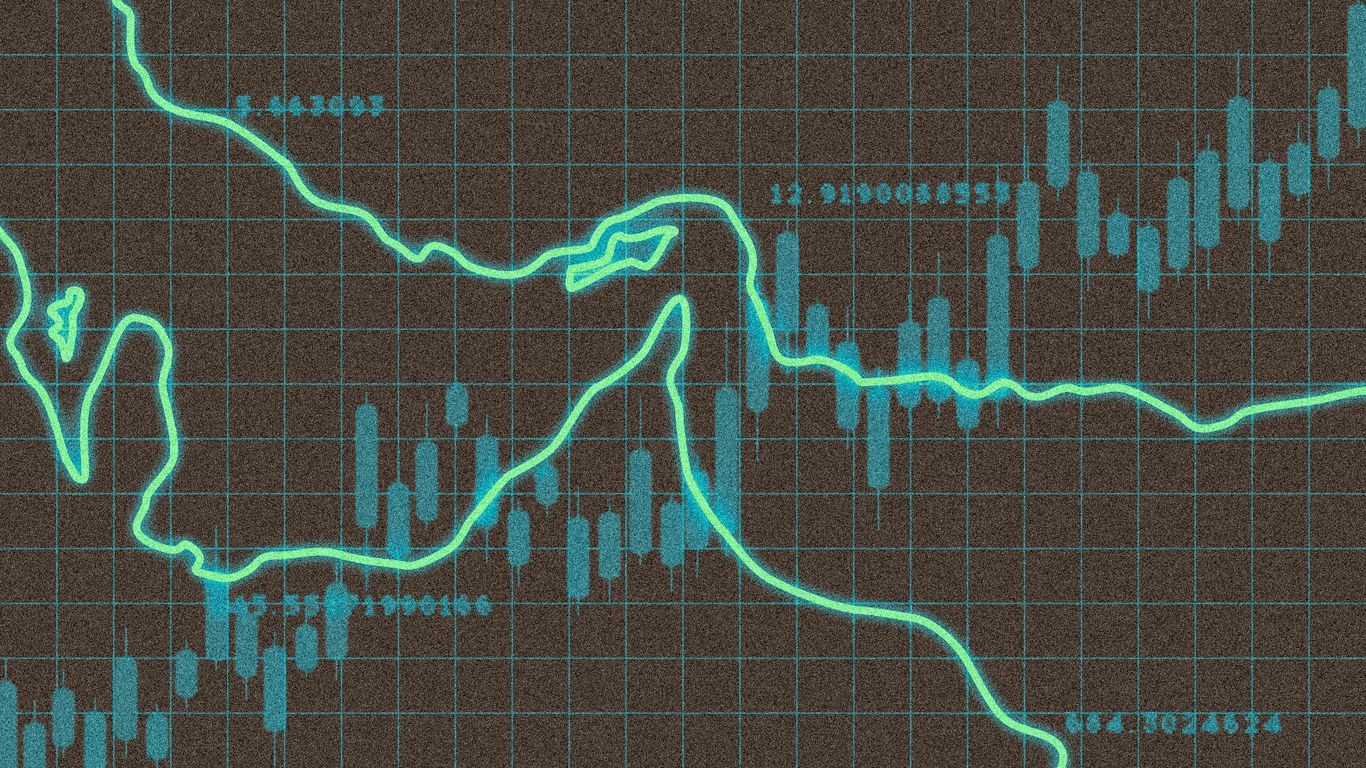
A closed Strait of Hormuz was once unthinkable
Axios

A closed Strait of Hormuz was once unthinkable

A fully closed Strait of Hormuz was long seen as unthinkable — and unmanageable if it happened — based on past modeling and interviews with energy experts.Why it matters: That conventional wisdom underscores just how unprecedented today's closure is — and how little playbook exists for what could come next.The intrigue: In at least two major exercises assessing potential oil disruptions — one in 2007 and another in 2022 — energy experts considered a full shutdown of the strait but ultimately didn't model it in their planning.In both cases, they judged it either too unlikely or too large in scale to meaningfully plan around."The idea was laughed out of the room," said Sam Ori, who worked on the 2007 exercise at the nonprofit Securing America's Energy Future. "The view was that it just wasn't credible and would be seen as alarmist." How it works: The blind spot reflects a real-world version of the "dismal theorem," coined by late Harvard economist Martin Weitzman.Originally developed in the context of catastrophic climate risk, the idea is that extreme, low-probability scenarios can overwhelm conventional analysis — and fall outside normal policy planning.The big picture: The Strait of Hormuz is the single most important chokepoint in the global energy system.It's a key economic artery for numerous products, including roughly one-fifth of the world's oil and liquefied natural gas.What they're saying: "I never looked at a map as precisely as I have done in the last few weeks at the Strait of Hormuz," Patrick Pouyanné, TotalEnergies CEO, told Axios in a recent interview."It's part of the sea, anybody can navigate it."Since it's not a canal like the Suez or Panama, Pouyanné said, the potential for it to be closed "was probably underestimated."Flashback: In 2007, a group of experts considered modeling a full closure — then rejected it."The discussion was, 'come on guys, it has to be credible. That could never happen,' " Ori said on stage at a recent conference hosted by SAFE.Modeling it meant confronting an "economic apocalyptic scenario," said Ori, who is now executive director at the University of Chicago's Institute for Climate and Sustainable Growth.State of play: That 2007 scenario took a year — and a less extreme disruption — to push oil to $165 a barrel."We're two months into this right now," Ori said last week of today's crisis, noting that oil prices were hovering around $100 a barrel and the stock market was not fazed."If this goes on for another three months, people's view of that is going to change."Catch up fast: Oil prices have surged again since Ori's comments, recently hitting $126 a barrel.Flashback (again): A 2022 task force led by representatives of countries that are part of the International Energy Agency also sidestepped a full Hormuz closure.The task force, convened to assess the best allocation of strategic oil reserves in the event of a crisis, didn't consider it for two reasons, said Landon Derentz, a member of the task force at the time while at the Energy Department.One, it had never happened before.And two, it was seen as requiring a global response beyond what the IEA could realistically coordinate, said Derentz, now at the Atlantic Council."Even if you convinced yourself maybe we should exercise it, the consequence of shutting the strait down was so significant that you couldn't really respond to it as an institution alone," Derentz said."It would require, at that point, a global response and scale of diplomacy that extended significantly past what is within the bandwidth of the IEA."The other side: An IEA spokesperson and a former top IEA official both said the agency has long considered the risks associated with a closed Strait of Hormuz in its emergency planning, including in 2019. Derentz said the 2022 task force was a separate exercise and focused specifically on the ability of countries' abilities to respond to an oil crisis with their existing reserves.Between the lines: Militaries have also extensively modeled the conflict risk around the strait — but usually separately from energy planners and economists, Derentz said.Reality check: The U.S. is better insulated than in the past.The U.S. economy is far less dependent on oil than it used to be, thanks to a few factors, including laws that have made cars more efficient.The U.S. is now the world's largest producer of oil and natural gas, the latter which provides a clear buffer from extreme price surges and shortages other parts of the world are experiencing.Yes, but: The world these models were built for has changed.The 2007 scenario "was before drones," said Daniel Yergin, a leading energy expert who participated in that exercise. "A cheap drone can now do enormous damage to a very large oil tanker."And geopolitical unpredictability — including more volatile U.S.

Read →
Trump Says US Navy Will Escort Ships out of Strait of Hormuz
NBC News Politics

Trump Says US Navy Will Escort Ships out of Strait of Hormuz

President Donald Trump has announced that the United States military will help guide stranded ships out of the Strait of Hormuz. Iran is responding with new threats, warning that if any foreign armed force approaches or enters the critical passage, it “will be subjected to attack.” NBC’s Gabe Gutierrez reports for TODAY.

Read →
Supreme Court issues temporary pause on order blocking mail access to abortion pill
NBC News Politics

Supreme Court issues temporary pause on order blocking mail access to abortion pill

The Supreme Court has issued a temporary pause on a lower court ruling that restricted telehealth and mail access to the abortion pill mifepristone.

Read →

Right-Leaning Media's Perspective

  • Kinetic Engagement in the Persian Gulf: Dominant reporting centers on the U.S. Navy sinking seven Iranian "mosquito fleet" boats that were allegedly harassing commercial cargo ships. The narrative emphasizes the immediate tactical success of the military and the President's forceful rhetoric promising to "blow the regime off the face of the earth" if provocations continue.
  • Domestic Security and the White House Summit: Significant attention was paid to a Secret Service shooting of an armed "suspicious individual" near the White House. This occurred while President Trump was hosting a Small Business Summit, with reporting focusing on the "hardcore" 24/7 patrolling and the immediate neutralization of the threat.
  • Judicial Pacing and Process: While reporting on the mifepristone stay, some outlets shifted focus toward the Supreme Court’s internal timing and administrative efficiency. There is a secondary narrative regarding the "clock" of the court and how it handles high-stakes, fast-moving litigation.
The Supreme Court Needs a Clock
RealClearPolitics - Homepage

The Supreme Court Needs a Clock

Read →
BREAKING: US Sinks Seven Iranian Small Boats Harassing Cargo Ships in the Strait of Hormuz – Trump Threatens To ‘Blow Mullahs Regime off the Face of the Earth’
The Gateway Pundit

BREAKING: US Sinks Seven Iranian Small Boats Harassing Cargo Ships in the Strait of Hormuz – Trump Threatens To ‘Blow Mullahs Regime off the Face of the Earth’

Tehran’s ‘mosquito fleet’ is under fire. The post BREAKING: US Sinks Seven Iranian Small Boats Harassing Cargo Ships in the Strait of Hormuz – Trump Threatens To ‘Blow Mullahs Regime off the Face of the Earth’ appeared first on The Gateway Pundit.

Read →
Supreme Court temporarily blocks appeals court ruling on abortion pill, restores wider access to drug
Latest Political News on Fox News

Supreme Court temporarily blocks appeals court ruling on abortion pill, restores wider access to drug

The Supreme Court temporarily restored access to the abortion pill mifepristone through telehealth, mail and pharmacies, blocking an appeals court ruling.

Read →
Previous Briefing← May 4, 2026