Center · BBC News
How much can Canada fight back in its trade war with the US?
The US may be the bigger trading partner, but Canada shouldn't be counted out quite yet in the escalating trade fight.
Read at BBC NewsHeadline from Democracy Now!
Slide to compare coverage
Center · BBC News
Bias ratings describe an outlet's overall coverage—not whether this particular article is accurate.
How much can Canada fight back in its trade war with the US?
The US may be the bigger trading partner, but Canada shouldn't be counted out quite yet in the escalating trade fight.
Read at BBC NewsChoose a story to feature it above.
left: 1 · center: 1 · right: 2. Counts describe displayed outlets, not independent investigations or the accuracy of their reporting.
Democracy Now! ·
BBC News ·
Blaze Media ·
Source context: A new documentary titled Top of the World tells the story of Windows on the World, the legendary restaurant atop the World Trade Center, through the eyes of its former employees. Windows on the World served guests for 25 years, until the morning of September 11, 2001, when it was…
The wording comparison is calculated from the featured headlines. It is a reading aid; it does not infer an outlet's motives or verify claims. Follow the original sources for evidence and context. See our source directory.
Coverage window: 9/4/2026, 12:43:07 PM UTC to 9/5/2026, 2:13:21 AM UTC. Last successful site ingestion: 9/8/2026, 4:07:15 AM UTC. A missing source may reflect feed or matching limitations.
Report a mismatch or correction4 outlets in our monitored sample covered this story, with reporting from the left, center, and right.
Across these headlines, common terms include trade, canada, world, blew, deal.
Open a headline at its original source, or choose “Show as featured story” to compare it above.
Far Left · Democracy Now!
Center · BBC News
Far Right · BizPac Review
1 publisher
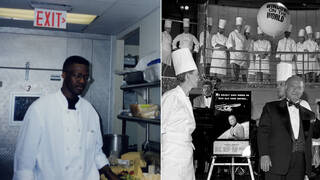
A new documentary titled Top of the World tells the story of Windows on the World, the legendary restaurant atop the World Trade Center, through the eyes of its former employees. Windows on the World served guests for 25 years, until the morning of September 11, 2001, when it was destroyed in the attacks on the World Trade Center. Seventy-nine workers and 91 diners were killed. We’re joined by Top of the World's co-directors, Julie Cohen and Betsy West, and by Sekou Siby, a former line cook at Windows on the World. Siby, who immigrated to the United States from the Ivory Coast in 1996, was originally scheduled to work on the morning of September 11, but a co-worker asked him to switch shifts. “He didn't make it,” says Siby, who later became an organizer and longtime leader at the Restaurant Opportunities Center (ROC), an advocacy group founded by Windows on the World workers to support each other in the aftermath of the attack. “The extraordinary immigrant workforce of Windows [of the World] and what they collectively created is just a reminder of the contributions of immigrant New Yorkers to the restaurant world and to the culture of the city,” says Cohen. “We want people to remember not just the tragedy, but the real beauty and the specific stories of what was lost on that day.” Top of the World premieres on CNN Monday, September 7, 2026.
1 publisher
The US may be the bigger trading partner, but Canada shouldn't be counted out quite yet in the escalating trade fight.
2 publishers
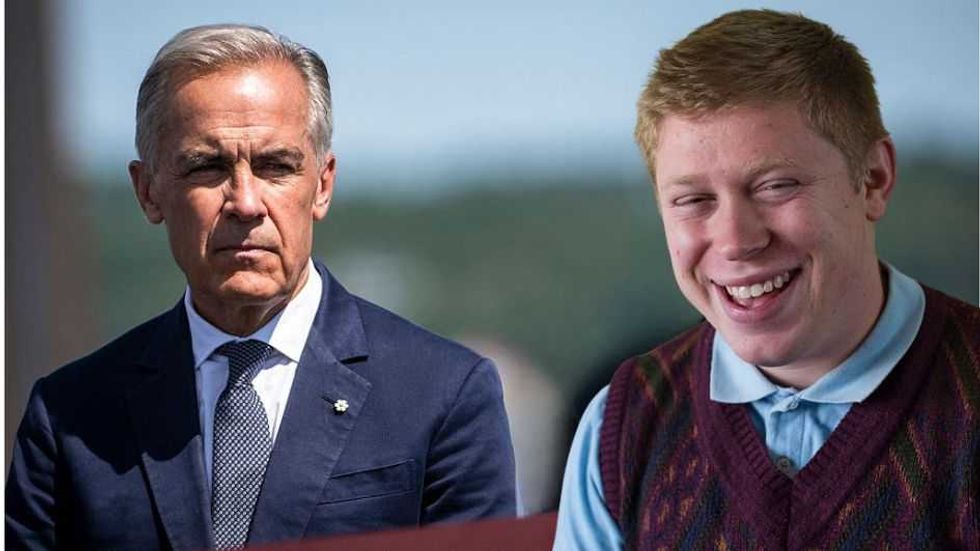
After Canadian Prime Minister Mark Carney declared that Canada was “at war” with the United States and walked away from a proposed trade deal last month, Canada quickly became an object of ridicule in Washington.But after blowing up the trade deal, Carney has been less eager to explain exactly what happened. He has ignored Official Opposition Leader Pierre Poilievre’s demand to reconvene Parliament or provide the Conservative leader with details of the failed trade negotiations.'How are we going to be at war with Canada? What, are they going to take their two submarines from the Edmonton Mall and sic them on us?'Carney has offered a broad explanation for walking away, arguing that Washington was demanding concessions that threatened Canadian sovereignty and could eventually wipe out important Canadian industries, particularly auto manufacturing.American officials tell a very different story.'Best deal available'U.S. Trade Representative Jamieson Greer flatly denied Carney’s allegations that President Donald Trump wanted somehow to interfere with Quebec culture or erode official bilingualism in Canada.“We had agreed to, as I've shared before in the press, really the best deal available to any country on the planet with respect to Canada,” Greer told CBC News in the aftermath of Carney's withdrawal.What Carney did emerge to address Tuesday was something else: the memes.“When the Americans stop doing memes, stop throwing shade, stop trying to be tough, and start being serious about having those discussions, we can have those discussions,” he told reporters Tuesday.As with all attempts to demand that people on the internet stop making fun of you, Carney’s statement had the opposite effect. Even American officials couldn’t resist a little trolling.Treasury Secretary Scott Bessent mocked Carney’s claim that the countries were “at war.”“I think this is very unfortunate that Prime Minister Carney has turned this into a political shouting match,” Bessent said. “I mean, we're not at war with Canada. How are we going to be at war with Canada? What, are they going to take their two submarines from the Edmonton Mall and sic them on us?”Looking out for number one?Then Bessent got more serious.“He came to power on an anti-American, anti-Trump agenda. He was 20 points behind in the polls, and then he started this. "It's unfortunate that he's not doing what's best for the Canadian people. He's doing what is best for the Liberal Party, what's best for Mark Carney, and in the long run, the Canadian people are going to see through that.”Bessent reiterated the administration’s contention that Canada had been offered “the best trade deal of any country on the globe” before Carney walked away from it at "the last minute.”Carney may not have been the only Canadian politician responsible for blowing up the agreement.Ontario Premier Doug Ford reportedly pushed for better treatment of Ontario's auto industry and resisted returning American alcohol to the shelves of Ontario's government-owned liquor stores.Since the deal collapsed, Ford has even suggested that Alberta could cut off oil shipments to the United States — an idea he has floated before.There was an awkward problem with Ford’s threat: Ontario itself depends on Alberta oil that travels through the United States. Enbridge’s Line 5 crosses Michigan before returning to Canada and supplying Ontario refineries.Alberta Premier Danielle Smith quickly rejected Ford’s idea, warning that cutting off Alberta energy exports to the United States would be “extremely harmful to Canadians.”RELATED: MILK MONEY: How Mark Carney chose the dairy cartel — and China — over a Trump trade deal Bloomberg/Kirsty O'Conner/Nuria Gonzalez-Sanchez/Getty ImagesKey role for American DemocratThere are also legitimate questions about other sticking points in the failed negotiations. Carney remains committed to Canada's heavily protected dairy sector, opposed to reviving the Keystone XL pipeline, and increasingly interested in expanding trade with China. The Trump administration has also accused Canada of serving as a route for Chinese steel transshipped into the United States to evade American trade restrictions.And the questions about Carney’s handling of the United States don’t end with the trade deal.Take Maia Johnson, the American and registered Democrat with ties to the Hillary Clinton, Joe Biden, and Kamala Harris campaigns, whom Carney promoted to the newly created position of chief operating officer in the prime minister’s office.
A top Trump administration official revealed that the admin offered Canada the “best deal” ever right before America’s northern neighbor rejected it. Appearing on Fox News’ “Special […]