The New RepublicLeft
Four Republicans Join All Democrats to Order Trump to End Iran War
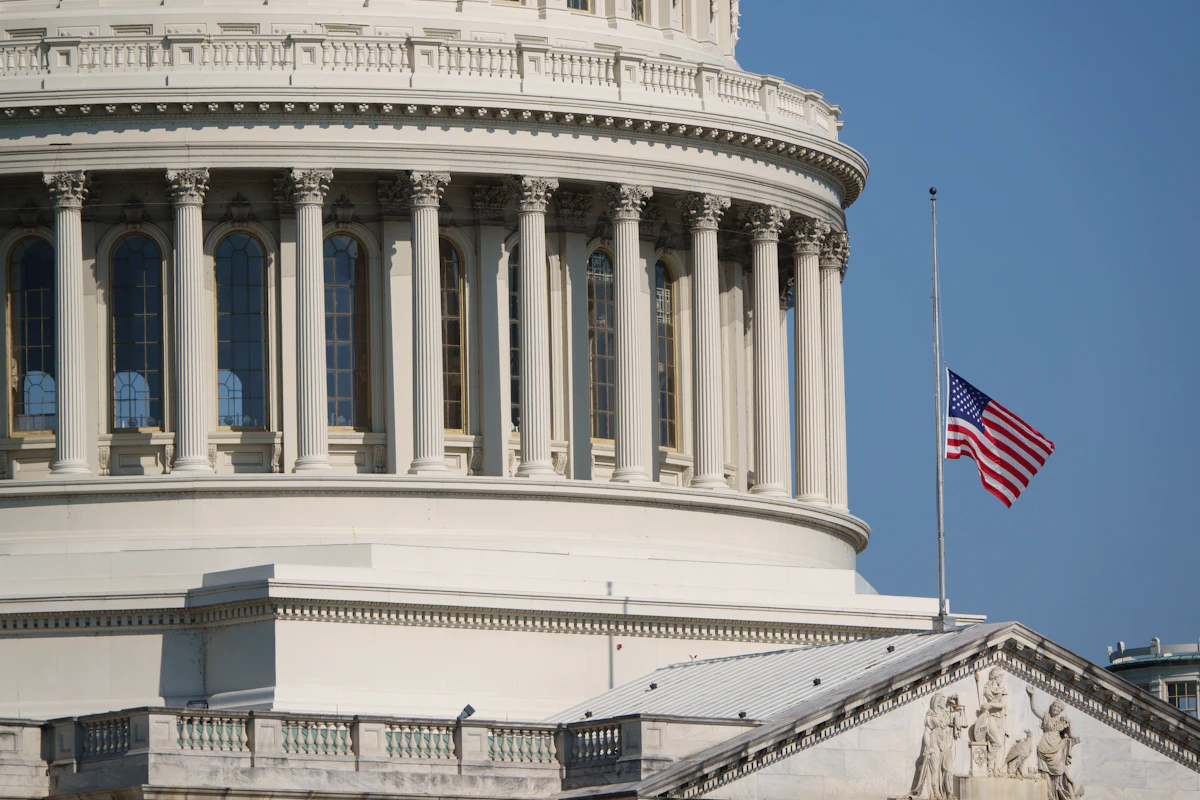
Four Republicans joined every Democrat in the House of Representatives Thursday to pass a war powers resolution to rein in President Trump on the Iran war. The resolution passed 214-208, with Republican Representatives Thomas Massie of Kentucky, Brian Fitzpatrick of Pennsylvania, Warren Davidson of Ohio, and Tom Barrett of Michigan voting yes. It joins a concurrent resolution in the Senate proposed by Democratic Senator Chris Van Hollen on Thursday which would block Trump from military action in Iran without congressional approval. Van Hollen’s resolution only needs a simple majority to pass in the Senate, which could be likely with Republican absences, such as Mitch McConnell, who has been hospitalized for over a month. The resolutions have heightened importance due to the reignition of hostilities with Iran in recent weeks, with the U.S. resuming airstrikes against the country while Iran launches missiles at oil refineries and U.S. military targets around the Middle East. On Thursday, Trump threatened to expand the war to Yemen after the country’s Houthi militia began carrying out attacks in the Red Sea. This is the second time the House has passed a war powers resolution, following a June 3 vote where the same four Republican representatives joined Democrats to curtail the Iran war. The Senate joined them three weeks later, but then reversed its vote following pressure from Donald Trump. Will the Senate join the House in trying to rein in Trump, or will they allow more civilian deaths and economic damage from the renewed war? This story has been updated.
Read at The New Republic →NBC News PoliticsCenter Left
House votes to end Iran war, but Senate Republicans vote to let Trump continue waging it
The House approved a nonbinding proposal to end the Iran war, directing President Donald Trump to remove armed forces from hostilities.
Read at NBC News Politics →Alternet.orgLeft
Republicans fume as Trump tries to make voting more difficult for their supporters
President Donald Trump's obsession with ending mail-in voting, even for those who are sick or serving in the military, has several Republicans at odds with him, according to The Hill, and the brewing conflict could further sink the SAVE America Act.Trump has pushed hard for Republicans in Congress to pass the bill, which would require proof of citizenship for individuals registering to vote and a photo ID at polling places, based on his long-debunked claims that undocumented immigrants are committing widespread voter fraud. While it was able to pass in the House, the SAVE Act has stalled out in the Senate due to the filibuster, and now, some of its other provisions are causing a stir among Republicans.At Trump's behest, the SAVE Act would also eliminate mail-in voting or absentee voting, even for those serving overseas, living out-of-state or dealing with an illness. The president has long claimed that voting by mail, which was more widely embraced by Democrats in 2020, is another source of fraud, despite providing no evidence to support the idea. According to a Tuesday report from The Hill, this provision has gone down poorly with several Republicans in states where these voting methods are widely popular.The provisions in the bill to tackle mail-in voting were reportedly added in a "last-minute push" from Trump, and have left a number of GOP lawmakers "p——ed off," to the point where the bill might not have enough votes even if the filibuster rules are changed."Republicans from rural states are concerned that eliminating mail-in balloting for people unless they have strong excuses like serious illness, disability, military duty or travel will hurt GOP-leaning voters in remote areas who then would be forced to travel long distances to vote," The Hill explained.Sens. Thom Tillis of North Carolina and Lisa Murkowski of Alaska, to notable critics of Trump, have already pledged to vote against the SAVE Act, while sources also indicated to The Hill that votes from Sens. Mitch McConnell of Kentucky and John Curtis of Utah are in doubt. "I’m a no because we don’t have a plan," Tillis said. "There’s no path for success. I was a no on the talking filibuster path, and this one is going to produce the same result."One anonymous Republican told the outlet that Trump's anti-mail-in voting push was "problematic."“I think it’s problematic because in some of these states, 60 or 70 percent of people vote by mail," the lawmaker said. "You don’t want to disenfranchise them. Some states have really encouraged it over the years."
Read at Alternet.org →