New UK law makes sex-selective abortion easier than ever
Source: Blaze Media · Bias: Right
Summary
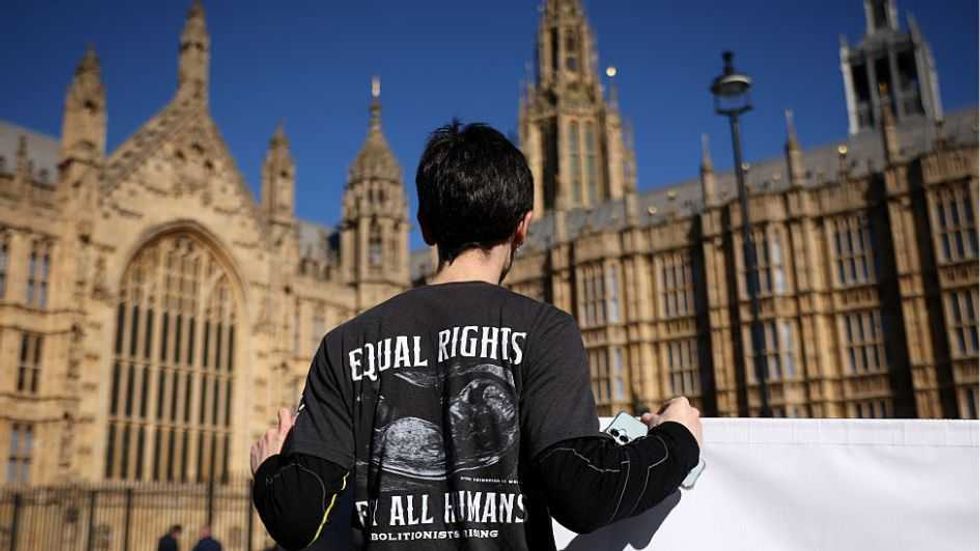
On March 18, abortion law in the United Kingdom underwent a profound — and, to some, deeply troubling — change. At the center of the controversy is Clause 208 of the Crime and Policing Bill.Introduced by Labour MP Tonia Antoniazzi, the clause passed in the House of Commons on June 17, 2025 and was supported by the House of Lords on March 18 of this year. India — the largest country of origin for migrants to the United Kingdom — accounts for roughly half of the world’s 'missing females' at birth.While presented as a compassionate update to Victorian-era laws, the clause effectively creates a legal disparity that anyone concerned with the sanctity of life may find objectionable.Exempting womenTo understand the scale of the change, American readers need context. The Abortion Act of 1967 did not legalize abortion outright. Instead, it established exemptions. Termination was permitted only if two doctors agreed that the pregnancy posed a risk to the physical or mental health of the mother or her existing children. Outside those conditions, abortion remained a criminal offense under the Offences Against the Person Act of 1861. Today, the general legal limit for abortion in the U.K. is 24 weeks.Clause 208 fundamentally alters that framework. It removes women entirely from the scope of the 1861 Act. In practical terms, a woman can no longer be prosecuted for ending her own pregnancy at any stage — including up to birth. Medical professionals, however, remain bound by the 1967 Act. A doctor who performs an abortion past the 24-week limit without specific medical justification still faces potential prosecution, including life imprisonment.The result is an asymmetry: The individual is exempt from criminal liability, while the practitioner is not. By removing legal risk from the woman — particularly in an era of pills by post and self-managed abortion — the law effectively permits abortion on request, even if formal restrictions on providers remain.Unprecedented levelsThis comes at a time when abortion rates have reached unprecedented levels. In January, the government released the 2023 abortion figures for England and Wales. The numbers showed there were 277,970 abortions — the highest recorded since the 1967 Act was introduced. If current trends continue, the U.K. is projected to surpass 300,000 annual terminations when the next figures are released.Nearly one-third of pregnancies in England and Wales now end in abortion. In 2023, approximately 32% of all conceptions resulted in termination. Much of this increase is attributed to the “pills by post” scheme introduced during COVID-19 and made permanent in 2022. By allowing women to access abortifacients without an in-person consultation, the policy has lowered practical barriers to abortion and accelerated its normalization.Critics of Clause 208 also point to the absence of a clear public mandate. Despite the scope of the change — effectively eliminating the prospect of prosecution for late-term self-abortion — there was no referendum or broad public consultation. Polling from Savanta ComRes suggests that while most Britons support access to abortion, only a small minority — around 1% — support access up to birth. The same polling found that 70% of women believe the current 24-week limit should be reduced. On this reading, the law moves in the opposite direction of public sentiment.RELATED: No more stiff upper lip: My fellow Brits are fed up with 'diversity' SOPA Images/Getty ImagesSex-selective abortionConcerns extend beyond process to potential consequences. Baroness Rosa Monckton, a life peer in the U.K.’s House of Lords, warned that the removal of legal liability could encourage sex-selective abortion. The NHS typically discloses fetal sex at the 20-week scan. Without legal deterrence, critics argue, there is little to prevent termination based on sex.Globally, sex-selective abortion has been documented for decades, particularly in countries such as India, Pakistan, and Bangladesh, where cultural and economic pressures — especially the dowry system — have historically incentivized a preference for sons. India — the largest country of origin for migrants to the United Kingdom — accounts for roughly half of the world’s “missing females” at birth.Inevitably, some long-standing cultural traditions have persisted within these communities.Some institutions dispute that risk. The British Pregnancy Advisory Service has described sex-selective abortion as a myth, and the Royal College of Obstetricians and Gynaecologists has stated that statistical evidence remains inconclusive.Imported misogyny Yet recent data challenges these claims.
Related Coverage
- Dolly Parton thanks Taylor and Travis for $2M donation, makes baby joke (Center — NewsNation)
- Taylor Swift and Travis Kelce married at New York City’s Madison Square Garden (Center Left — US news | The Guardian)
- Trump announces new pardons after privately weighing "Diddy" clemency, sources said (Center — Politics - CBSNews.com)
- Business Leader Calls on New York City to Resist Mamdani (Far Right — The Gateway Pundit)
- Critics mangle MAGA’s crusade to make the nation 'sad and pathetic' like itself (Left — Alternet.org)
- Rare ‘Exeter’ copy of Declaration of Independence discovered in UK (Center — The Hill News)
- Rare copy of US Declaration of Independence found by volunteer in UK archives (Center — BBC News)
- Wes Moore: Trump on July 4 has ‘tried to make this moment about him’ (Center — The Hill News)
Daily Analysis
Read the full Parallax Pulse for April 15, 2026 — an AI-powered analysis of how Left and Right media covered the biggest stories this day.
More Headlines From April 15, 2026
- Firefighter accused of killing wife with ax at North Hollywood home appears in court (Right)
- Scoop: Vance heading to Iowa for campaign events (Center Left)
- Vance Calls for Conservatives to 'Get More Involved' in Pushing to Pass SAVE Act (Far Right)
- Karoline Leavitt Unveils Plans for the 'Triumphal Arch' As Part of the Commemoration of America 250 (Right)
- Tulsi Issues Criminal Referral For Eric Ciaramella, the ‘Whistleblower’ Who Sparked Trump Ukraine Impeachment, and Former Intel Community IG (Far Right)