Why American Farmers Are Feeling the Pain of the Iran War
Source: The New Republic · Bias: Left
Summary
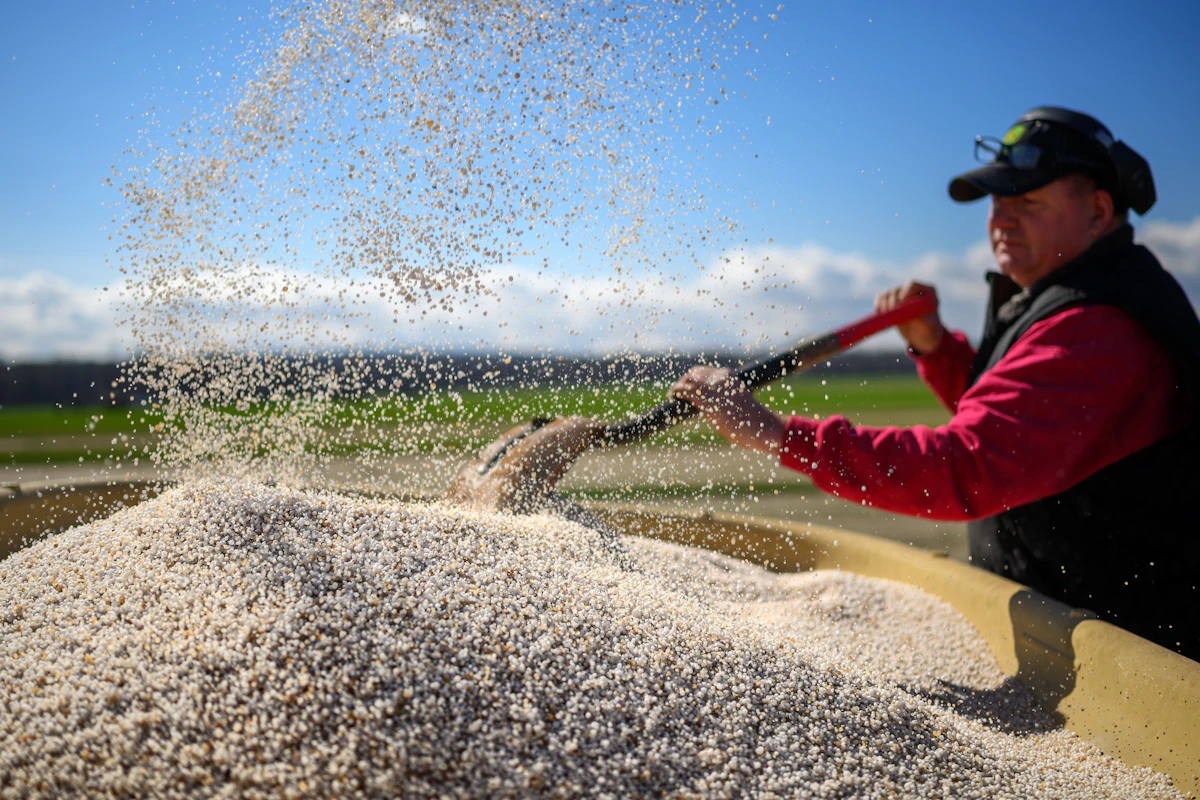
President Trump’s war on Iran has introduced Americans who haven’t previously followed farm policy to a rather niche topic: fertilizer. It’s estimated that half of global food production relies on synthetic nitrogen fertilizer. Gulf countries are major producers both of the finished product and of the natural gas that’s used to make it. And up to a third of the global fertilizer trade passes through the Strait of Hormuz, which has been effectively closed since the war began in late February. Ergo, the looming fertilizer crisis that you’ve surely heard about by now. The growing season has started in the Northern hemisphere, and the price of synthetic nitrogen fertilizer is higher than it’s been in years. Seventy percent of respondents in a recent American Farm Bureau Federation survey said they can’t afford “all the fertilizer they need.” Another report suggests rising fertilizer prices are already adding an extra $35 per acre to the cost of corn production. A bevy of recent articles have speculated about how bad this could get. Fertilizer production across the globe will be affected by the market volatility for natural gas. This will in turn raise food prices. Farmers who can’t afford to buy as much fertilizer as usual this year may produce far less crops, or go bankrupt. All of this will hit poorer nations first and hardest—with potentially devastating consequences. But the U.S. will be affected, too. And as the conflict drags on, it’s worth asking: Does agriculture have to be this vulnerable to supply chain disruptions halfway across the world? What would it take to wean the U.S. off of natural gas–sourced fertilizer?Some experts doubt whether it’s even possible, given the corporate interests aligned against change, the torpedoing of even the most basic, imperfect legislative coalitions needed to pass agricultural policy, and the country’s collective addiction to corn. But they also point to easily identifiable reforms—from the farms themselves to the halls of Congress—that could make American agriculture far less vulnerable, not just to wars but also climate disasters. And these ideas would also carry major environmental benefits to boot. To understand the scale of the problem, it helps to understand why fertilizers, and particularly nitrogen fertilizers, depend so heavily on natural gas to begin with. “The core of the green revolution that allowed us to double and triple yields from an acre of land is dependent on the chemical process discovered by [German chemist] Fritz Haber back in the early part of the twentieth century,” said Lewis Ziska, who spent 24 years as a scientist with the USDA’s Agricultural Research Service before his current position as an associate professor at Columbia University’s Mailman School of Public Health.Richard Farrell, a soil science professor at the University of Saskatchewan, explained that “you’re taking atmospheric nitrogen which has what would be called a triple bond—it’s a very stable compound—and you have to break that apart to produce ammonium nitrate or urea fertilizers.” Breaking that bond takes a lot of energy, which gets provided by natural gas—which also provides the hydrogen input needed for the chemical process. While some researchers, he noted, are trying to synthesize ammonia via a different process—something that could more plausibly be powered by solar or wind power or done on a smaller scale, even on individual farms—“you wouldn’t call it a mature science, yet.”Not all crops require huge infusions of nitrogen. But many do. And the United States specializes in the most notoriously nitrogen-hungry crop in the world: corn. It’s the top crop in the country both by both acreage and federal subsidies, and serves as the top source of animal feed. For optimum corn yields, the rule of thumb is that you need to apply 200 to 250 pounds of nitrogen fertilizer per acre.There are ways to reduce fertilizer usage, though—starting with farmers simply using less of it. “The department of agriculture in each state [has] a recommended usage of fertilizer—in this state, in our climate, in this soil, growing this crop, you should use this amount per acre,” said Lilliston. “And typically farmers go considerably over that” just to be safe, even though that exacerbates runoff and water quality problems.Fertilizer application could also be timed more precisely. In Canada, Farrell said, the fertilizer industry, and to some extent the Canadian government, has advocated for what’s dubbed the “Four R nutrient strategy”—applying fertilizer from the Right Source (types of fertilizer tailored to the particular crop), at the Right Rate (exactly how much the crop needs), at the Right Time (looking at the plant’s life cycle), and Right Place (so, not just spread evenly over the field).
Related Coverage
- Great American State Fair flyovers showcase military might (Center — NewsNation)
- How private equity destroyed an American pastime (Left — Salon.com)
- What Is Iran Building Now in the Zagros Mountains? (Right — RedState)
- Iran's control of the Strait of Hormuz remains a powerful bargaining chip (Center — NPR Topics: News)
- ‘A total disappointment’: revelers face unbearable heat at Great American State Fair (Center Left — US news | The Guardian)
- Extreme heat temporarily closes Great American State Fair (Center — NewsNation)
- Americans Cheer as B-2 Stealth Bomber, Fighter Aircraft Fly Over Great American State Fair in DC Amid 250 Celebrations (VIDEO) (Far Right — The Gateway Pundit)
- Mt. Olive Pickle Co. exits Great American State Fair over Confederate flag (Center — The Hill News)
Daily Analysis
Read the full Parallax Pulse for April 24, 2026 — an AI-powered analysis of how Left and Right media covered the biggest stories this day.
More Headlines From April 24, 2026
- DOJ Drops Fed Probe, Clearing Way for Warsh | Balance of Power: Early Edition 4/24/2026 (Center)
- Bolton lambasts US-Iran peace talks: ‘Nowhere close to a deal’ (Center)
- Indirect peace talks to take place between Iran and US in Pakistan (Center)
- After 2 failed votes, Mike Johnson unveils new plan to extend key U.S. spy powers (Center)
- Justice Department Calls for Expansion of Federal Death Penalty (Center)