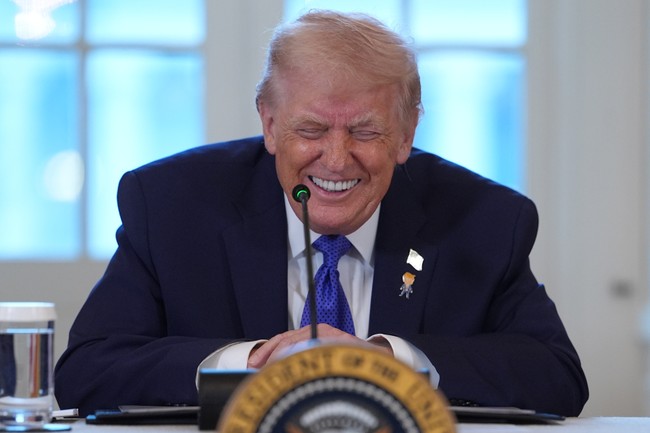
Trump Is Quietly Showing His True Feelings About Gig Workers
Source: The New Republic · Bias: Left
Summary
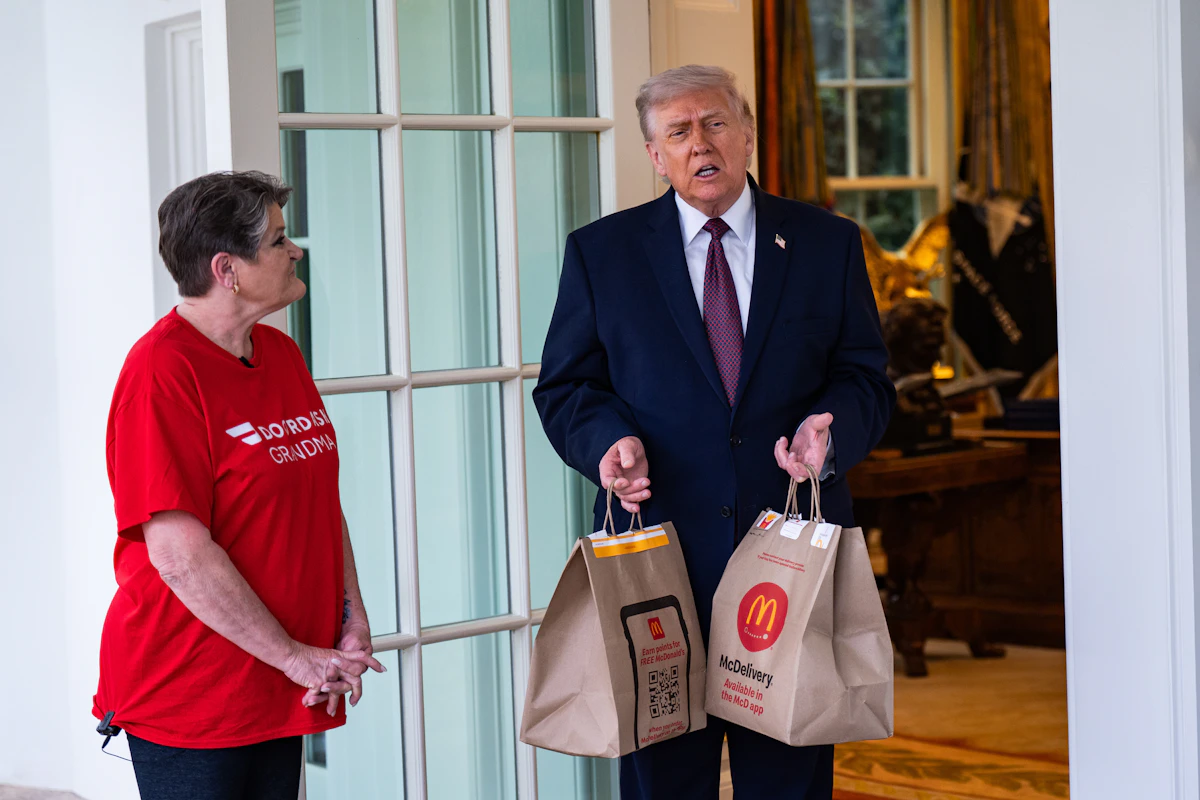
On Monday, in the vain hope that Americans might forget about his economically disastrous war against Iran, President Trump attempted a symbiotic stunt with DoorDash in which he summoned Sharon Simmons, a 58-year-old who lives in Arkansas and works for the company, to deliver him lunch from his favorite restaurant: McDonald’s. The goal, with tax day looming, was to remind Americans about the “no taxes on tips” provision in the GOP’s One Big Beautiful Bill that passed last year. Alas, it turned out that this humble “DoorDash grandma” had previously lobbied in D.C. for that provision, and the savings she attributed to the new law most likely were not due to that law at all.But the event did illustrate a bleak economic reality: Simmons said she needed the money to help pay her husband’s medical bills from cancer treatment, and to do so she is turning, like an increasing number of workers, to the gig economy.The gig economy—which also includes rideshare services like Uber and handyman apps like Taskrabbit—is relatively new, but some of the issues its workers face are longstanding. One of the biggest is how to determine who counts as an employee versus an independent contractor. The distinction can make a huge difference to both businesses and workers, because the latter are covered by rules on overtime pay, workplace harassment, family and medical leave, and more.The Biden administration expanded the definition of an employee in order to try to cover more workers employed in the gig economy. Now, though, the Trump administration is attempting to roll back the definition in a way that, as a new report from the Economic Policy Institute Report shows, could cost the most vulnerable workers thousands of dollars and leave them less safe in the workplace.The question of who is an independent contractor versus an employee might sound easy to answer, but it’s actually a complicated legal test laid out by the Department of Labor. On one end, a truly independent, self-employed person has total freedom over their schedules, their work, who they work with, how much they are paid, and when they get days off. On the other is a traditional employer arrangement with guaranteed paychecks and a company who contributes to unemployment insurance and social insurance programs. In-between is a gray area of temps, contract workers, on-call workers, and independent contractors—all of which are distinct categories in the eyes of the government. In July 2023, according to the most recent data from the Bureau of Labor Statistics, there were 11.9 million independent contractors to whom the Trump rule change would apply, accounting for 7.4 percent of total employment—a share that has steadily risen in recent decades, as union membership has declined and Washington has further deregulated work and the economy.App-based jobs are just one manifestation of a longer trend of more workers being classified as independent contractors. The classification has traditionally relied on a three-pronged test that involves how much control the worker has over their work, whether it’s outside the usual course of the business for the employer (like a law firm employing janitors for its office building), or the individual works in a business where independent contractor arrangements are traditional and common (like freelance writers). The rise of apps like Uber and DoorDash led to drives to classify those workers as employees rather than independent contractors, igniting huge legal battles in California. Companies that rely on the gig economy have lobbied for the status quo, arguing that app-based jobs are typical of independent contractor arrangements.But economists and labor advocates have long said that employers are misclassifying workers as independent contractors because workers are often performing the same core functions that employees would and the companies are failing one or many components of the test. Several examples, like a class-action lawsuit brought by FedEx drivers in California and the decision by a home health startup not to rely on independent contractors, show that those assessments are often correct. “What we see is employers are still exerting so much control over how work is done for independent contractors, but they’re not being held liable as employers,” said Dr. Kate Bahn, the chief economist and senior vice president of research at the Institute for Women’s Policy Research.In a report released Wednesday, the Economy Policy Institute looked at the fields where workers are most likely to be misclassified. The list was filled with old-fashioned jobs like construction workers, truck drivers, home health and personal care aides, and manicurists and pedicurists.
Related Coverage
- Melania gives Congress private deadline as she works around Trump's team: report (Far Left — Raw Story)
- Trump announces pardons for pollution violators prosecuted for "fixing their car" (Center — Politics - CBSNews.com)
- Trump Pardons Six People Pursued for ‘Fixing Their Car’ (Center — Bloomberg Politics)
- Sources: Trump likely to pardon pollution violators; weighing clemency for Diddy (Center — Politics - CBSNews.com)
- Fox host warns Trump will pay for his 'breathtaking' corruption (Left — Alternet.org)
- Trump Scores Appeals Court Victory in Battle Over National Park Historical Displays (Right — RedState)
- Signs of Victory: I-95 Welcomes President Donald Trump Int'l Airport (Right — RedState)
- Trump’s ‘ramped up’ rhetoric leaves unifying tone of July Fourth speech in question (Center Left — NBC News Politics)
Daily Analysis
Read the full Parallax Pulse for April 17, 2026 — an AI-powered analysis of how Left and Right media covered the biggest stories this day.
More Headlines From April 17, 2026
- LOL: Chuck Schumer Still Thinks Iran Is Running Circles Around President Trump (Far Right)
- Acting ICE Director Todd Lyons is leaving the Department of Homeland Security (Center Left)
- International Energy Chief: Europe Has Just “Six Weeks” of Jet Fuel Left (Far Right)
- Trump warns US may 'drop bombs again' if no Iran deal by ceasefire deadline (Center)
- Opinion | A Victory in Iran Won’t Look Like One (Center)