Transcript: The Supreme Court Is Lying About Racism in America
Source: The New Republic · Bias: Left
Summary
This is a lightly edited transcript of the May 1 edition of Right Now With Perry Bacon. You can watch the video here or by following this show on YouTube or Substack.Perry Bacon: I’m Perry Bacon. I’m the host of The New Republic show Right Now. We have a great guest. Kimberlé Crenshaw is a professor of law at UCLA and Columbia, and she’s very well known for writing about intersectionality, but also as a great professor, activist, and expert for decades now. So Kim, welcome.Kimberlé Crenshaw: Always happy to be in conversation with you, Perry. Thanks for having me.Bacon: Yes—you were a great guest, I think in November. You have a memoir out, so I want to talk about that—which is, I would say, great news, hearing from you in this kind of—but I want to start with really important news from yesterday. You’re the right kind of person to ask about this. We now have another Supreme Court ruling further limiting the Voting Rights Act, and as we’re speaking right now, legislators and governors in Alabama, I think Louisiana, among other places, are literally talking about, How do we redraw our districts to further limit the number of Black representatives we send to Congress and to state legislatures, and to limit Black voices in our states further? So talk about your reaction to that ruling yesterday, first of all.Crenshaw: Perry, it was sadly expected. Anyone who has been following the Supreme Court’s jurisprudence over the last two decades knows that we are looking at a deliberate, devastating approach to the infrastructure of the civil rights movement. The Voting Rights Act has been particularly painful to watch as it’s being destroyed. It’s been called the crown jewel of the civil rights movement for good reason. It’s the only law that actually focuses on results. It focuses on representation, and anything that is done in states that had a history of denying African Americans the right to vote is potentially subject to intervention.Most other laws are not like that. To take an equivalency between voting and housing, for example—one could say practices and policies and procedures that predictably produce segregated housing, no matter what they are, whether it’s insurance, lending, redlining, restrictive covenants—all of these things are suspicious because they produce a particular end that we associate with discrimination, segregation, and white supremacy. That’s what the Voting Rights Act has done. That’s what it has been. That’s why it is one of the most successful laws in the United States in terms of achieving a particular objective. It has become so much of our fabric in this society that when we look at Black representatives, we don’t think about how much had to happen, and what the infrastructure of voting procedures and policies has to be for that to happen. Now, unfortunately, as you mentioned, these state legislatures are quickly going about—now that they have the green light—to have at it. We’re going to see how important these laws had been in creating a reality that we have since then taken for granted.Bacon: I’m not a lawyer or legal expert, but if you read these opinions, not only this one but the past ones ... the idea of critical race theory is in part to look at outcomes and results and not just intent. It seems like Roberts’s intention is very much to make it so that—unless you said the N-word and said, “I want to stop every Black person from voting because [I’m a racist]”—they’re trying to define civil rights law down to express an intent that very few people make in 2026.Crenshaw: Yes. They are targeting a kind of discrimination—a reflection of discrimination that goes all the way back to a time that was 50, 60 years ago. People don’t discriminate like that anymore. Even when they did discriminate like that, they didn’t often say, “No Black person can come to the polls.” What they would do is bury their discriminatory intent inside a process, inside a structure, inside a procedure. So when you had to pass a literacy test, or had to guess how many marbles are in a jar, or when you had to recite the Constitution—these were not said to be, “If you’re Black, you can’t vote,” but it gave the power, the authority, and the discretion to individual white people to effectively do what they wanted to do, which is not to let any Black people vote.Even their telling of discrimination is anachronistic to 1965, when the Voting Rights Act was passed. Now we’re talking a half-century later, and the only thing they think counts as discrimination is something that’s over a century old. This is why they’ve gone after critical race theory, because critical race theory makes that clear. It says discrimination, exclusion can happen in any number of ways that are presumably race-neutral. The Voting Rights Act understood that—that’s why it was so effective. The MAGA judges understand that, and that is exactly why they gutted it.Bacon: Talk about what the results will be.
Related Coverage
- Trump Scores Appeals Court Victory in Battle Over National Park Historical Displays (Right — RedState)
- America 250 Soars With Amazing Flyovers and Aerial Action Over the National Mall (Right — RedState)
- Lawfare: Kangaroo court picks fight with state’s conservative attorney general (Far Right — WorldNetDaily)
- UPDATE: Louisiana Supreme Court Temporarily Blocks Politically Motivated Indictment Against AG Liz Murrill (Far Right — The Gateway Pundit)
- America declared independence in 1776. Yorktown secured it in 1781 (Center Right — Washington Examiner)
- Final preparations for America's 250th anniversary underway (Center — NewsNation)
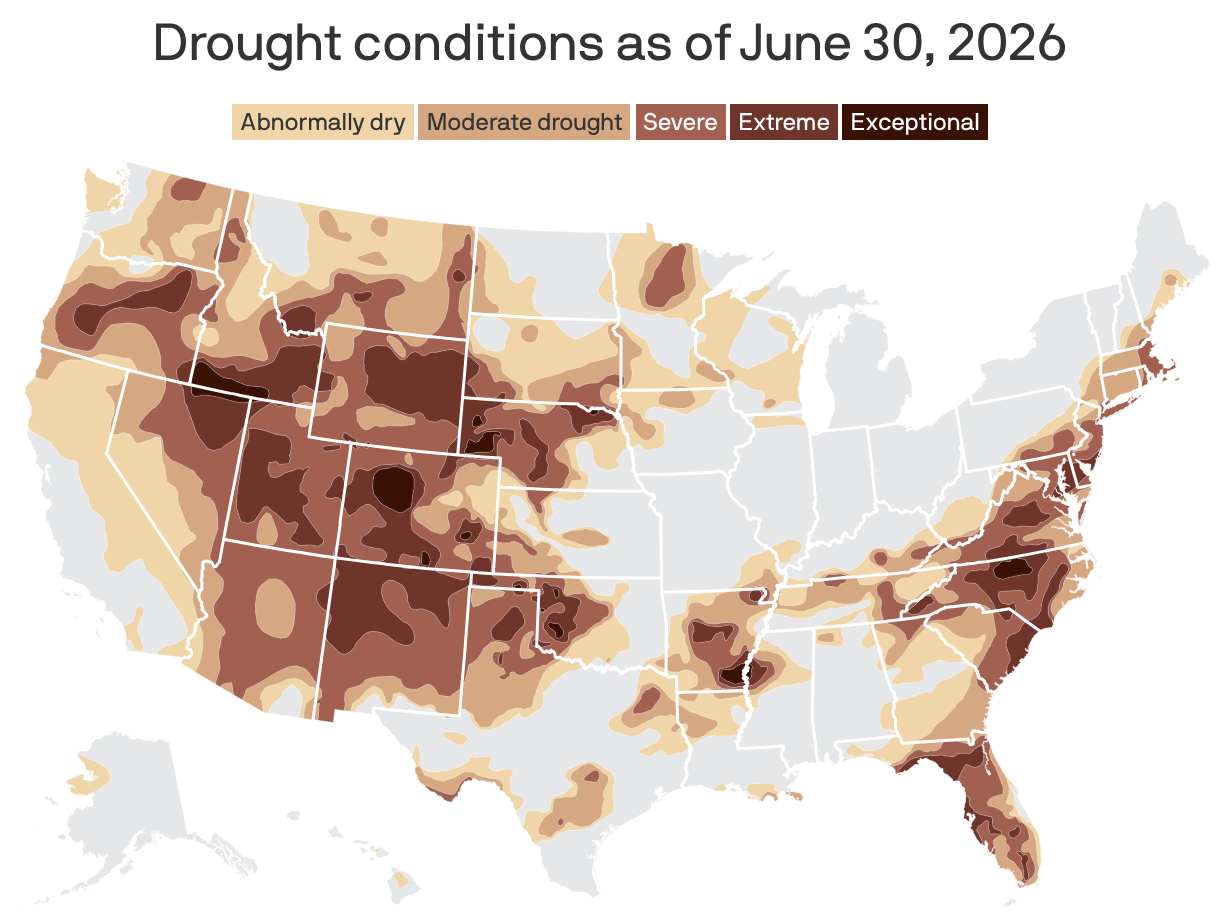
- America's 250th fireworks party collides with burn-bans (Center Left — Axios)
- Glenn Beck REACTS to foreigners LOVING their visit to America (Right — Blaze Media)
Daily Analysis
Read the full Parallax Pulse for May 5, 2026 — an AI-powered analysis of how Left and Right media covered the biggest stories this day.
More Headlines From May 5, 2026
- Live updates: Hegseth holds press briefing as US, Iran exchange fire over Strait of Hormuz (Center)
- Watch live: Hegseth, Caine brief on Iran as Strait of Hormuz tensions bubble over (Center)
- Democrats gain midterm edge, NPR poll shows. And, U.S. pauses 'Project Freedom' (Center)
- Kristi Noem Stooge Flops Out of Congressional Race (Left)
- Republicans Look to Build Their Redistricting War Advantage in Southern States (Center Left)