The Supreme Court Might Still Screw Up Birthright Citizenship
Source: The New Republic · Bias: Left
Summary
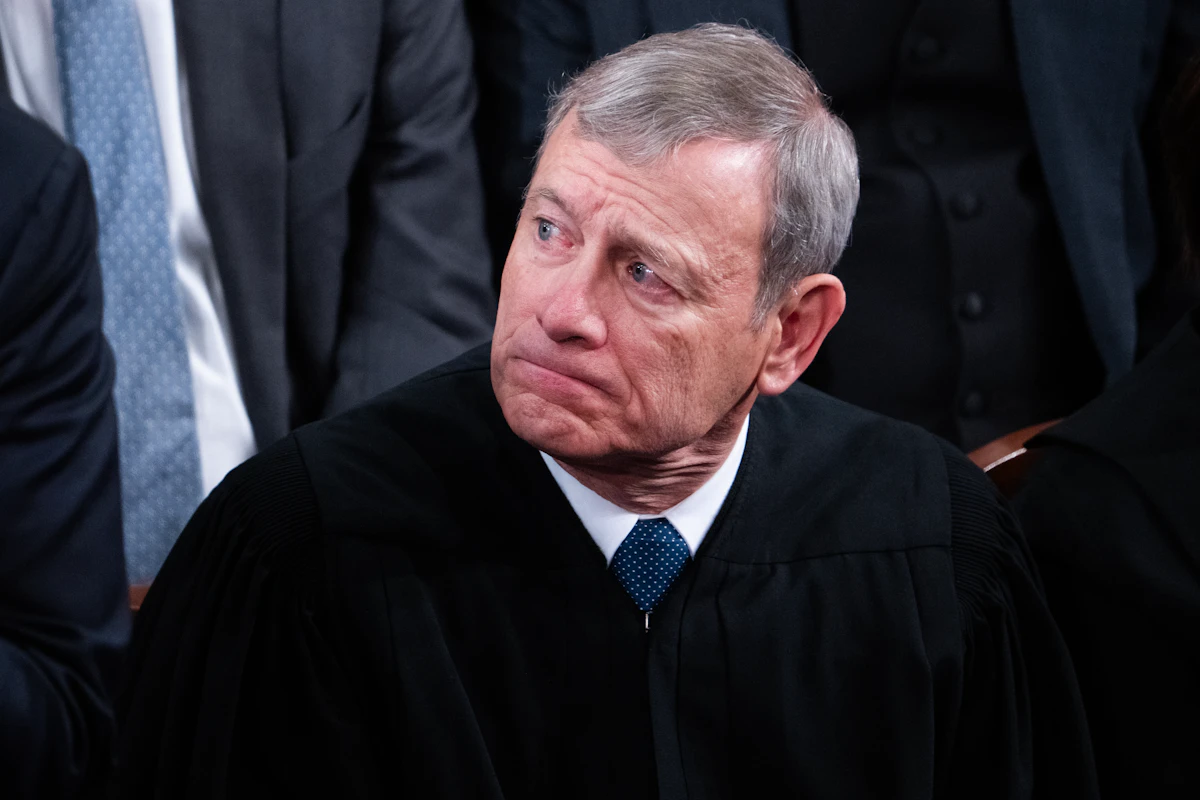
The Supreme Court appears likely to strike down President Donald Trump’s executive order limiting birthright citizenship. At Wednesday’s oral arguments, the justices showed little interest in letting the president arbitrarily deny citizenship to untold numbers of Americans.But how the justices rule against Trump could matter almost as much as whether they do it. One dangerous possibility is that the court’s conservative members will open the door to future challenges, or otherwise weaken the prevailing interpretation of the Fourteenth Amendment’s Citizenship Clause.Trump v. Barbara is, at its core, a very easy case. The Citizenship Clause states that “[a]ll persons born or naturalized in the United States, and subject to the jurisdiction thereof, are citizens of the United States.” For the last 137 years, the consensus between Congress, the courts, and the executive branch was that anyone born on U.S. soil is automatically a U.S. citizen. The Supreme Court reached the same conclusion in the 1898 case United States v. Wong Kim Ark.There were narrow exceptions, of course. Children of foreign diplomats did not qualify, because their parents had diplomatic immunity, and were therefore not “subject to the jurisdiction” of the United States. So too were members of Native American tribal nations that retained their own sovereignty, though Congress later extended citizenship to all Native Americans by statute in 1924.Only under the second Trump administration has anyone seriously questioned this consensus or disputed the most natural reading of the text. I will not bother to recite once more the scholarly back-and-forth over the matter. Suffice it to say that the justices seemed largely unpersuaded on Wednesday by the administration’s claims that American citizenship actually derives from one’s innate “allegiance” at birth to their “domicile.”Ideally, the court would issue a 9-0 opinion that reaffirmed the Citizenship Clause’s plain meaning and confirm that the Fourteenth Amendment places questions of American citizenship beyond the scope of ordinary political debate. Unanimity is one of the court’s best tools for legitimizing its own rulings among the American public, as evidenced by the court’s unified front on desegregation in the 1950s and 1960s.That prospect appears unlikely here. At least two justices appear set to dissent from a potential ruling in the plaintiffs’ favor. Justice Samuel Alito, who is arguably the most consistently conservative member of the court, signaled his sympathy with the Trump administration throughout Wednesday’s oral arguments. At one point, he lamented that the nation had a “unusual situation here because our immigration laws have been ineffectively and, in some instances, unenthusiastically enforced by federal officials.”Justice Clarence Thomas also indicated during oral arguments that he could embrace a narrower version of the Citizenship Clause—one that would limit its scope to the historical circumstances in which it was enacted. Before they embraced random nonsense on allegiance and domiciles, the Trump administration initially justified the executive order by claiming that the clause only meant to extend citizenship to formerly enslaved people in the American South during Reconstruction.Overturning Dred Scott v. Sandford and securing African-American citizenship was indeed one of the principal reasons for adopting the Citizenship Clause. As I’ve noted before, the Fourteenth Amendment’s drafters also made clear that they intended the clause’s egalitarian impact to be much more far-reaching than that.Thomas’s questions at oral argument, however, suggested that he would be willing to embrace the narrower view championed by the Trump administration. “How does the Citizenship Clause respond specifically to Dred Scott and answers, or changes, or corrects its answer as to citizenship?” he asked Solicitor General John Sauer, who happily claimed in response that the clause was only meant to address Dred Scott.This approach would not be out of character for Thomas. As always, he is outright hostile to precedent that he himself did not write. And he has hinted at similar views in the past. In the 2010 case McDonald v. Chicago, Thomas noted in passing that the Citizenship Clause “guaranteed the rights of citizenship in the United States and in the several States without regard to race.” That is a much narrower vision of the clause than the longstanding consensus.Even for the remaining seven justices, it is hard to trust that they will get things right even if they vote against the Trump administration. Justice Brett Kavanaugh, for example, has a recurring habit of writing concurring opinions that telegraph how he might decide future cases involving similar issues to the one before him.
Related Coverage
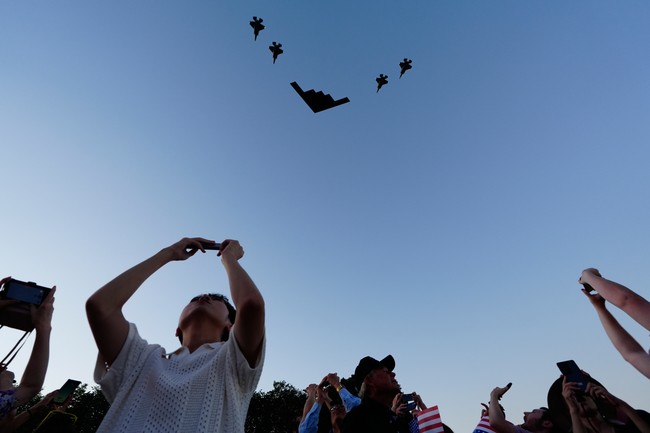
- Great American State Fair flyovers showcase military might (Center — NewsNation)
- Trump Scores Appeals Court Victory in Battle Over National Park Historical Displays (Right — RedState)
- The Race to Rescue 8,000 Sailors Still Stranded Behind Hormuz (Center — Bloomberg Politics)
- America 250: America’s Melting Pot Still Has Fire in It (Right — PJ Media)
- Lawfare: Kangaroo court picks fight with state’s conservative attorney general (Far Right — WorldNetDaily)
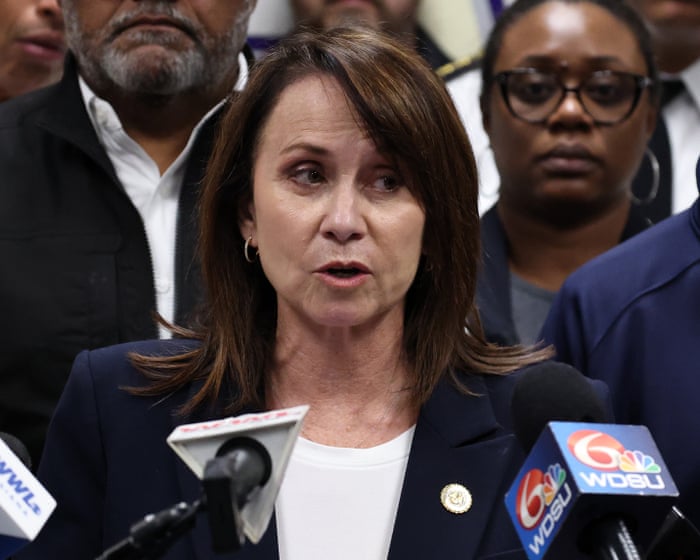
- UPDATE: Louisiana Supreme Court Temporarily Blocks Politically Motivated Indictment Against AG Liz Murrill (Far Right — The Gateway Pundit)
- Iran’s supreme leader bails on first day of late dad’s funeral ceremonies (Right — New York Post)
- Louisiana court halts criminal indictment against state attorney general (Center Left — US news | The Guardian)
Daily Analysis
Read the full Parallax Pulse for April 2, 2026 — an AI-powered analysis of how Left and Right media covered the biggest stories this day.