The Justice Department Sides With the Ku Klux Klan
Source: The New Republic · Bias: Left
Summary
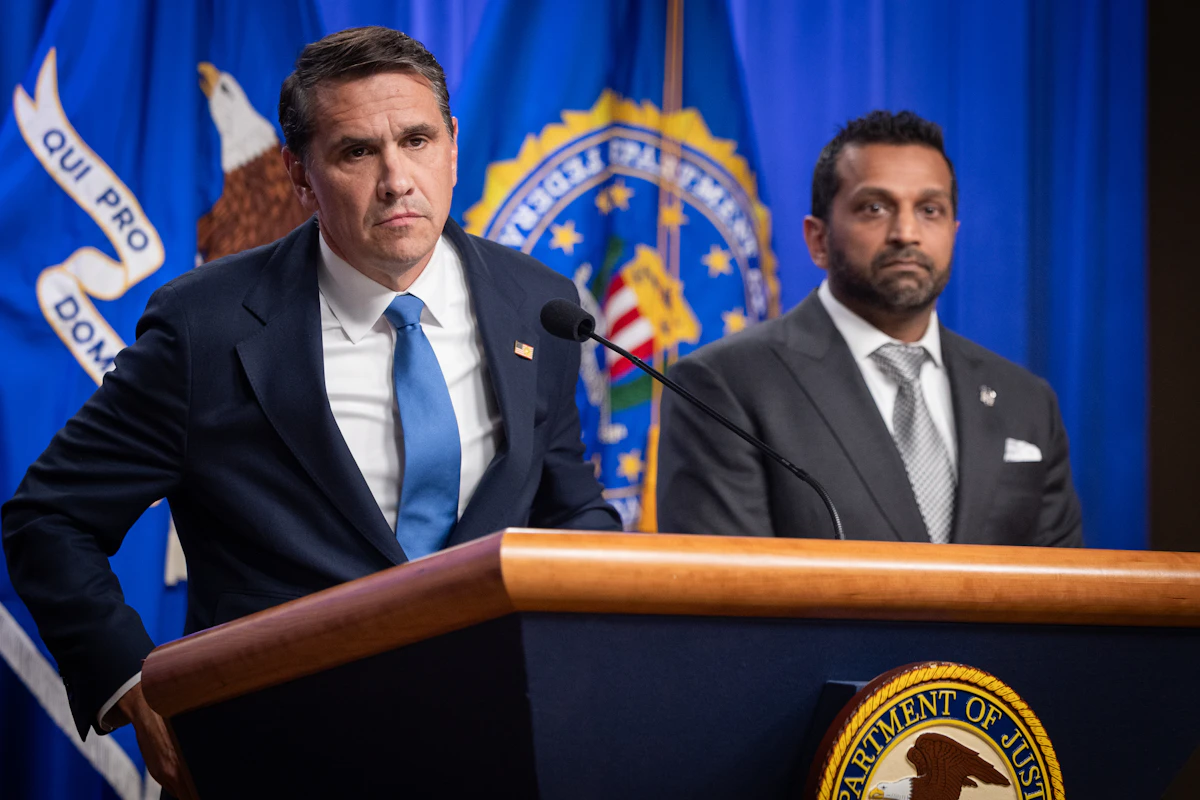
The United States did not always have a Department of Justice. President Ulysses S. Grant founded it in 1870 to help suppress the Ku Klux Klan in the Southern states and enforce federal civil rights protections for formerly enslaved Americans. On Tuesday, Justice Department officials announced what may be the first Klan-friendly prosecution in the department’s history.The Southern Poverty Law Center, or SPLC, is one of the most influential civil rights groups in the nation. Founded in 1971, it has spent the last five decades monitoring, documenting, and exposing hate groups and violent extremists. The group rose to national fame in the 1980s by financially breaking the modern Klan through strategic lawsuits on behalf of its victims. The SPLC’s most persistent targets have been white nationalist groups like the Klan and various neo-Nazi gangs, but its work has expanded over the years, as well. (More on that later.)Trump Justice Department officials struck a much different note about the SPLC’s work when announcing the indictment. Acting Attorney General Todd Blanche claimed on Tuesday that the SPLC was “manufacturing the extremism it purports to oppose by paying sources to stoke racial hatred.”“The SPLC is manufacturing racism to justify its existence,” Blanche later said in a press release. “Using donor money to allegedly profit off Klansmen cannot go unchecked. This Department of Justice will hold the SPLC and every other fraudulent organization operating with the same deceptive playbook accountable. No entity is above the law.”Those are serious accusations, even without the claims of criminal misconduct. The SPLC is one of the nation’s best-known anti-racism groups, and accusing it of “manufacturing racism to justify its existence” is akin to claiming that anti-abortion groups are secretly funding abortion clinics or that the Sierra Club was buying oil and gas leases in Texas. Blaming white nationalist violence on the groups that oppose it may have been the entire point.Tuesday’s indictment lists 11 counts against the organization. The first six counts involve allegations of wire fraud. To prove wire fraud, prosecutors need to describe some sort of scheme to obtain money under false pretenses. Another count, conspiracy to commit concealment money laundering, also hinges on the premise that the SPLC was trying to conceal details about “fraudulently obtained donated money.”According to the indictment, the SPLC “explicitly sought donations under the auspices that donor money would be used to help ‘dismantle’ violent extremist groups.” Instead, the indictment claimed, SPLC donors “were not told that some of the donated funds were to be used by the SPLC to pay high-level leaders of violent extremist groups,” as well as for similar undercover purposes.There are a few problems with this theory of fraud. First of all, the SPLC was not paying members of these groups to provide material support to their activities or out of ideological sympathy. They were cultivating informants who could provide damaging (or even basic) information about extremist groups, their members, and their operations, thereby furthering the SPLC’s goals of “dismantling” those groups. Sunlight, as Justice Louis Brandeis once said, is a potent disinfectant. Prosecutors were fully aware of this because they describe it elsewhere in the indictment. One of the undercover informants, the indictment noted, “entered the headquarters of a violent extremist group and stole 25 boxes of their documents,” then passed them along to an SPLC employee. “Thereafter, the high-level SPLC employee utilized the documents, in part, as the basis for a story published on the SPLC’s Hatewatch website,” it claimed. This obviously did not further the violent extremist group’s goals. It’s also hard to believe that an SPLC donor might find these activities—and these results—to be a fraudulent use of their money.Second, it was hardly a secret to the public or to donors that the SPLC used undercover sources. (The practice reportedly stopped a few years ago.) You don’t have to look hard to find press reports that describe the SPLC’s clandestine work. In a 1996 New York Times article that was published on the eve of the first anniversary of the Oklahoma City bombing, for example, the newspaper reported that the SPLC had “spies” at a white nationalist convention at Lake Tahoe the preceding weekend.Nor was any of this news to the federal government. Law enforcement agencies routinely worked with the SPLC to track and monitor hate groups. As a private nonprofit group, the SPLC is not bound by the First Amendment when tracking and identifying hate groups and their members. The FBI and other agencies, on the other hand, face greater legal constraints when it comes to surveilling domestic political groups.Third, even if donors were somehow unaware, nonprofit groups often speak in broad terms when soliciting donations.
Related Coverage
- Justice Department defends decision not to release, unredact more Epstein files (Center — NewsNation)
- Justice Department defends decision not to release, unredact more Epstein files (Center — The Hill News)
- Education Departments sues schools for allegedly letting boy dominate girls’ sports (Far Right — BizPac Review)
- Education Department sues schools over boys in girls’ sports (Far Right — WorldNetDaily)
- Trump calls out NATO ahead of summit, calling it 'ridiculous' for US to persist on 'one sided path' (Right — Latest Political News on Fox News)
- Appeals court sides with intelligence officers fired for working on DEI (Center — The Hill News)
- Trump's 'hero' justice offers roadmap after Supreme Court rejects birthright order (Right — Latest Political News on Fox News)
- In Tumultuous Term, Chief Justice Roberts Took Charge of Unruly Supreme Court (Center Left — NYT > U.S. > Politics)
Daily Analysis
Read the full Parallax Pulse for April 23, 2026 — an AI-powered analysis of how Left and Right media covered the biggest stories this day.
More Headlines From April 23, 2026
- Trump orders Navy to ‘shoot and kill’ any boat laying mines in Strait of Hormuz (Center)
- DOJ Inspector General to Audit Handling of Epstein Files and Redactions (Center)
- 2 Republicans break with party as GOP defeats budget amendment to lower health care costs (Center)
- U.S. Soldier Charged With Using Classified Information to Bet on Maduro’s Ouster (Center)
- RFK Jr. Faces Backlash Over FDA Rejection of Lifesaving Cancer Drug (Left)