The AI Industry Is Discovering That the Public Hates It
Source: The New Republic · Bias: Left
Summary
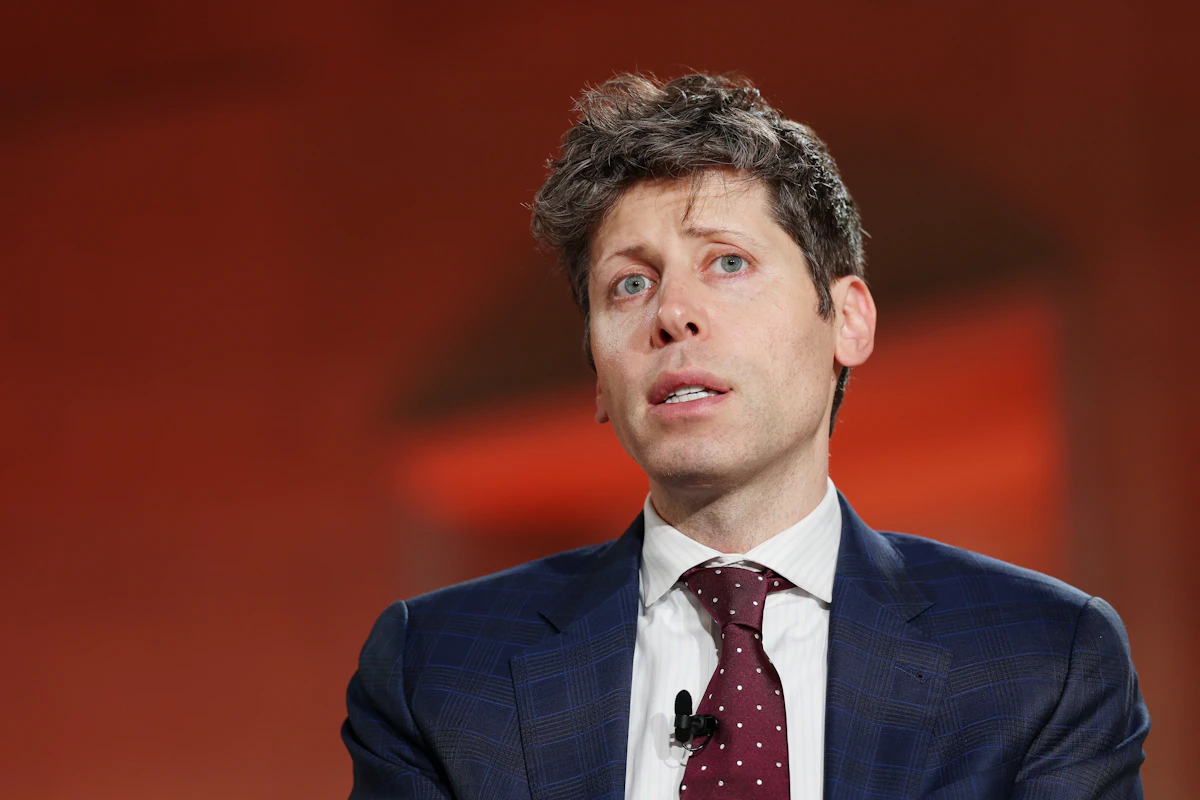
On April 10, the house of OpenAI CEO Sam Altman was attacked with a Molotov cocktail by 20-year-old Daniel Moreno-Gama. The suspect, who was arrested the same day, had written a manifesto warning of the existential threat of artificial intelligence. In his missive, he advocated for killing the CEOs of AI companies, and he referred to himself as “butlerian jihadist” on Instagram (a reference to a war against machines in Frank Herbert’s Dune universe). Three days prior in Indianapolis, an unknown perpetrator fired 13 shots into the home of local Democratic councilman Ron Gibson while his 8-year-old son was home. Neither were hurt, but a note reading “No Data Centers” was left on the doorstep. Gibson had lent his support for a potential data center project in his district. There have not yet been any arrests in the case.Both incidents were frightening examples of abhorrent, politically motivated violence. But the reaction, at least on social media, seemed to revel in it. The mood exemplified by inflamed Instagram commenters on these incidents was further reinforced on April 13 when Stanford University released its annual Artificial Intelligence Index, which provides a yearly snapshot of where the industry stands. In the report, one of the most standout contrasts was the gulf between what AI experts predict for AI’s future and the public’s reaction to the industry’s designs. On jobs, 73 percent of experts were positive about the long-term effect, with 69 percent positive about the long-term effect on the economy. Among the public, those numbers were 23 percent and 21 percent, respectively, with nearly two-thirds of Americans thinking that AI would lead to fewer jobs over the next 20 years. A separate survey, released in March 2026 by Gallup, also showed a sharp increase in negative attitudes toward AI among Gen Z. According to the poll, the percentage of Gen Zers who felt excited about AI had dropped from 36 percent to 22 percent, while the number who felt angry about it increased from 22 percent to 31 percent. These numbers and actions point in the same direction: a rapidly growing populist backlash toward AI, which tech journalist Jasmine Sun defined as “a worldview in which AI is viewed not only as a normal technology, but an elite political project to be resisted … a thing manufactured by out-of-touch billionaires and pushed onto an unwilling public.”Naturally, violence is never an answer, nor is it a politically effective tactic. But you also cannot ignore how the tone-deaf public messaging of the AI industry has helped to contribute to this reaction.For years, CEOs like Altman and Anthropic’s Dario Amodei have very publicly oscillated between two suboptimal scenarios. In one, AI exterminates humanity with a biological super-weapon. In the other, AI either takes your job entirely or creates an economy where your only option is to downshift into the gig economy. These pitches may be perfect for attracting attention at tech conferences or funding rounds, but they utterly ignore the daily concerns of regular Americans, at a time when the job market (especially for newer graduates) is incredibly shaky; economic gains are concentrated among the top 0.1 percent; and the price of food, housing, and, now, gasoline all continue to skyrocket. This is the environment in which the AI industry is very publicly asking for hundreds of billions of dollars in continued investment, as well as a massive data center buildout that has had significant effects on local populations’ electrical bills. For example, in Virginia, the epicenter of the U.S. data center boom, residential electrical rates have been projected to increase by up to 25 percent by 2030. These costs could be ignored, or even accepted, if there was a clear idea of how precisely AI would streamline and improve the workplace—or offer any tangible public benefit significant enough to make these underlying trade-offs acceptable. But the answers to these questions remain extremely tenuous. According to a February 2026 paper by the National Bureau of Economic Research, 80 percent of companies that have begun actively using AI have reported no impact on company productivity. A separate, widely cited 2025 MIT study revealed that 95 percent of corporate AI pilot programs received zero return. Even within tech and coding, one of the areas where AI is reported to have the most promise, there’s the question of whether the productivity gains reported can be trusted.
Related Coverage
- Rare ‘Exeter’ copy of Declaration of Independence discovered in UK (Center — The Hill News)
- Hakeem Jeffries Reminds Radicals To Hide America-Hating Until After Election Day (Right — The Daily Wire - Breaking News, Videos & Podcasts)
- How the world's top AI models were revived (Center Left — Axios)
- AI Industry Is Creating a New Age of Imperial Extraction and Labor Exploitation (Far Left — Truthout)
- "Empire of AI": Karen Hao on How AI Is Threatening Democracy & Creating a New Colonial World (Far Left — Democracy Now!)
- J.D. Vance Hates Milton Friedman (Center Right — Reason.com)
- Israel discovers vast terrorist tunnel in southern Lebanon (Center Right — Washington Examiner)
- Stop Hating America (Center Right — Reason.com)
Daily Analysis
Read the full Parallax Pulse for April 24, 2026 — an AI-powered analysis of how Left and Right media covered the biggest stories this day.
More Headlines From April 24, 2026
- Bolton lambasts US-Iran peace talks: ‘Nowhere close to a deal’ (Center)
- Justice Department Calls for Expansion of Federal Death Penalty (Center)
- DOJ Drops Fed Probe, Clearing Way for Warsh | Balance of Power: Early Edition 4/24/2026 (Center)
- After 2 failed votes, Mike Johnson unveils new plan to extend key U.S. spy powers (Center)
- Trump Talks Up Iran Blockade as Israel-Lebanon Truce Extended (Center)