Clarence Thomas Can’t Get American History Right
Source: The New Republic · Bias: Left
Summary
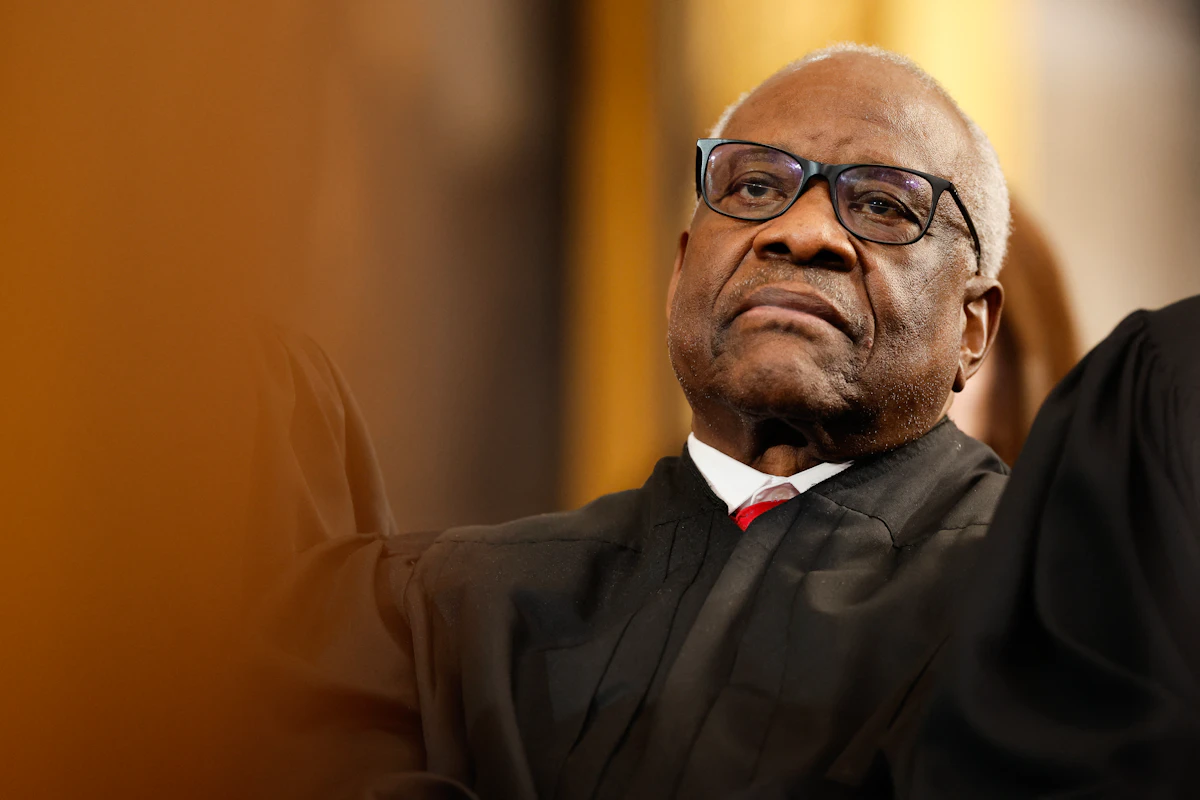
This year marks the 250th anniversary of the nation’s independence. Justice Clarence Thomas, the senior-most member of the Supreme Court, sought to honor that historic milestone this week by denouncing millions of his fellow Americans and claiming that their views were incompatible with the Declaration of Independence’s ideals. In doing so, he only demonstrated his profound ignorance of this nation’s history, as well as his own personal flaws.Thomas’s roughly hour-long speech on Wednesday at the University of Texas at Austin Law School began with a lengthy reflection on the Declaration of Independence and its importance in American history. The Declaration is not a legal text per se, Thomas argued, but it is an important testament to the nation’s founding ideals. “It did not establish a form of government; that was the work of the Constitution that followed,” he explained. “But it stated the purpose of government.”That purpose, Thomas explained, is to “protect our God-given inalienable rights, rights that all individuals equally possess.” He argued that the most important part of the Declaration comes at the end, when the signers “mutually pledge to each other our lives, our fortunes and our sacred honor.”“Nothing in the Declaration of Independence, I now realize, matters without that final sentence,” he wrote. “Without that sentence, the rest of the declaration is but mere words on parchment paper—nice words, but nonetheless just words. What changed the world was not the words, but the commitment and spirit of the people who were willing to labor, sacrifice, and even give their lives—what Lincoln at Gettysburg called ‘the last full measure of devotion’—for the Declaration’s principles.”So far, so good. This is fairly standard civic fare for justices when they speak in public. Thomas is one of many prominent Americans who has defined the nation’s conception of itself in the Declaration. Lincoln referred to it as the “sheet anchor of our republic,” a phrase that Thomas approvingly cited. The justice even linked the promise made by the Founders to the one made by his grandparents when they took him and his brother in as a child in impoverished rural Georgia.“They told us, ‘We don’t have no education and no chance, but you boys are going to have a chance, [and] we going to devote the rest of our lives to you boys,’” he recalled. “It was their devotion, their love, their dedication to raising us right that has made the difference, not the words, though the words expressed as best they could what they intended to do, their devotion is what mattered.”After this inspiring and touching recollection, however, Thomas’s oratory began to go downhill. He recounted how he had moved to Washington, D.C., nearly fifty years ago and found that there was “never a shortage of people espousing noble purposes” and “saying the right things” in the nation’s capital. “These people can be just as high-minded as the men who signed the Declaration,” he warned. “They can mouth the words of the Declaration and parrot its principles. They can write essays and talk at conferences about the Declaration with the best of them all too often. However, this was lip service, camouflaged by grand theories in the tall grass of big words and eloquent phrases. What seemed to be lacking was that devotion.”Without that devotion, Thomas claimed, these people “become petrified by criticisms” and “fearful of negative attention,” or they “fall prey to the enchanting siren songs of flattery,” or “enticed by access to things that were previously unavailable to them.” The result is a personal shift away from their principles. “They recast themselves as institutionalists, pragmatists, or thoughtful moderates, all as a way of justifying their failures to themselves, their consciences and their country,” Thomas claimed. It is hard not to read this line as a jab at some of his Supreme Court colleagues over the years, as well as a strong dose of self-promotion.Clarence Thomas alone is devoted to the Declaration’s principles in Washington, says Clarence Thomas, and the problem is only getting worse. “As we meet today, it is unclear whether these principles will endure,” the justice warned. “At the beginning of the twentieth century, a new set of first principles of government was introduced into the American mainstream. The proponents of this new set of first principles, most prominently among them the twenty-eighth president, Woodrow Wilson, called it progressivism.“Since Wilson’s presidency, progressivism has made many inroads in our system of government and our way of life,” Thomas continued. “It has coexisted uneasily with the principles of the Declaration. Because it is opposed to those principles, it is not possible for the two to coexist forever.” Thomas is correct that progressivism was introduced around the turn of the twentieth century, that Woodrow Wilson was the twenty-eighth president, and that Wilson was a progressive.
Related Coverage
- Great American State Fair flyovers showcase military might (Center — NewsNation)
- How private equity destroyed an American pastime (Left — Salon.com)
- 'You're screaming in front of children!' Right-wing activist all he can handle in Philly (Far Left — Raw Story)
- ‘A total disappointment’: revelers face unbearable heat at Great American State Fair (Center Left — US news | The Guardian)
- Extreme heat temporarily closes Great American State Fair (Center — NewsNation)
- Americans Cheer as B-2 Stealth Bomber, Fighter Aircraft Fly Over Great American State Fair in DC Amid 250 Celebrations (VIDEO) (Far Right — The Gateway Pundit)
- A Vietnam Nurse Who Came Home, Helped Get Us to 250 (Center Right — RealClearPolitics - Homepage)
- Mt. Olive Pickle Co. exits Great American State Fair over Confederate flag (Center — The Hill News)
Daily Analysis
Read the full Parallax Pulse for April 17, 2026 — an AI-powered analysis of how Left and Right media covered the biggest stories this day.
More Headlines From April 17, 2026
- Oil prices plunge on claims Strait of Hormuz is open (Center Left)
- Trump warns US may 'drop bombs again' if no Iran deal by ceasefire deadline (Center)
- Can the US and Iran Agree to a Lasting Deal to End the War? (Center)
- Utah Supreme Court Justice Allegedly Caught Having an ‘Inappropriate’ Relationship With Leftist Attorney Who Helped Dems Steal a Congressional Seat (Far Right)
- International Energy Chief: Europe Has Just “Six Weeks” of Jet Fuel Left (Far Right)