‘Very dark picture’: IMF warns Trump's war may unleash recession
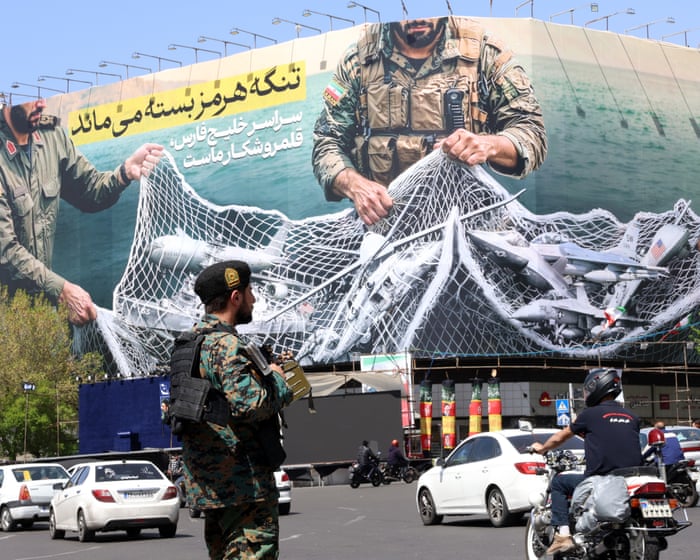
The International Monetary Fund warned Tuesday that the US-Israeli war on Iran could slow global economic growth, stoke inflation, and increase the possibility of a worldwide recession and energy crisis.The illegal war of choice on Iran being waged by US President Donald Trump and the government of fugitive Israeli Prime Minister Benjamin Netanyahu has already had wide-ranging negative impacts on the global economy, from soaring fuel prices caused by the closure of the Strait of Hormuz to supply chain disruptions and financial market volatility.However, a major global economic crisis has thus far been averted. That could soon change.“Despite major trade disruptions and policy uncertainty, last year ended on an upbeat note,” International Monetary Fund director of research Pierre-Olivier Gourinchas wrote in an analysis of the IMF’s latest World Economic Outlook report. “The private sector adapted to a changing business environment, while powerful offsets came from lower US tariffs than originally announced, some fiscal support, and favorable financial conditions coupled with strong productivity gains and a tech boom.”IMF Growth Forecast 2026: 🇺🇸 US: 2.3% 🇩🇪 Germany: 0.8% 🇫🇷 France: 0.9% 🇮🇹 Italy: 0.5% 🇪🇸 Spain: 2.1% 🇬🇧 UK: 0.8% 🇯🇵 Japan:0.7% 🇨🇦 Canada: 1.5% 🇨🇳 China: 4.4% 🇮🇳 India: 6.5% 🇷🇺 Russia: 1.1% 🇧🇷 Brazil: 1.9% 🇲🇽 Mexico: 1.6% 🇸🇦 Saudi Arabia: 3.1% 🇳🇬 Nigeria: 4.1% 🇿🇦… pic.twitter.com/hs7T3ebF1v— IMF (@IMFNews) April 14, 2026 “Despite some downside risks, the momentum was expected to carry over into 2026, lifting the pre-conflict global growth forecast to 3.4%,” Gourinchas continued. “War in the Middle East has halted this momentum. The closing of the Strait of Hormuz and serious damage to critical facilities in a region central to global hydrocarbon supply raise the prospect of a major energy crisis should hostilities continue.”The IMF said that even if the war ends quickly, lasting damage to the world’s economy will still happen.According to the IMF report:Under the assumption of a limited conflict, global growth is projected at 3.1% in 2026 and 3.2% in 2027, below recent outcomes and well under pre-pandemic averages. Global inflation is expected to tick up in 2026 and resume its decline in 2027. Pressures are concentrated in emerging market and developing economies, especially commodity importers with preexisting vulnerabilities. Risks are decisively on the downside. A prolonged conflict, deeper geopolitical fragmentation, disappointment over [artificial intelligence]-driven productivity, or renewed trade tensions could weaken growth and unsettle markets. High public debt and eroded policy buffers add vulnerability. Policies should foster adaptability, enhance credibility, and reinforce international cooperation.The IMF said that “the shock’s ultimate magnitude will depend on the conflict’s duration and scale—and how quickly energy production and shipment normalize once hostilities end,” and that effects will vary by location.“Countries will feel the impact differently,” Gourinchas wrote. “As in past commodity-price surges, importers are highly exposed. Low-income and developing economies—especially those with vulnerabilities and limited buffers—are likely to be hit hardest. Gulf energy exporters will face economic fallout from damaged infrastructure, production disruptions, export constraints, and weaker tourism and business activity. Remittances will fall in countries that supply migrant workers to the region.”Eric LeCompte, executive director of the religious development group Jubilee USA Network and a United Nations finance expert, called the new IMF forecast “extremely concerning for the global economy,” lamenting that “the most dire impacts of our economic situation will be felt by the poor and the vulnerable.”The new report comes as the IMF’s annual Spring Meetings are underway in Washington, DC.“World leaders coming to Washington are receiving a very dark picture of the global economy,” said LeCompte. “The war is causing greater poverty and increases in our fuel and food costs.”Other groups have also warned of the adverse economic effects of the US-Israeli war on Iran.Ben May, Bridget Payne, and Paul Moroz of Oxford Economics recently published a report warning that a longer war in Iran “could tip the global economy into recession.”In such a situation, “the Gulf states suffer most acutely—GDP down over 8% in 2026—before rebounding sharply as production recovers,” they wrote. “Advanced Asian economies, which are especially reliant on Gulf oil, take a heavy blow from energy import cost surges and supply chain disruption.”“Europe faces a painful squeeze on gas and electricity,” the trio added.
Compare Perspectives
No direct matches found for "Very IMF Trumps dark picture" in this bias range.