Rep. Mike Levin (D-Calif.) revealed Friday that House Republicans on the Appropriations Committee voted to make themselves eligible to collect from President Donald Trump's $1.8 billion January 6th slush fund, triggering immediate outrage online.Levin took to X to announce that he had introduced an amendment to block members of Congress, the president, and the vice president from collecting any money from the controversial fund unless a court specifically orders it. Every Republican on the committee voted against his amendment, according to his video."Every Republican present in the House Appropriations Committee last night voted to make THEMSELVES eligible to collect from Trump's $1.8 billion January 6th slush fund. I am not making this up," Levin wrote in the caption.The California Democrat said the vote allows MAGA Republicans in Congress, along with Trump and Vice President JD Vance, to position themselves as victims of "government weaponization" and collect settlement funds out of the pool Trump created."That is exactly the kind of self-dealing corruption the American people are sick of," Levin wrote.The reaction was immediate. Former GOP insider Tara Setmayer reposted Levin's thread with a single line."Republicans in Congress did WHAT???" Setmayer wrote.Media producer Roy Bellamy offered a different take."I hope this ends up like a class action suit and everyone gets 35 cents," Bellamy wrote.Disability rights advocate James Tate kept it simple."Republicans love stealing tax dollars," Tate wrote on X.Republicans love stealing tax dollars. https://t.co/J4FnwMpQmy— James Tate (@JamesTate121) May 23, 2026
George Soros boasted he’s putting $30 million towards groups fighting antisemitism and other types of bigotry, but critics say the far-left billionaire is largely response for the surge.
Lawmakers left Washington for Memorial Day weekend without passing a budget reconciliation bill to fund Immigration and Customs Enforcement (ICE) and Border Patrol, due in large part to GOP backlash against the Trump administration’s newly announced $1.776 billion “anti-weaponization” fund. Senate Republicans on Thursday blasted acting Attorney General Todd Blanche over the proposal to set…
NATO Secretary General Mark Rutte welcomed an abrupt announcement by President Donald Trump to send an additional 5,000 troops to Poland even as the alliance’s top envoys braced for cuts in US military resources.
Sen. Bill Cassidy (R-La.) said Wednesday the nearly $1.8 billion “anti-weaponization” fund that the Department of Justice (DOJ) created earlier this week should be approved by Congress. “People are concerned about paying their mortgage or rent, affording groceries and paying for gas, not about putting together a $1.8 billion fund for the President and his…
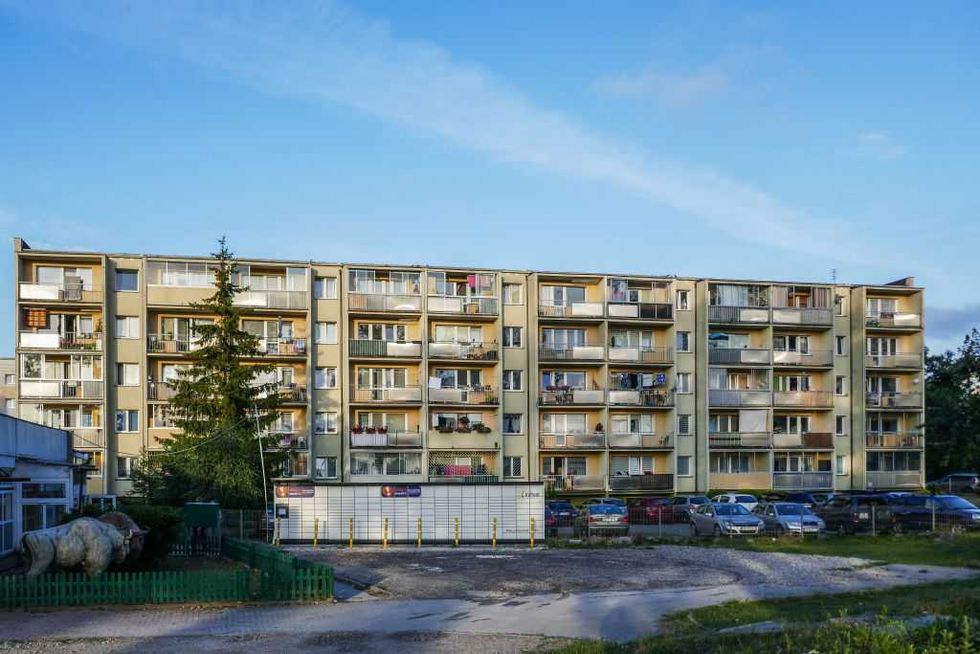
The U.S. House of Representatives will soon vote on a housing bill that supposedly addresses the nation’s very real affordability crisis and, even more important, lets politicians claim they are doing something about it.The Senate passed the 21st Century ROAD to Housing Act in March by an 89-10 vote. Democrats backed it almost unanimously, and all but one of the no votes came from Republicans, even though President Donald Trump pushed hard for the bill.States have the right to be stupid or smart. The federal government has no constitutional authority to make that choice for them.One provision separates the Senate and House versions, and it matters a great deal.The Senate bill would require investors who own more than 350 single-family rental properties to sell the excess after seven years. It exempts large institutional investors that build or buy new single-family homes for the rental market, but even they would have to sell those properties to individual homeowners after seven years.The House bill drops that provision. That may be its best feature.The Senate’s ownership cap is not only arbitrary and unfair; it is economically backward. Driving investors out of the market would raise prices, not lower them. It would shrink the pool of potential investors, reduce incentives to build and maintain housing, and leave buyers competing for a smaller supply of homes.Those effects would push housing prices higher.The only Democrat to vote against the Senate bill, Sen. Brian Schatz of Hawaii, blasted the seven-year forced-sale provision on the floor, calling it “bananas” and “a very bizarre thing” to restrict ownership by businesses other than hedge funds. The bill “demonize[s] people who want to build rental housing,” Schatz said.He was right. The Senate version would do serious damage to housing supply. As Schatz put it, “This is positively Soviet.”The two versions reflect sharply opposing views not only of housing, but of markets and government power in general. The real question is whether housing unaffordability reflects a “market failure” requiring federal and state correction, or whether markets work best when government limits itself to preventing force and fraud.RELATED: When your ‘rich’ neighbor can’t afford furniture SDI Productions / Getty ImagesToday’s housing crisis is not a market failure. It is the product of government interference.As I explain in my new Heartland Institute policy study, “Housing Affordability: America’s Short-Term Crisis and Long-Term Problem,” the immediate affordability crunch began with the rapid rise in federal spending starting in January 2021. The Federal Reserve accommodated that spending by expanding the money supply, helping ignite inflation across the economy.Housing prices rose sharply and crossed into statistical unaffordability in May 2021. They then surged further as inflation spread throughout the economy. The Federal Reserve later raised interest rates to contain the damage, which only made housing less affordable as mortgage rates climbed to levels not seen since the early 1980s.At the same time, the country was already suffering from years of weak housing-stock growth after the 2008 financial crisis, another disaster created by the federal government and the Fed. Add a rapidly rising population driven by mass immigration, along with Millennials and then Gen Z entering prime homebuying years, and a long-running squeeze turns into a full-scale crisis.That is the mess Congress and Trump now want to address.Their answer is to tweak some federal regulations in the hope of encouraging more construction. That may help at the margins. It will not do much to expand supply, and it will do nothing to address the inflation that turned a difficult market into a crisis.As I write in the policy study, “The solution to the inflation-inflicted affordability problem is significant cuts in federal spending,” though such cuts appear to have little political support.The long-term solution is straightforward: Build more houses.Here again, government is the main obstacle. Zoning restrictions, taxes, overregulation, rent control, urban-growth boundaries, land rationing, impact fees, excessive building-code requirements, and countless other local barriers have choked construction and sales.Those policies mostly come from states and localities. The federal government, however, encourages them through housing and urban-development spending.RELATED: Trump needs to denounce the Dignity Act Alex WROBLEWSKI/AFP/Getty ImagesBoth versions of the current bill try to reduce some of that federal encouragement of excessive state and local regulation. That is the right direction because under the Constitution, housing regulation belongs to the states.States have the right to be stupid or smart. The federal government has no constitutional authority to make that choice for them.