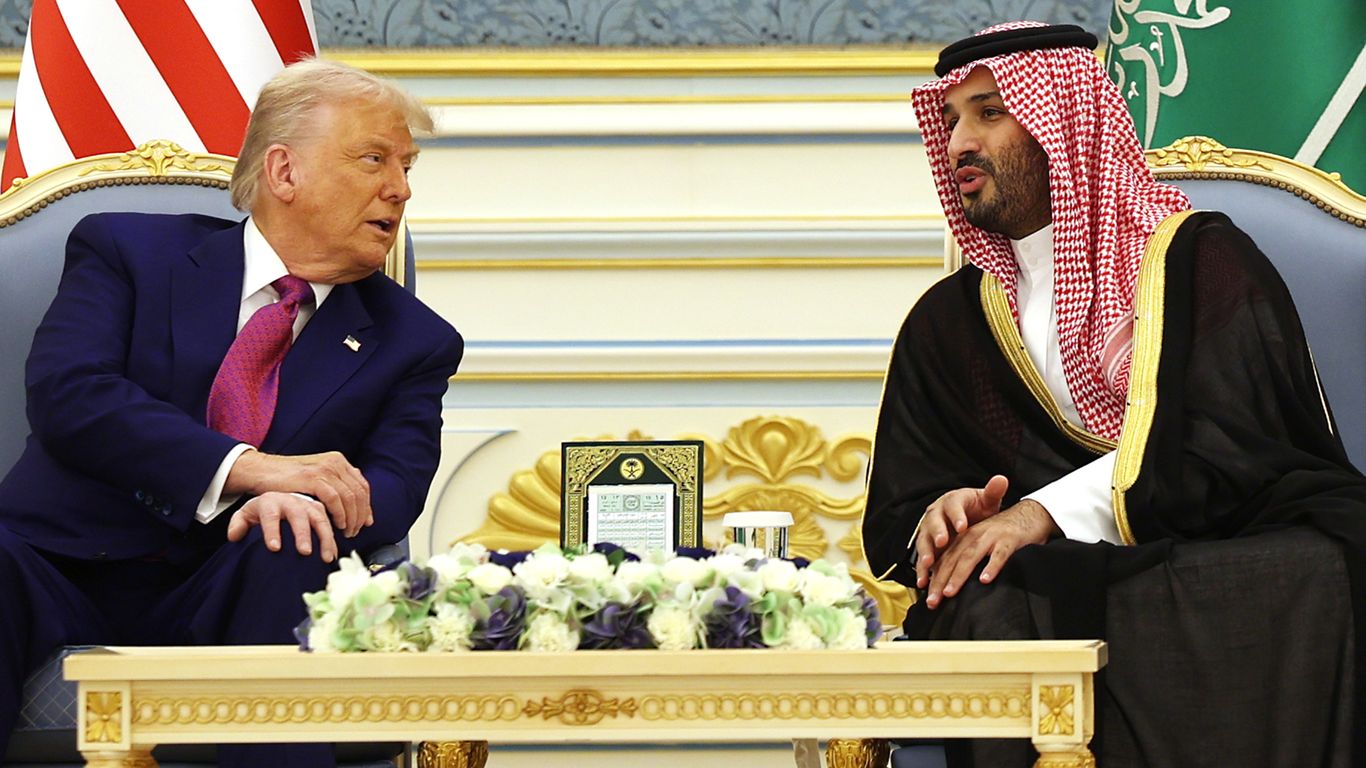
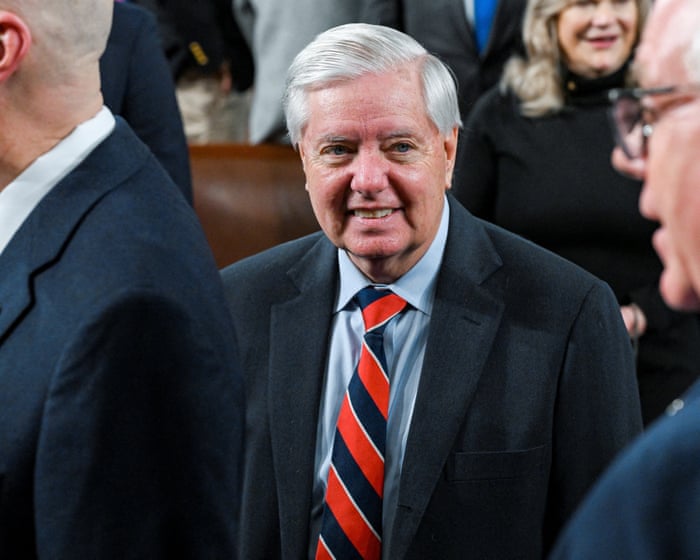
President Trump told leaders of several Arab and other Muslim countries during a Saturday conference call that if a deal to end the Iran war is achieved he wants their nations to sign peace agreements with Israel, per two U.S. officials with direct knowledge of the call. Why it matters: Trump's remarks on Israel and the countries signing onto the Abraham Accords during the call signal the next big step he wants to take in the Middle East after the war. Trump is aiming mostly at a historic Saudi-Israeli peace agreement, but the current political climate in the region and the upcoming Israeli election make any near term breakthrough extremely difficult. Driving the news: On Saturday, Trump held a phone call with the leaders of Saudi Arabia, the United Arab Emirates, Qatar, Pakistan, Turkey, Egypt, Jordan and Bahrain to discuss the emerging deal with Iran.Leaders including UAE President Mohammed bin Zayed, who has had a more hawkish view on the Iran war, said they support it."They all said we are with you on this deal. And if it doesn't work we will be with you too," a U.S. official said.Behind the scenes: A U.S. official with knowledge of the conversation said Trump told the leaders that he would call Israeli Prime Minister Netanyahu next and stressed that he hoped that in the near future Israel's leader would be on the same call.Trump told the leaders that after the war with Iran ends he expects all of them who are still not part of the Abraham Accords or don't have peace agreements with Israel to join and normalize relations with the Jewish state, two U.S. officials said. The leaders, especially those of Saudi Arabia, Qatar, and Pakistan who don't have formal diplomatic relations with Israel, were surprised by Trump's request. "There was silence on the line and Trump joked and asked if they are still there," one of the U.S. officials said. Trump then told the leaders that his envoys Jared Kushner and Steve Witkoff will follow up on this issue in the coming weeks. What they are saying: "I would like to thank, thus far, all of the countries of the Middle East for their support and cooperation, which will be further enhanced and strengthened by their joining the Nations of the historic Abraham Accords," Trump wrote in a post on Truth Social on Sunday. He floated the idea of Iran joining the Abraham Accords one day. It would require Tehran to recognize Israel, something it has refused to do for decades. The current Iranian regime sees Israel as an enemy and is committed to its destruction. Senator Lindsey Graham (R-S.C.) who criticized the emerging deal with Iran and is a leading force in Congress for the expansion of the Abraham Accords wrote on X on Sunday that he supports Trump's request to the Arab and other Muslim leaders. "If in fact as a result of these negotiations to end the Iranian conflict, our Arab and Muslim allies in the region agreed to join the Abraham Accords, it would make this agreement one of the most consequential in the history of the Middle East," he said. Graham called on Saudi Arabia and other countries to adhere to Trump's request. "If you refuse to go down this path as suggested by President Trump, it will have severe repercussions for our future relationships and make this peace proposal unacceptable. Further, it would be seen by history as a major miscalculation," he wrote. Yes, but: Saudi Arabia's Crown Prince Mohammed Bin Salman had expressed willingness to normalize relations with Israel, but over the past year he has cooled down on this issue. Trump asked Bin Salman to join the Abraham Accords during their Oval Office meeting last November. The Saudi crown prince pushed back and the meeting got tense. The Iran war and Saudi Arabia's rift with the UAE have pushed the Kingdom to take a more skeptical and tough position towards Israel's far-right government. Saudi officials still demand that Israel commits to an irreversible and time-bound path for a Palestinian state as a condition for them normalizing relations. The Israeli government refuses this. Israeli and U.S. officials think Riyadh will not take any steps on this issue ahead of Israel's elections planned for September and before it sees which government is sworn in.
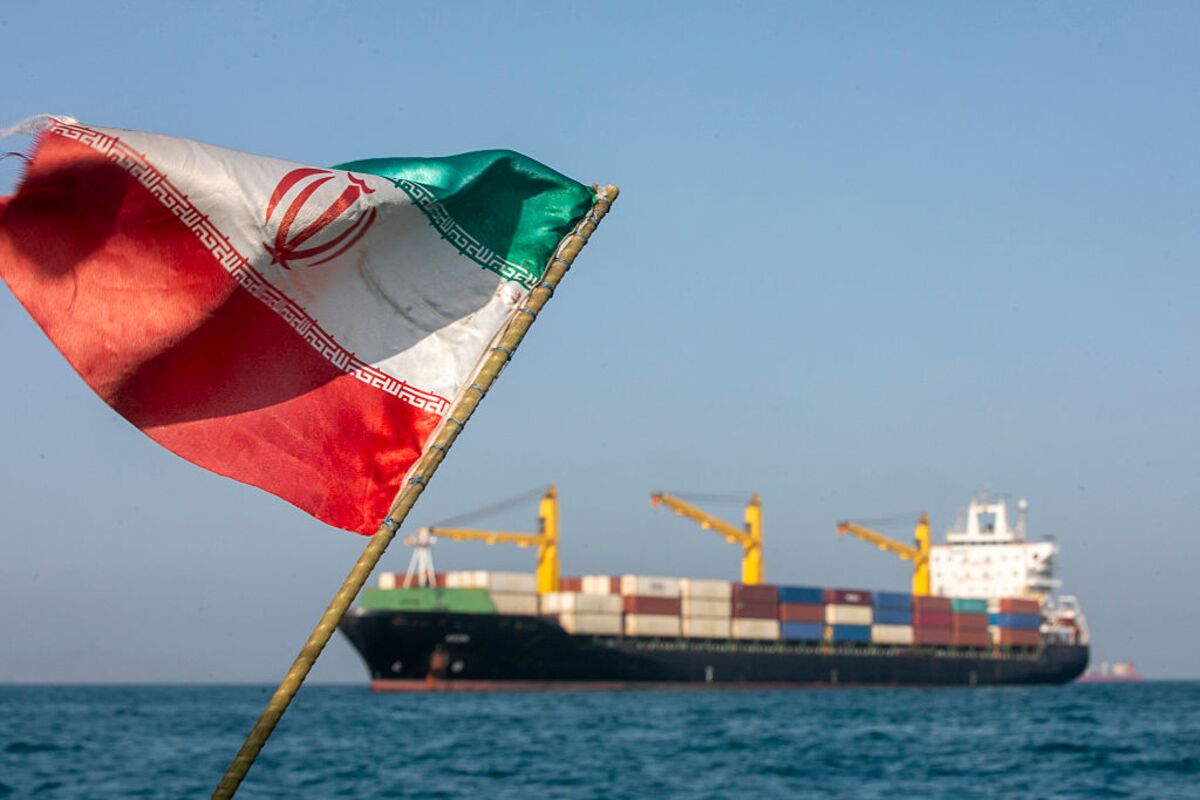
US Secretary of State Marco Rubio said there may be “some good news” regarding the blocked Strait of Hormuz in the coming hours, as Iran and Washington press ahead with peace negotiations.
Meet the Press Moderator Kristen Welker joins Hallie Jackson on Sunday TODAY to discuss Republicans raising concern over what’s included in President Donald Trump’s potential peace deal with Iran. "Really witnessing an extraordinary week of divisions between the president and his own party, all raising questions for Republicans about his priorities as we get deeper into this midterm election cycle,” Kristen says.
Sen. Thom Tillis (R-N.C.) on Sunday added his voice to other Republicans criticizing an emerging peace deal with Iran, saying he would not support it based on his understanding of what it includes. “It doesn’t make sense to me,” Tillis said of the deal, arguing it was a mistake to leave nuclear material in Iran.…
President Trump on Sunday said negotiations with Iran were proceeding in “an orderly and constructive” manner, and that he had told U.S. officials “not to rush into a deal.” The remarks follow intense criticism of reports on an emerging deal from several conservative Republican senators, including Trump ally and Sen. Lindsey Graham (R-S.C.). It was…
Trump insists US won’t rush talks with Tehran after rebukes from Republicans, including Ted Cruz and Lindsey GrahamRepublican hawks have issued a rare rebuke of Donald Trump over his planned peace deal with Iran, describing it as a “disaster” and questioning why the US president launched the war in the first place.Allies of Trump who strongly backed his controversial decision to order war on Iran alongside Israel urged him to “hold the line” this weekend, despite mounting economic costs and no sign of progress on many of the the initial objectives set out by his administration. Continue reading...
Donald Trump took to Truth Social Sunday morning to praise what he called a "much more professional and productive" relationship with Iran — the same country he spent years branding the world's leading state sponsor of terrorism."Our relationship with Iran is becoming a much more professional and productive one," Trump wrote, describing ongoing nuclear negotiations as proceeding in "an orderly and constructive manner."The statement landed with considerable whiplash for anyone who followed Trump's career. In 2018, Trump withdrew from the Obama-era nuclear deal and launched a "maximum pressure" campaign of crushing economic sanctions against Tehran. In January 2020, he ordered the assassination of Iranian General Qasem Soleimani, the head of the Islamic Revolutionary Guard Corps' Quds Force, in a drone strike at Baghdad's international airport — an act that brought the two countries to the brink of open war.Now, in his second term, Trump finds himself in the position of negotiating his own nuclear deal with the same government — and praising the relationship in terms his predecessor might have used.The post also contained a swipe at Barack Obama — using his full middle name, a longtime Trump dog whistle — calling the 2015 Joint Comprehensive Plan of Action "one of the worst deals ever made by our Country" and "a direct path to Iran developing a Nuclear Weapon."But in the very same post, Trump described his own negotiations in terms nearly identical to what Obama-era diplomats might have said: both sides taking their time, getting it right, no rushing, proceeding carefully toward a verifiable agreement.The contradiction did not go unnoticed. Earlier Sunday, former Secretary of State Mike Pompeo — Trump's own top diplomat during his first term — warned that the deal being floated "seems straight out of the Wendy Sherman-Robert Malley-Ben Rhodes playbook," referring to key architects of Obama's Iran deal. White House communications director Steven Cheung responded by telling Pompeo to "shut his stupid mouth."Trump closed his post with a notable flourish, suggesting that Iran might one day consider joining the Abraham Accords — the normalization agreements between Israel and several Arab states that Trump brokered in his first term.