President Trump’s approval rating remains near the lowest level of his political career as Americans said they expect gasoline prices to continue rising due to the Iran war, according to a new Reuters/Ipsos poll. In the survey released Monday, 35 percent of Americans approved of Trump’s job performance in the White House. The figure is…
The federal prosecutor leading California's election fraud investigations appeared on Glenn Beck's show Monday to announce imminent charges — then pleaded with the public to help him find the evidence to bring them.First Assistant U.S. Attorney Bill Essayli, the number-two federal prosecutor in the Central District of California, told Beck that election fraud charges are coming — "one to two months, I believe" — before pivoting to ask the conservative host's audience for help."What we need right now are witnesses," Essayli said in the interview. "If you've witnessed anything… we wanna know about that."The announcement fits a pattern. On June 5 — one day after President Donald Trump alleged without evidence that California's primary was being rigged — Essayli announced his office had "multiple" probes underway. He then accused California of blocking a federal audit of its voter rolls, part of an ongoing DOJ lawsuit against California Secretary of State Shirley Weber (D). On Monday, Essayli hedged his own timeline even as he announced it."I hate to put timelines on things," he told Beck, "but one to two months, I believe. We need some of these results to be certified so we can prove some of the allegations."Then came the ask."I know people have theories and they have ideas," Essayli added. "What we need right now are witnesses."It's a striking posture for a prosecutor promising imminent charges. Essayli's credibility carries its own baggage: a federal judge previously ruled that he had illegally served as acting U.S. Attorney, having remained in office beyond his interim appointment without congressional approval. He now holds the title of First Assistant U.S. Attorney.None of that dampened his confidence Monday. Charges are coming, he insisted — just as soon as someone tells him what happened.
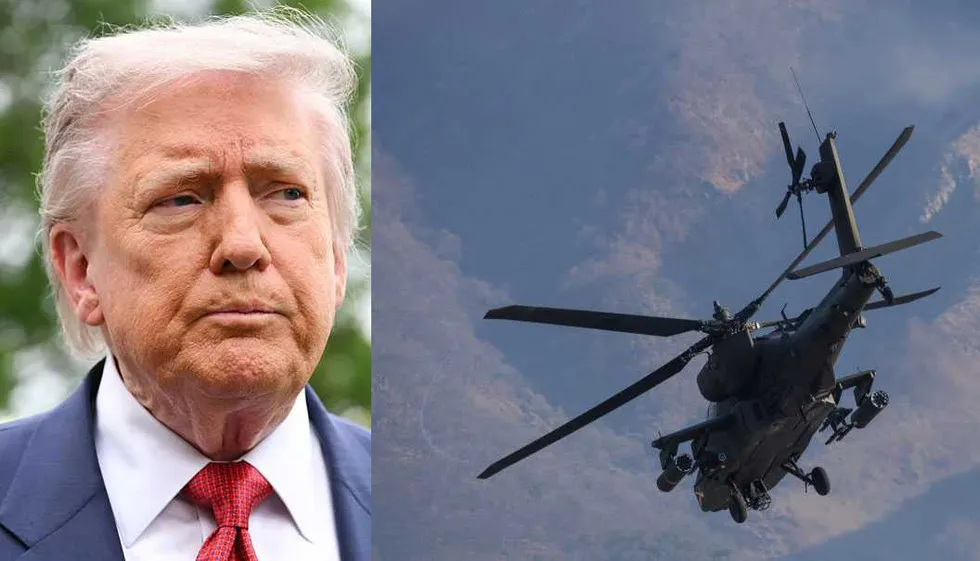
President Trump on Monday said two crew members who were aboard a U.S. attack helicopter when they crashed near the Strait of Hormuz are “fine.” The two crew members, whose AH-64 Apache helicopter was patrolling regional waters, were rescued within two hours after they crashed near Oman’s coast, according to U.S. Central Command (Centcom). The…
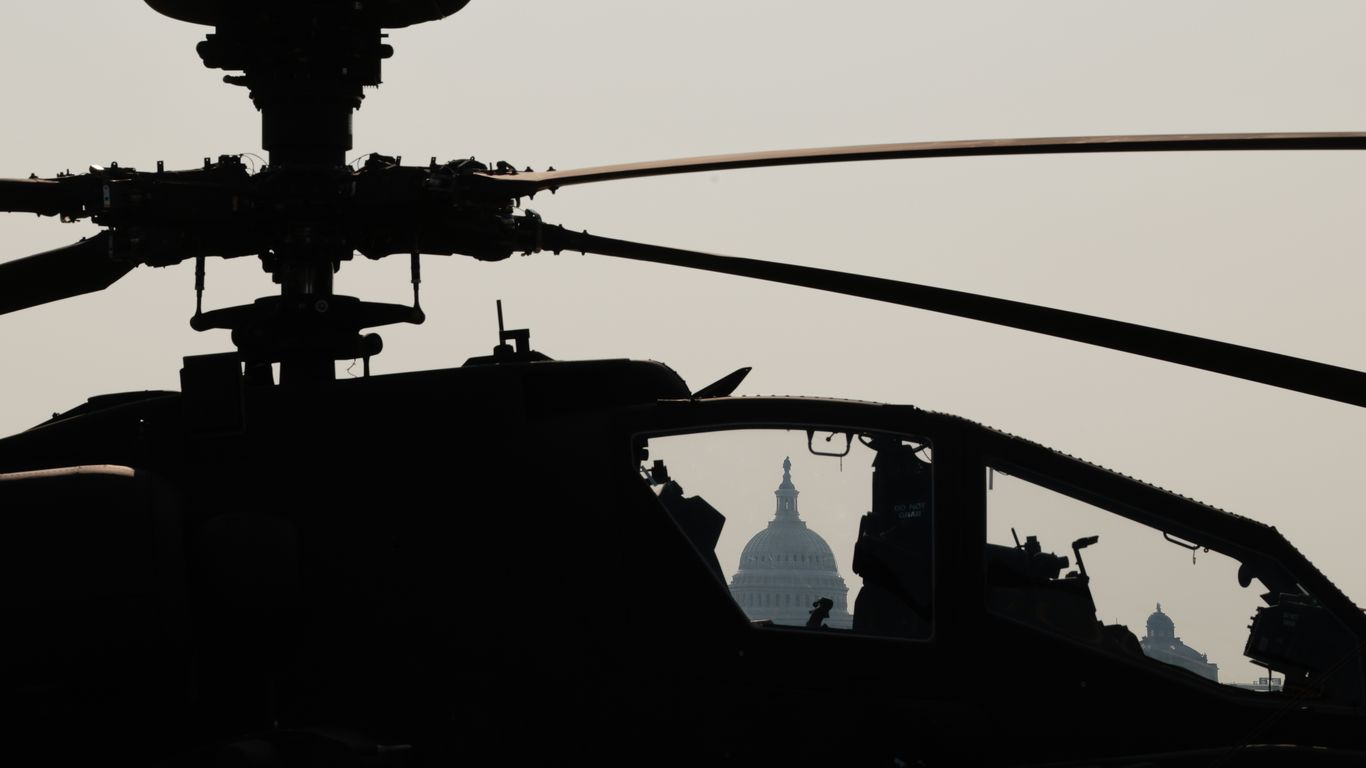
A U.S. Army AH-64 Apache went down near the Strait of Hormuz on Monday, and officials are investigating whether Iranian fire brought it down, two American officials and a third source with knowledge tell Axios.The big picture: The crash comes after Israel and Iran exchanged strikes for the first time since the April 8 ceasefire, with President Trump urging both sides to show restraint. Driving the news: Both crew members were rescued around 7:30pm ET, about two hours after the helicopter went down off the coast of Oman, U.S. Central Command said in a post on X. They are in stable condition."The pilots are fine. Yeah," Trump told reporters, according to the Associated Press. "Nobody injured. We are going to issue a report tomorrow. But the pilots are fine."The cause of the crash may become clearer once the two, who are undergoing treatment, are interviewed, one official said.A source familiar with the incident said there was a dramatic hours-long search before the crew was found.This is a breaking news story and will be updated.
Two U.S. soldiers are in stable condition after an Apache helicopter went down near the Strait of Hormuz while it was “patrolling regional waters,” according to Central Command. It comes President Donald Trump is saying the blockade continues to hold and as Israel and Iran continue to exchange fire. NBC’s Richard Engel reports for TODAY.
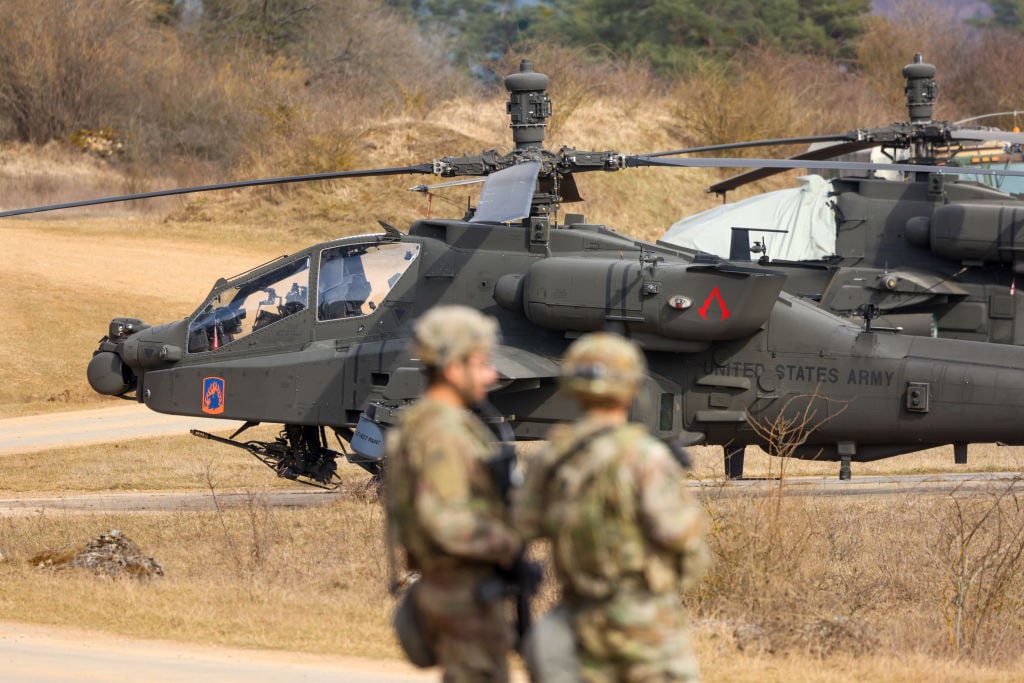
A U.S. Army AH-64 Apache helicopter crashed near the coast of Oman while patrolling regional waters on Monday as the war in Iran has now crested the 100-day mark.According to U.S. Central Command, the two pilots were rescued at 7:33 p.m. ET — within approximately two hours of the crash — and are in "stable condition." CENTCOM spokesman Capt. Timothy Hawkins said that a U.S. Navy surface drone "found and rescued the crew from the water."'I call all the shots.'The rescue operation was led by U.S. Naval Forces Central Command and the 82nd Airborne Division and aided by U.S. Air Force and Navy units, including U.S. 5th Fleet's Task Force 59.After attending Game 3 of the NBA Finals in New York City, President Donald Trump confirmed to reporters that "the pilots are fine" and said that nobody was injured in the crash. He would not specify what prompted the crash.CENTCOM noted that an investigation into the cause of the crash is underway.The Apache is hardly the first American aircraft lost during the conflict with Iran.RELATED: Trump boxes Netanyahu's ears over Lebanon offensive, calls him 'f**king crazy': Report Joe Raedle/Getty ImagesAccording to a May 13 report from the Congressional Research Service, 42 fixed-wing or rotary-wing aircraft, including drones, have reportedly been lost or damaged during Operation Epic Fury. The lost or damaged aircraft include:three F-15E Strike Eagle fighter aircraft shot down by friendly fire over Kuwait early in the conflict and the F-15E shot down during combat operations over Iran;one F-35A Lightning II fighter aircraft damaged by Iranian ground fire;one A-10 Thunderbolt II ground-attack aircraft, which crashed after sustaining enemy fire over Iran; andseven KC-135 Stratotanker aerial refueling aircraft, five of which were damaged on the ground at Prince Sultan Air Base in Saudi Arabia during an Iranian missile and drone attack, and two of which were involved in an accident over friendly airspace.The aircrew of all of the lost or damaged aircrew mentioned above survived with the exception of the six service members killed in the March 12 Stratotanker crash.In his remarks to the press on Monday evening, Trump said that a deal to end the war is imminent.Late last month, negotiators representing the U.S. and Iran appeared poised to advance the cause of peace between their respective nations, extend the fragile ceasefire that first went into effect in April, and open the Strait of Hormuz again to trade.The peace talks quickly began to unravel, however, following Prime Minister Benjamin Netanyahu's June 1 announcement that Israel was going to ramp up attacks in Lebanon and conduct a new round of strikes in Beirut.Iranian officials subsequently indicated that Tehran was backing out of the talks, citing Israel's offensive in Lebanon.Trump responded to the apparent sabotage of his deal by boxing Netanyahu's ears, calling him "f**king crazy" and insisting upon greater restraint. The American president managed to salvage the talks in part by securing a tentative truce between Israel and Lebanon.This truce would not, however, hold.Late last week, Hezbollah leader Naim Qassem characterized the ceasefire plan agreed by Israel and Lebanon as a "roadmap to annihilate part of the Lebanese people" and said that "as long as the occupation exists, the resistance will continue."On Sunday, Israel attacked Beirut — an attack that Netanyahu's office said was "in response to Hezbollah's firing at Israeli territory." Iran responded by firing missiles at Israel. Israel, in turn, attacked "military and economic targets throughout Iran," Netanyahu said.As things were cooling off, Trump told reporters on Monday that Iran and Israel are "going to just leave each other alone for another week or something. It's been going on for a long time — you could say about 3,000 years if you really want, but certainly it's been going on for 47 years.""We're in the final throes of what will be a very, very good deal that will not allow in any way, shape, or form nuclear weapons, et cetera, and the strait will open up right away," said Trump. "It'll open up immediately upon signing, which could be in two or three days."Earlier in the day, Trump noted that the negotiations were proceeding, "subject to ignorance or stupidity getting in its way."When asked by the Financial Times (U.K.) over the weekend whether Netanyahu would ultimately have to accept a deal with Iran, Trump said, "He won't have a choice."The president emphasized, "I call the shots. I call all the shots. [Netanyahu] doesn't call the shots."Like Blaze News? Bypass the censors, sign up for our newsletters, and get stories like this direct to your inbox. Sign up here!