Rubio Says U.S.-India Ties Are Strong, Despite Fury Over Trump’s Actions
Center Left
In New Delhi, Secretary of State Marco Rubio tried to explain why President Trump has pushed aggressive trade and immigration policies affecting India and Indians in the United States.
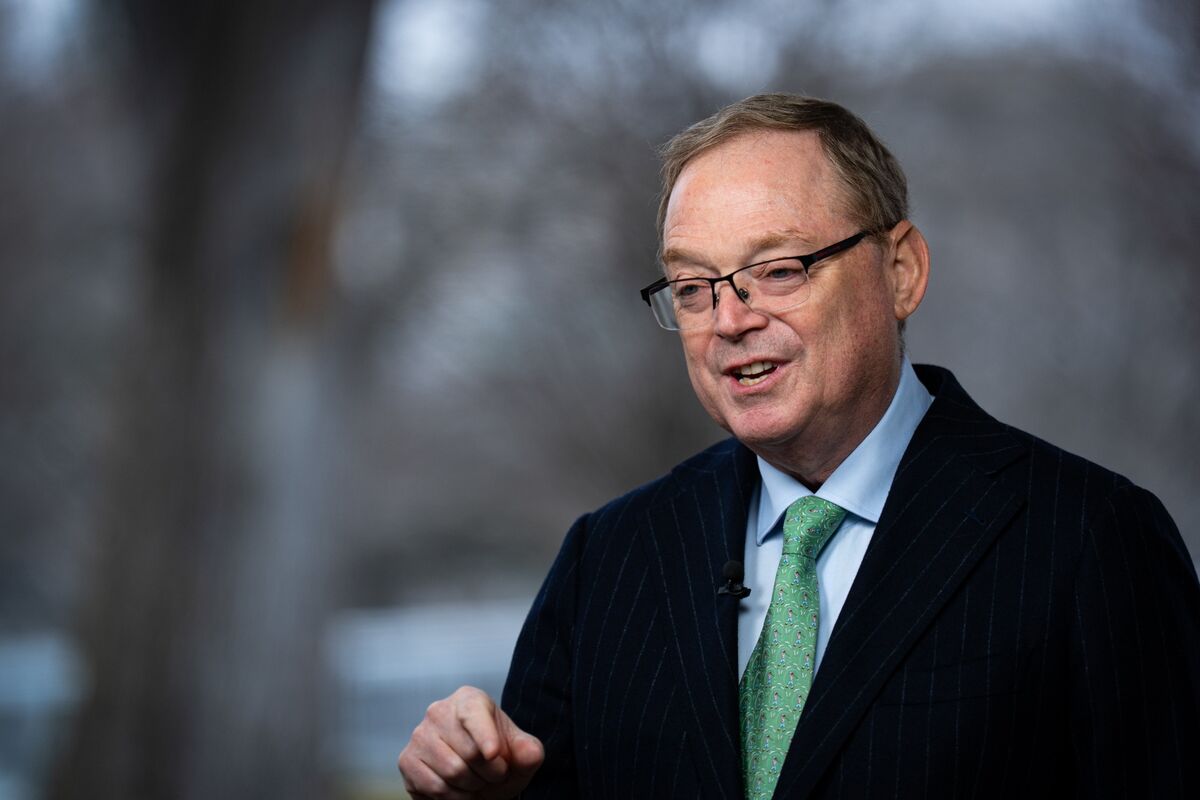
Kevin Hassett, President Donald Trump’s chief economic adviser at the White House, signaled he’s confident that an eventual drop in oil prices will create space for the Federal Reserve to lower interest rates.
President Donald Trump has remained defiant amid a wave of criticism from right-wing figures urging him to resume hostilities with Iran and walk away from peace negotiations, but according to Israeli-American academic and podcast host Shaiel Ben-Ephraim, that pressure may be gaining traction.“I am currently talking to two sources I really respect. They are both telling me that Trump is backing away from the deal with Iran, likely under extreme internal pressure (i.e. Israel and its domestic allies in the US),” Ben-Ephraim wrote in a social media post Sunday on X. “This is a terrifying turn of events.”Washington and Tehran have already “agreed in principle” on a deal to end the U.S. war against Iran, though such a deal has yet to be finalized. Amid reports that the Trump administration was nearing a peace deal, several prominent right-wing figures expressed skepticism, including former CIA Director Mike Pompeo, Sens. Ted Cruz (R-TX) and Lindsey Graham (R-SC), as well as Trump-ally Laura Loomer, who claimed there to be “no such thing as peace with Muslims” and urged the president to “bomb the Iranian regime.”Amid the alleged “internal pressure” being placed on Trump to resume the war against Iran, Bloomberg has reported that the president has also faced significant “outside” pressure to resume the war, including from Israeli Prime Minister Benjamin Netanyahu and billionaire media mogul Rupert Murdoch.On Saturday, Trump said that he would likely come to a final decision on whether to resume hostilities by Sunday, with there being a “solid 50/50” chance that he would authorize the U.S. military to “blow [Iran] to kingdom come.”I am currently talking to two sources I really respect. They are both telling me that Trump is backing away from the deal with Iran, likely under extreme internal pressure (i.e. Israel and its domestic allies in the US). This is a terrifying turn of events.— Shaiel Ben-Ephraim (@academic_la) May 24, 2026
A prominent MAGA-aligned physician publicly exposed what she described as a furious texting campaign by far-right activist Laura Loomer on Sunday — triggering a spectacular public meltdown that played out in real time on social media.Dr. Mary Talley Bowden posted screenshots of text messages from Loomer, who had challenged her over a post questioning why HHS Secretary RFK Jr. was sharing privileged information with Loomer — a pointed reference to Loomer's past accusation that he drove his wife to suicide."Laura Loomer is in a rage and is furiously texting me," Bowden posted along with the screenshots, a message that was promptly reposted by Roger Stone. Bowden gained national attention during the COVID pandemic as a vocal advocate for ivermectin as a treatment for the virus, a position that led Houston Methodist Hospital to suspend her privileges in 2021. She has since become a fixture in MAGA medical circles, appearing frequently alongside RFK Jr. and other figures in the anti-establishment health world.Loomer fired back, disputing the characterization. "Two texts is furiously texting?" she shot back. "You asked a question and I gave you an answer. Don't ask questions you don't want answers to, dumb dumb. You are a liar, a propagandist and a bad actor."Bowden's response was clinical — and withering. "I can't give you medical advice, but if you were my patient, I'd tell you to put down your phone and go run around the block. Hug your dogs. Call a friend. Or read a book."In the texts, Bowden had pressed Loomer on why Kennedy was giving her privileged information, with Loomer calling her "dumb dumb" and "deliberately ignorant." In the texts, Loomer insisted the information wasn't privileged but rather confirmation of a whistleblower report.
President Donald Trump seems indifferent to public opinion, according to one political analyst — and that poses a grave threat to the future of democracy.“His approval rating has plunged into the 30s, and he doesn’t seem to care,” MS NOW’s Paul Waldman wrote on Sunday. “Americans think the economy is terrible, and Trump seems indifferent. Instead, he’s putting his time and attention into a series of projects that could not be better designed to make him look corrupt and out of touch.”Waldman proceeded to list Trump’s various actions that Republicans believe are counterproductive to their goal of retaining control of both the House of Representatives and the Senate. These include his proposed gold-plated ballroom, his proposed Virginia arch, his $1.8 billion slush fund for supporters including Jan. 6 rioters and his revenge campaign against Republicans who do not always vote as he wishes. He also has vocally expressed indifference to problems that Americans are concerned about including the Iran war and rising gas prices.“Indeed, if Trump were trying to engineer a defeat in November for his party, it’s hard to imagine what he would be doing differently,” Waldman argued. “Where does this indifference to both his own standing and the political fortunes of his party come from? He may have a version of senioritis, the way students stop caring about classes as the end of high school approaches. Trump does care about his legacy, but as far as he’s concerned, that legacy isn’t written in legislation or policy victories; it’s physical and tangible. If he’s loathed by two-thirds of the public when he departs the White House, it may not matter to Trump so long as there are gigantic buildings with his name on them.”He added, “Even more, Trump may see this indifference to the public’s judgment as a kind of liberation. He spent a lifetime attempting to free himself of any and all constraints, so he can do whatever he wants. Before he was president, it was the constraints of the law, ethics, convention and civility that vexed him; in politics it’s the law and ethics (again), political norms, international alliances and agreements, the bureaucracy, Congress and the courts. The political interest of his own party, and even his own popularity? That’s just one more thing tying him down. And he’s going to cut those cords.”Indeed, Washington Post reporter Luke Boradwater recently noted regarding last week in the president’s career that Trump’s political standing continues to deteriorate week-by-week basis.Life finally man-handled President Donald Trump like it typically abuses Democratic presidents: with pushback and disappointment. But don’t expect to see this brand of ego acknowledge it, says Washington Post writer Luke Broadwater.“By pretty much any estimation, President Trump has had a very bad week,” said Broadwater. “New poll numbers show his approval rating has hit a second-term low. He is weighing whether to restart a bombing campaign in an unpopular war against Iran. Gas prices are high and inching higher heading into Memorial Day weekend. And his grip over Republican lawmakers is beginning to slip after he proposed a pair of deeply unpopular spending items, prompting an unusual revolt from the Senate.”He added that Trump is acting like a man who does not need to concern himself whatsoever with public approval in order to retain his power.“But Mr. Trump has decided to double down, presenting himself as politically all-powerful even in the face of indications that he is not,” Broadwater wrote.
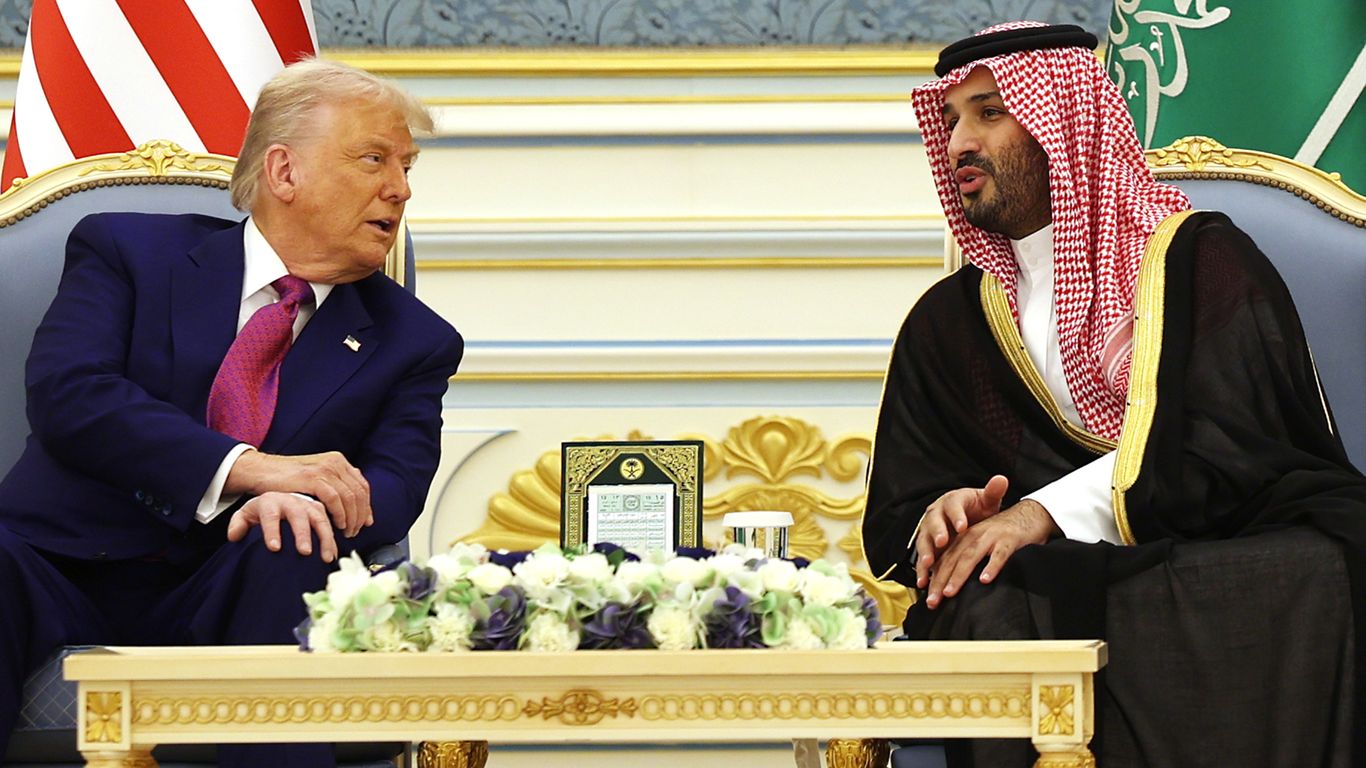
President Trump told leaders of several Arab and other Muslim countries during a Saturday conference call that if a deal to end the Iran war is achieved he wants their nations to sign peace agreements with Israel, per two U.S. officials with direct knowledge of the call. Why it matters: Trump's remarks on Israel and the countries signing onto the Abraham Accords during the call signal the next big step he wants to take in the Middle East after the war. Trump is aiming mostly at a historic Saudi-Israeli peace agreement, but the current political climate in the region and the upcoming Israeli election make any near term breakthrough extremely difficult. Driving the news: On Saturday, Trump held a phone call with the leaders of Saudi Arabia, the United Arab Emirates, Qatar, Pakistan, Turkey, Egypt, Jordan and Bahrain to discuss the emerging deal with Iran.Leaders including UAE President Mohammed bin Zayed, who has had a more hawkish view on the Iran war, said they support it."They all said we are with you on this deal. And if it doesn't work we will be with you too," a U.S. official said.Behind the scenes: A U.S. official with knowledge of the conversation said Trump told the leaders that he would call Israeli Prime Minister Netanyahu next and stressed that he hoped that in the near future Israel's leader would be on the same call.Trump told the leaders that after the war with Iran ends he expects all of them who are still not part of the Abraham Accords or don't have peace agreements with Israel to join and normalize relations with the Jewish state, two U.S. officials said. The leaders, especially those of Saudi Arabia, Qatar, and Pakistan who don't have formal diplomatic relations with Israel, were surprised by Trump's request. "There was silence on the line and Trump joked and asked if they are still there," one of the U.S. officials said. Trump then told the leaders that his envoys Jared Kushner and Steve Witkoff will follow up on this issue in the coming weeks. What they are saying: "I would like to thank, thus far, all of the countries of the Middle East for their support and cooperation, which will be further enhanced and strengthened by their joining the Nations of the historic Abraham Accords," Trump wrote in a post on Truth Social on Sunday. He floated the idea of Iran joining the Abraham Accords one day. It would require Tehran to recognize Israel, something it has refused to do for decades. The current Iranian regime sees Israel as an enemy and is committed to its destruction. Senator Lindsey Graham (R-S.C.) who criticized the emerging deal with Iran and is a leading force in Congress for the expansion of the Abraham Accords wrote on X on Sunday that he supports Trump's request to the Arab and other Muslim leaders. "If in fact as a result of these negotiations to end the Iranian conflict, our Arab and Muslim allies in the region agreed to join the Abraham Accords, it would make this agreement one of the most consequential in the history of the Middle East," he said. Graham called on Saudi Arabia and other countries to adhere to Trump's request. "If you refuse to go down this path as suggested by President Trump, it will have severe repercussions for our future relationships and make this peace proposal unacceptable. Further, it would be seen by history as a major miscalculation," he wrote. Yes, but: Saudi Arabia's Crown Prince Mohammed Bin Salman had expressed willingness to normalize relations with Israel, but over the past year he has cooled down on this issue. Trump asked Bin Salman to join the Abraham Accords during their Oval Office meeting last November. The Saudi crown prince pushed back and the meeting got tense. The Iran war and Saudi Arabia's rift with the UAE have pushed the Kingdom to take a more skeptical and tough position towards Israel's far-right government. Saudi officials still demand that Israel commits to an irreversible and time-bound path for a Palestinian state as a condition for them normalizing relations. The Israeli government refuses this. Israeli and U.S. officials think Riyadh will not take any steps on this issue ahead of Israel's elections planned for September and before it sees which government is sworn in.